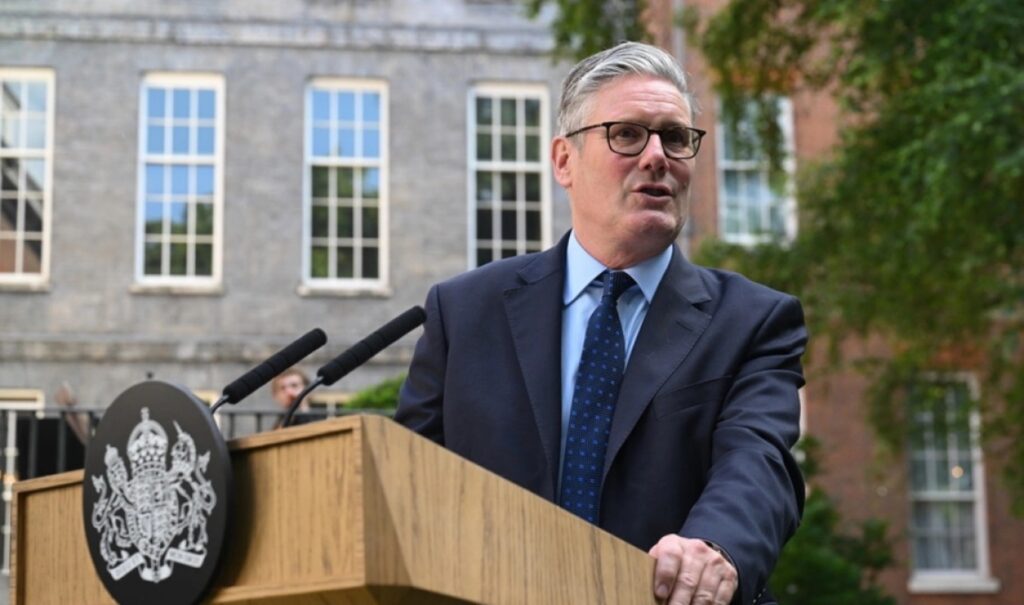
The resignation of Keir Starmer is already sending shockwaves through UK-EU relations, with the two sides’ scheduled summit now heading toward postponement. The meeting had been set for July 22 in Brussels and was intended to mark another step in the rapprochement effort that the British Prime Minister had pursued since taking office. However, the political developments unfolding in London are changing the landscape entirely, forcing European officials to reassess their plans for the period ahead.
Starmer’s resignation reshapes the agenda
European Council President António Costa made clear that Keir Starmer’s resignation has created a new set of circumstances that make postponing the summit necessary. Speaking in Brussels, Costa stated that the European Union is now weighing the available options for the meeting’s future, leaving open the possibility of scheduling a new date once the political situation in the United Kingdom becomes clearer.
António Costa also expressed hope that Starmer’s successor will continue the strategic course set by the outgoing Prime Minister to rebuild ties with Brussels. The development is considered particularly significant, as this summit had been presented as one of the key milestones in the new phase of cooperation between the two sides following Brexit.
What the European Commission is saying
The European Commission struck a similar tone. Commission spokesperson Paula Pinho confirmed that contacts are ongoing between the Commission and the President of the European Council to assess the new conditions created by the British Prime Minister’s resignation. According to Pinho, it is being evaluated whether the summit can proceed on its original schedule or whether it will need to be pushed to a later date. This stance reflects the desire of European institutions to ensure that any future summit takes place with political stability and clear representation on the British side.
The second post-Brexit summit
This meeting would have been only the second official summit between the European Union and the United Kingdom since Britain’s departure from the European family. The first took place in London in May 2025, at Keir Starmer’s initiative, as he had made a political investment in restoring a more functional framework of cooperation with Brussels. Although Starmer had ruled out any possibility of rejoining the European Union or the single market, he had sought closer collaboration on defense, trade, investment, and foreign policy. The July 22 summit had been considered pivotal for deepening this approach further.
The symbolic timing of the Brexit anniversary
The political upheaval carries even greater symbolic weight, as Starmer’s resignation comes just hours before the tenth anniversary of the Brexit referendum. On June 23, 2016, British voters chose to leave the European Union — a decision that triggered years of political turbulence and ultimately culminated in the completion of Brexit in 2020. A decade on, relations between London and Brussels remain in a process of redefinition, with several key issues still unresolved.
The unresolved issues in EU-UK relations
Despite efforts at rapprochement, frictions between the two sides have not disappeared. At the heart of the tensions lie disputes over the European defense industry, state aid rules within the European Union, and the EU’s broader strategy for promoting goods and investments produced within its member states. Starmer’s resignation now introduces fresh uncertainty over the trajectory of these negotiations and whether the next Labour leadership will maintain the same political approach toward Brussels. The coming weeks are expected to be decisive — both for the succession within the Labour Party and for the future of relations between the European Union and the United Kingdom.