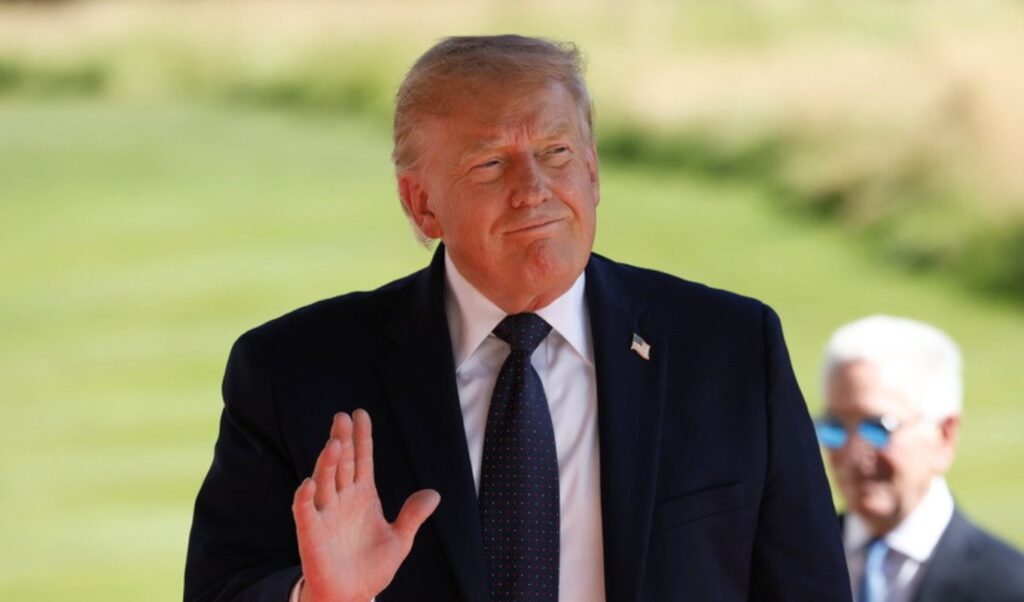
At the center of a growing storm of criticism from American media outlets is the deal with Iran and the way Donald Trump handled it. As commentators point out, the original war objectives have effectively been abandoned, Iranian power appears strengthened, and the cost of the conflict remains steep. Accordingly, critics are speaking of significant “concessions” made to Tehran and raising questions about the accuracy of the administration’s claims regarding the deal’s true scope.
The American president and his Iranian counterpart Masoud Pezeshkian signed a memorandum of understanding remotely, aimed at ending the conflict that erupted on February 28 following the US-Israeli strikes on Iran. However, the news was met with a torrent of criticism in the United States — even from outlets that typically support Trump.
Fox News, the Republican president’s preferred television network, pulled no punches. The outlet gave particular weight to those “who argue that the deal framework offers Iran enormous economic benefits without requiring the dismantlement of its nuclear infrastructure.” “While the administration presents the agreement as a major success, critics contend that the concessions granted to Iran far outweigh the commitments secured in return,” Fox reported.
MS Now: “Trump was fooled by the Iranians”
“The White House accepted this ceasefire extension, which failed to meet any of its pre-war objectives, while simultaneously making enormous economic concessions to Tehran,” commented the television network MS Now (formerly MSNBC), which leans Democratic. “Now the administration is desperately trying to argue otherwise. Put simply, Trump was fooled by the Iranians, and no one is buying his alternative narrative,” it added.
Wall Street Journal: “He will face backlash from the hawks”
The deal represents “the biggest foreign policy gamble of the president’s second term,” assessed the Wall Street Journal, which noted that Trump “will face backlash from the hawks (…) who argue that the president is giving away far more than he is getting in return.”
The remote signing of the agreement at Versailles, in the presence of French President Emmanuel Macron, also failed to win universal approval. As the financial newspaper noted, it caused “confusion over a signing ceremony that had been scheduled to take place later in the week.”
New York Times: “It looks nothing like a surrender document”
As for the Islamic Republic, while it emerges weakened from the conflict, the text that was signed “looks nothing like a surrender document,” commented the New York Times — a publication frequently targeted by the Republican president.
“The Iranians emerged from a conflict (…) with plenty of reasons to feel satisfied,” the newspaper added, noting that they “proved they can use economic chaos as a weapon.” Trump had spoken at the start of the war about the possibility of the Iranian regime collapsing — and later about the prospect of more negotiation-minded leaders coming to power.
“Trump may have actually strengthened the new leadership”
“In reality, Trump may have actually strengthened the new leadership,” the newspaper assessed. Even more troublingly, Tehran now has more concrete reasons than ever before to pursue nuclear weapons, it argued. For more than two decades, Iran remained “on the threshold” of acquiring a nuclear weapon in order to deter its enemies — yet it was targeted by bombings in June 2025 and struck again in February, the New York Times summarized. Its leaders “may now be questioning whether they have been following the right nuclear strategy.”
The public radio network NPR catalogued the devastating human toll of a conflict that “pitted the world’s most powerful military force against a far weaker adversary that nonetheless possessed considerable strategic skill.”
“It also undermined the message on purchasing power that the administration had been trying to promote ahead of the November midterm elections,” it added. And at a substantive level, nothing has been resolved. NBC, along with other outlets, compared the memorandum of understanding to the previous agreement between the two countries on Iran’s nuclear program — known as the JCPOA — which was signed in 2015 under President Barack Obama.
“Trump’s memorandum is nothing more than a ‘framework,’ as most of the significant issues remain to be resolved in future negotiations. By contrast, the 2015 nuclear deal was a detailed text that took two years to negotiate,” the network reported.