With the threat from the US looming, a climate of great concern prevails in Cuba. There, continuous power outages, fuel shortages, economic collapse and suffocating pressure from the US have already turned daily life into a struggle for survival according to CNN. The fact that CIA Director John Ratcliffe suddenly visited Cuba and information about the possible prosecution of Raul Castro has reopened a chapter that seemed to belong to the Cold War: the fear of an open US-Cuba confrontation.
Authorities in Havana are publicly calling on citizens to prepare for a “hypothetical military attack,” while government buildings and services are drafting emergency plans. In a country already living in a state of prolonged crisis, the sense that “something is coming” has begun to spread everywhere.
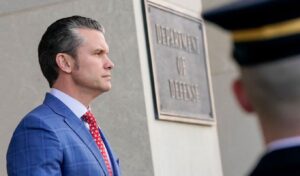
According to a CNN report, Ratcliffe’s presence in Havana caused intense sensation among many Cubans. For the regime, the CIA remains identified with some of the darkest moments in the history of relations between the two countries, from assassination attempts on Fidel Castro to the failed Bay of Pigs operation.
Cuba: The photographs released by the CIA
The photographs released by the CIA itself had intense symbolism: heavy blackout curtains, cold meeting rooms and Cuban officials facing American agents with covered faces.
As CNN comments, Donald Trump’s government message now seems clear: the era of negotiations and limited openings is ending and pressure on Havana is entering a new period.
According to American officials, Washington accuses Cuba of hosting Russian and Chinese surveillance facilities, operating as a geopolitical tool against American interests in the region.
On the other hand, the Cuban government maintains that it poses no threat to the US and that strict American policy is pushing the island toward economic suffocation.
Cuba prepares again for possible conflict
In recent days, Cuba’s state media constantly broadcasts footage of citizens’ military training. Men and women of all ages participate in exercises, hold Soviet-origin weapons and train in guerrilla warfare tactics.
The strategy remains essentially based on the doctrine that Fidel Castro had shaped: a “war of all the people,” where in case of invasion the population would function as a resistance force against a stronger opponent.
In some of the videos being broadcast, soldiers move anti-aircraft guns with the help of oxen — images that highlight both the lack of modern military equipment and the regime’s symbolic attempt to show that “the revolution does not retreat.”
The country’s president, Miguel Díaz-Canel, appeared on May Day with intense war rhetoric, declaring that Cubans are ready “to sacrifice even their lives for the revolution.”
An island under pressure
Behind the geopolitical tension, however, lies a society that has reached its limits.
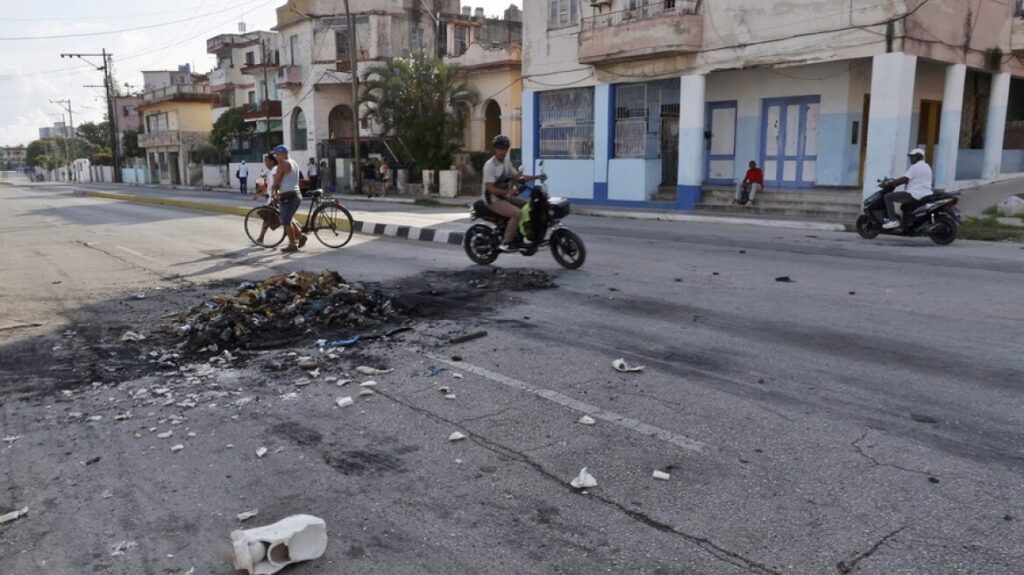
The energy crisis has led many areas of the country to prolonged power outages. Hospitals face serious shortages of basic medicines, food spoils in refrigerators due to blackouts and garbage accumulates on Havana’s streets.
American policy restricting oil imports has exhausted the country’s fuel reserves, while new sanctions on companies cooperating with Cuba make maritime transport to the island even more difficult.
For many Cubans, the situation has become so suffocating that even the possibility of conflict seems less frightening than the daily reality they experience today.
In recent protests over continuous power outages in Havana, residents banged pots for hours in the streets. “If half the country is lost, let it be lost,” one woman told reporters. “Maybe then the other half can someday live normally.”
Fear of what may follow
The possibility of regime collapse, however, also causes intense concern for the next day. Historians and analysts warn that violent political change in Cuba could lead to extensive conflicts and waves of retaliation.
The shadows of the Cold War return to the island again, not as a distant historical memory but as daily fear. And although Washington does not officially speak of military intervention, in Havana many have already begun to live as if a major crisis is approaching.
As one resident of the Cuban capital commented with bitter humor: “They tell us to prepare an emergency bag as if a hurricane is coming. Except we’ve already run out of everything.”