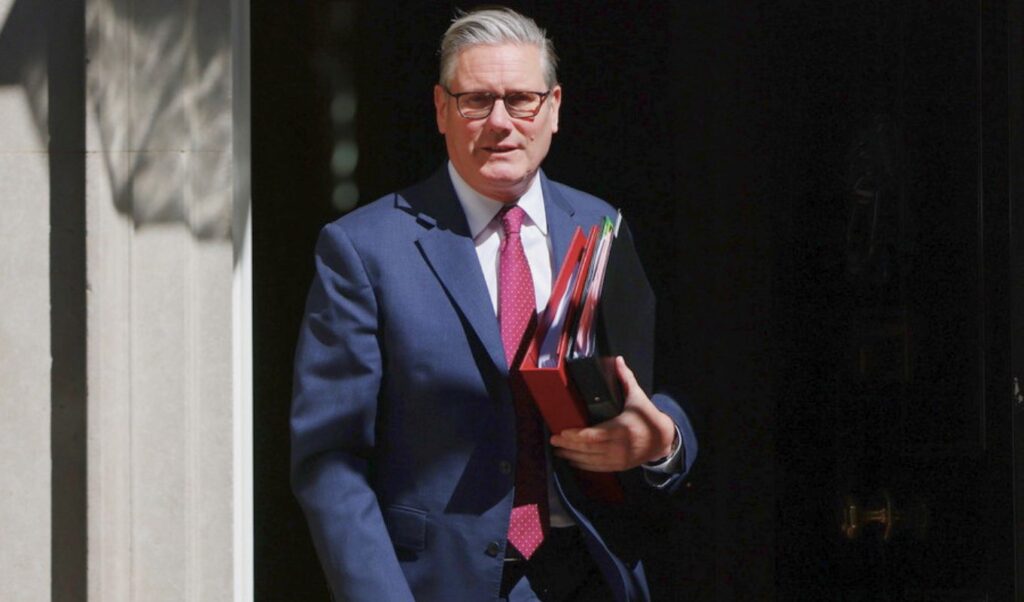
The political crisis deepens in Britain, with Prime Minister Keir Starmer determined to remain as leader of the Labour Party, despite mounting internal pressure and public calls from dozens of MPs for his resignation.
Britain: Who sees opportunity in Labour if Starmer is challenged
Keir Starmer shows no signs of backing down and is ready for any eventuality, calling on his critics to move officially against him and trigger a leadership challenge process. According to party rules, support from at least one-fifth of Labour’s parliamentary group – meaning 81 MPs – is required to activate an internal leadership contest.
It’s worth noting that nearly 100 MPs have publicly called for the resignation of the 63-year-old Labour leader and UK Prime Minister, however no official challenger has emerged with the necessary support so far. Three names are at the center of discussion, which according to CNN are considered the most likely successors in case of an internal party crisis.
Wes Streeting and “Blairism”
Health Secretary Wes Streeting is considered the choice for those wanting immediate leadership change. The 43-year-old politician, who has undertaken reform of Britain’s National Health Service (NHS), belongs to the moderate and center-right wing of Labour. His political career began as president of the National Union of Students and he subsequently served as a local councilor and MP for a constituency in east London, close to the social housing estate where he grew up. He has repeatedly expressed admiration for Tony Blair’s period in government, adopting elements of so-called “Blairism” in several cases.
However, his close relationship with veteran Labour politician Peter Mandelson has caused political damage, as Mandelson was removed from his position as Britain’s ambassador to Washington due to his ties with Jeffrey Epstein.

Andy Burnham and “Manchesterism“
Manchester Mayor Andy Burnham is another option, considered particularly popular with British public opinion. His supporters favor a more “smooth” power transition, mainly because he is not currently an MP and cannot immediately challenge for party leadership. The 56-year-old attempted earlier this year to return to parliament through a seat near Manchester, however Labour’s National Executive Committee blocked his candidacy and many party members interpreted the decision as an attempt to prevent a potential challenge to Starmer.
Burnham promotes the political model of “Manchesterism,” which combines pro-business policies with enhanced public control of essential services and measures supporting citizens’ daily lives. He often cites Manchester’s economic development, which became Britain’s fastest-growing urban economy during his tenure. Although popular, Burnham’s Westminster career was less successful, as his two previous attempts to assume Labour leadership did not succeed. He also caused market turbulence when he told “New Statesman” magazine last year that Britain must “stop depending on bond markets,” leaving open the possibility of more radical economic policy.

Angela Rayner and the grassroots base
Another standout figure is former Deputy Prime Minister Angela Rayner, who maintains strong appeal among the grassroots and traditional socialist voters of the party. The 46-year-old politician grew up in a poor family in the Manchester suburbs and became a mother at age 16. She has said that her mother, who suffered from bipolar disorder, could not read or write and as a result, Rayner worked as a care assistant for the elderly and entered trade unionism. These experiences, she said, pushed her into politics.
She took a central role in a series of reforms during her tenure in Starmer’s government. Among these were minimum wage increases, housing market reforms and legislation against so-called “exploitative” zero-hours contracts. However, her political image was damaged by a scandal involving reduced tax payments on a second home in southern England. She maintained it was an error due to incorrect legal advice. Angela Rayner, in a letter to Keir Starmer on Sunday, avoided directly calling for his resignation, but warned that “what we’re doing isn’t working and must change. This may be our last chance.”

The “outsiders”
Among potential candidates are also Home Secretary Shabana Mahmood, who has taken on tackling illegal immigration and is considered a rising figure in Labour’s right wing, as well as Energy Secretary Ed Miliband. Still particularly popular among the party base, mainly among voters with strong environmental and trade union activism, remains Miliband, former Labour leader.
Although internal party turbulence is intense, no unified front has formed against Starmer for now, with him maintaining control of the party despite increased political pressure.