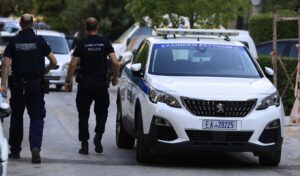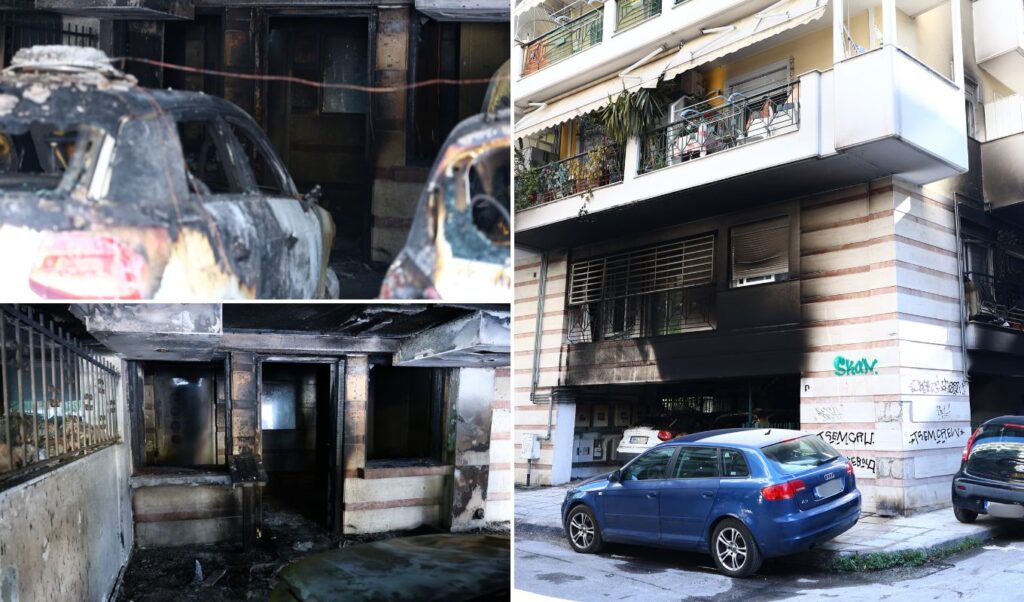
As the hours pass, Counter-Terrorism Service officers tasked with solving the series of arson attacks targeting the homes of New Democracy members in Thessaloniki are working to piece together a profile of the perpetrators — analyzing both the physical evidence recovered from the attack sites and the manner in which the attacks were organized and carried out.
Counter-Terrorism: How investigators are building the suspects’ profile in the Thessaloniki arson attacks
Although the investigation is still ongoing and no firm conclusions have been reached regarding the identity or motives of those involved, sources indicate that several characteristics of the case bear similarities to attacks previously attributed to the anti-authoritarian movement. This represents a primary line of inquiry, though investigators stress that this scenario has not yet been confirmed.
Gas canisters, motorcycles, and coordinated action: The suspects’ “operational blueprint”
According to the same sources, the selection of targets, the coordination of three simultaneous attacks within minutes of each other, the use of improvised incendiary devices made from gas canisters and flammable materials, and the perpetrators’ escape routes together paint an operational picture strongly reminiscent of similar past incidents.
Particular weight is also being given to the potential ideological motivation behind the attacks. The fact that only residences linked to New Democracy were targeted has led investigators to conclude that the perpetrators knew precisely who their targets were, had previously conducted surveillance of the areas, and had gathered detailed information about the exact addresses.
Arson attacks on New Democracy members in Thessaloniki: Scenarios of orders from specific networks
In this context, police are examining whether individuals previously known to authorities for incidents or other attacks may be behind the assault, while also searching for potential ideological references that could explain the choice of specific targets.
Investigators are also scrutinizing past incidents and events that have historically triggered intense mobilization within anti-authoritarian circles. According to sources, authorities are examining whether there is any connection or reference to the Alexandra Avenue refugee housing case, as well as to the Pylos shipwreck tragedy of 2023 — two issues that had previously served as major flashpoints for political and activist confrontation.
These potential triggers are not the only ones under consideration, however, as police believe it cannot be ruled out that the groups behind this triple attack may have been acting on orders from specific individuals and networks.
At this stage, investigators believe the operation involved two or three vehicles, primarily motorcycles. It is also estimated that at least three individuals were present on the ground during the attacks.
Security cameras and telecommunications data at the heart of the investigation
Footage from dozens of security cameras already collected by police is expected to play a decisive role in cracking the case. Investigators are using this material to map the approach and escape routes, identify those involved, and determine whether this was indeed an organized cell of three or four individuals operating with clearly defined roles and a specific plan of action.
According to experienced officers, the full picture will emerge from a combination of forensic evidence, witness statements, telecommunications data that may be obtained through court-authorized wiretaps, and — most critically — the security camera footage.