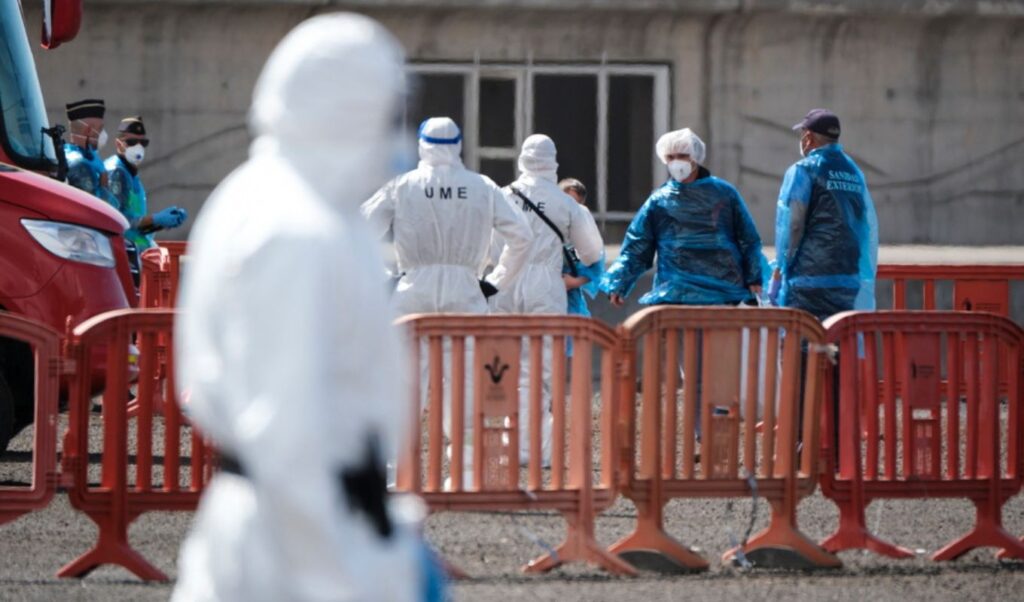
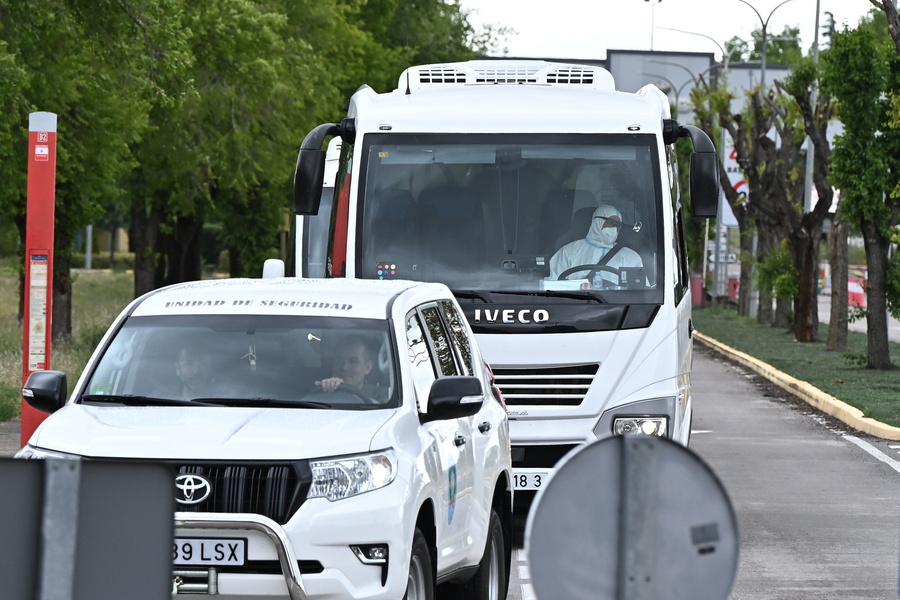
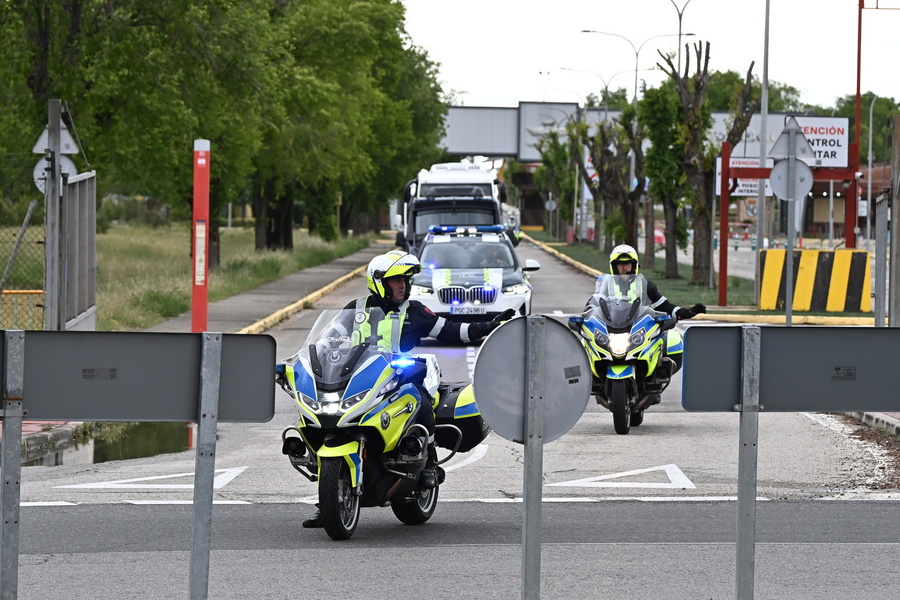
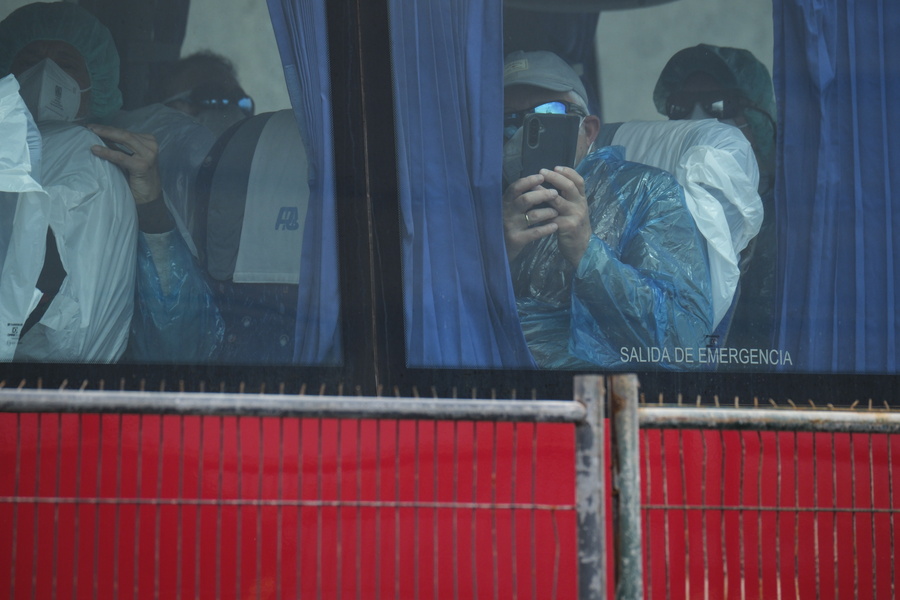
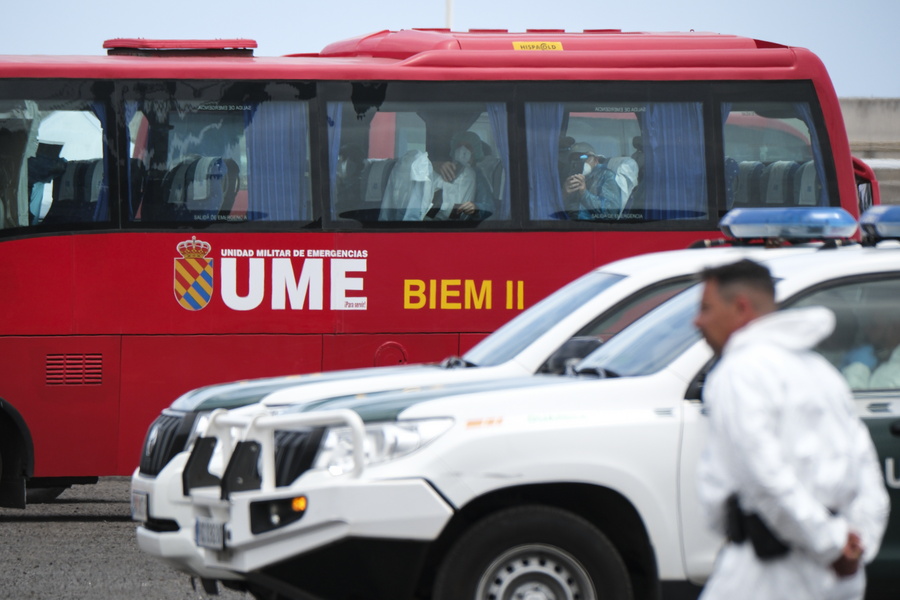
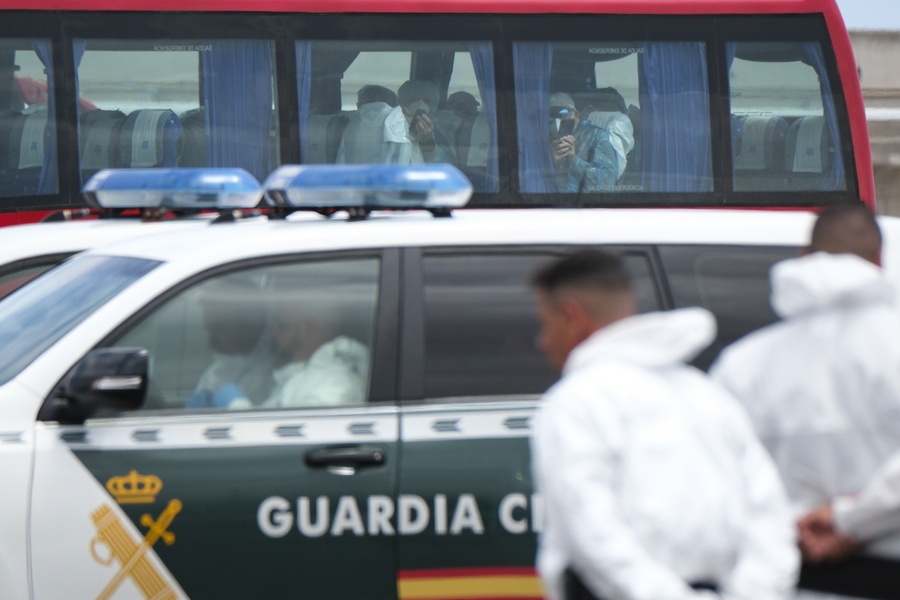
High alert and strict security measures dominated Sunday, May 10th, at Tenerife port, where the repatriation operation began for passengers of the MV Hondius cruise ship, after a Dutch couple died from hantavirus. Spanish authorities are following an extremely strict health protocol, with maximum biosafety measures in place. To ensure smooth operations, 325 Spanish Civil Guard officers and 33 police officers are stationed in the Canary Islands. The operation resembles a dystopian movie, as passengers, divided into groups, wear special protective suits. Additionally, authorities have structured the operation around controlled movement – boarding and disembarking – to maintain complete oversight. The 14 Spanish passengers and five French nationals departed by air to their home countries. All will undergo 42-day quarantine. Canadian passengers were expected to fly to North America Sunday evening. Spanish public television reported that the flight schedule has been modified due to limited aircraft availability for repatriation missions.
Tenerife: Over 90 MV Hondius passengers expected to depart
“More than 90 people, passengers and crew members, will have been evacuated” from the MV Hondius during Sunday, May 10th, announced Spanish Deputy Health Minister Javier Padilla in a video posted on social media. With the Canadian flight departure, evacuation operations from the cruise ship were expected to pause, resuming Monday afternoon, May 11th. No passenger removals were scheduled for Monday morning due to “refueling” requirements for the ship’s multi-day journey to the Netherlands, said Granadilla port manager Pedro Suarez on local television.
After evacuation completion, the cruise ship where the hantavirus outbreak was detected is scheduled to depart Monday around 21:00 (Greek time), according to Spanish authorities.
Asymptomatic Greek passenger returns
At 04:00 Monday morning (11/5), the Greek passenger aboard the MV Hondius cruise ship where hantavirus cases were discovered is expected to arrive. A C27 aircraft departed from Elefsina just before 17:00 Sunday afternoon (10/5) to collect the passenger.
Read: Hantavirus: C27 departed Elefsina to collect Greek passenger from Netherlands cruise ship (Video)
Health condition of hantavirus cruise ship patient
According to the Health Ministry, “the Greek citizen will be transported by Dutch aircraft to Eindhoven Airport in the Netherlands, then by special Air Force flight to Elefsina military airport. An EKAV ambulance will transport him to a specially configured negative pressure chamber at Attikon University General Hospital, where he will undergo mandatory 45-day quarantine.”
The Greek citizen is healthy and asymptomatic. According to indicated safety measures, for preventive reasons, the special repatriation flight will be accompanied by an EKAV physician, EKAV paramedic-nurse, and EODY Scientific Council President Dr. Theodoros Vassilakopoulos.
Cruise ship at Tenerife
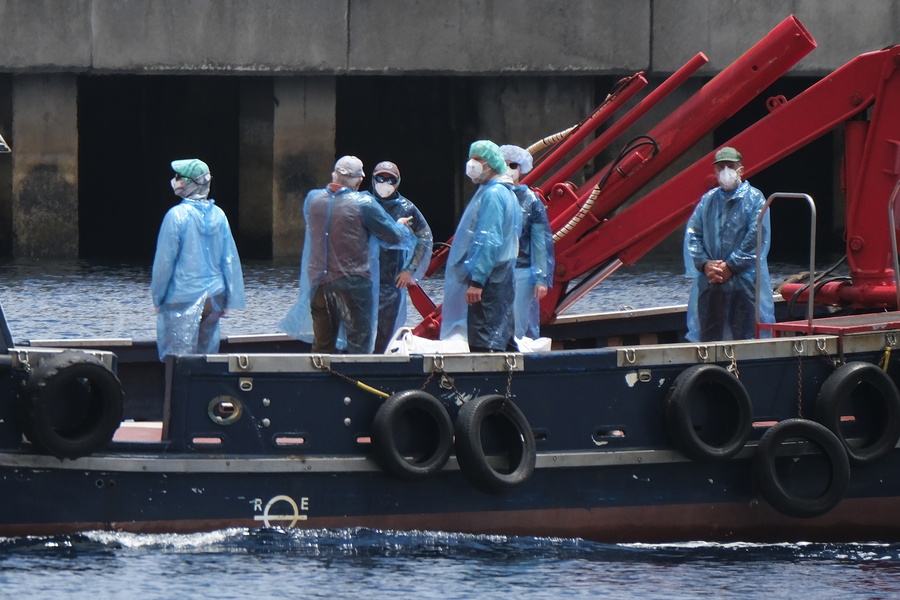
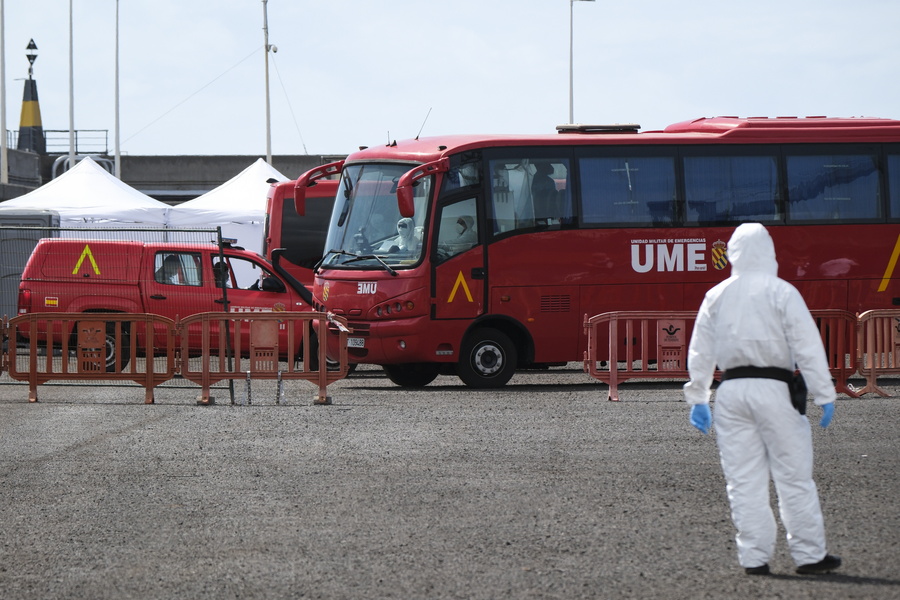
Nearly one month after the first passenger’s death from hantavirus aboard the MV Hondius, the ship docked at Tenerife. Authorities organized a massive operation for reception at Granadilla port, for disembarking and transferring over 100 people to land, aimed at repatriation.
The outbreak was first reported to WHO on May 2nd, with risk remaining low. The US Centers for Disease Control and Prevention (CDC) has classified their response at level 3, the lowest level, according to CNN.
The origin
Authorities are investigating the source, with WHO estimating that the Dutch couple was infected before boarding the ship. The incubation period ranges from one to six weeks, while passengers and crew are advised to remain vigilant for 45 days.
Mortality and transmission
Hantavirus is particularly deadly. Approximately 38% of people who develop respiratory symptoms may die, according to the CDC. No vaccine exists for virus prevention. Human-to-human transmission of the Andes virus is rare but has been reported. “This is not a virus that spreads like flu or Covid. It’s quite different,” said WHO’s Dr. Maria Van Kerkhove. Globally, annual virus cases are estimated between 60,000 and 100,000.