Unrest prevails in the Middle East following the announcement by the Revolutionary Guards about regaining control of the Strait of Hormuz. Iran specifically announced that it is restoring “strict control” of the Strait of Hormuz in response to the maintenance of the American blockade of Iranian ports, reversing yesterday’s decision to reopen this strategically important maritime route. Tehran “accepted in good faith to allow the passage of a limited number of oil tankers and commercial vessels,” but the Americans, violating their commitments, “continue to engage in acts of piracy under the pretext of the so-called blockade,” denounced the command of Iranian armed forces, in a statement broadcast on state television.
“For this reason, control of the Strait of Hormuz returns to the previous state and this strategic passage is now under strict control” of Iran, the statement adds. This announcement comes while diplomatic efforts are underway to end the war in the Middle East, beyond the two-week ceasefire that came into effect on April 8 between Iran and the US.
Two ships attempted to pass through the Strait of Hormuz and came under fire from the Revolutionary Guards
Meanwhile, ships that attempted to cross the Strait of Hormuz after Iran’s announcement of a new blockade came under attack by the Revolutionary Guards.
According to information from an audio document released by SKAI, an Indian tanker allegedly came under attack from light weapons and issued a distress signal. Shortly after, Reuters reported, citing sources from the maritime security and shipping sector, that at least two commercial vessels reported coming under fire while attempting to cross the Strait of Hormuz.
In the first audio recording, the captain of an Indian tanker that came under fire from the Iranian Navy is heard saying: “You gave us permission to move, why are you attacking us?”
In the second audio recording, the captain protests and issues a distress signal, while gunfire from light weapons can be heard.
At the same time, the Times Of India reports that shooting incidents occurred in the Strait of Hormuz, as at least two ships attempted to cross it.
The reports are spreading on social media, where several users refer to the incident and mention that the ship interrupted its course and changed direction. Meanwhile, other accounts report that the ship simply received a warning and then changed course.
Mojtaba Khamenei: Iran’s navy ready to inflict “new bitter defeats” on enemies
Iran’s Supreme Leader, Mojtaba Khamenei, in a statement on Telegram emphasized that Iran’s navy is ready to inflict “new bitter defeats” on the country’s enemies.
“The Army of Islam defends today, as in the two previous imposed wars, with courage the waters, land and flag to which it belongs,” states Iran’s Supreme Leader, Mojtaba Khamenei, in his statement. “Relying on strong divine and popular support, and with compact and stable ranks, it stands side by side with other mujahideen of the armed forces, fighting with the two armies leading the front of disbelief and arrogance, and has revealed their weakness and humiliation before the eyes of the world,” he adds.
“Just as its drones strike Americans and Zionist criminals like lightning, its brave navy stands ready to make enemies taste the bitterness of new defeats,” Khamenei concludes.
Khamenei’s statement notes the importance of Iran’s military readiness, during a period of heightened geopolitical tensions in the region. The Islamic Revolutionary Guards announced that the Strait of Hormuz, which had reopened the previous day, was placed under closure regime again. This development caused strong reactions and concern in the international community.
According to the Iranian military’s announcement, the decision was taken as a response to American policy that, as stated, prevents navigation and commercial transport in the region. Tension in the Middle East increased when Iranian speedboats opened fire against an oil tanker and a commercial vessel that were attempting to pass through the Strait of Hormuz.
Eight oil tankers crossed the Strait of Hormuz today
At least 8 oil tankers and liquefied natural gas carriers passed through the Strait of Hormuz early this morning, with Iran having declared yesterday that it was opening the maritime route for the duration of the ceasefire, before changing position today, according to Kpler data monitoring maritime traffic.
One crude oil tanker, four LNG carriers, two ships carrying oil and chemical products, and an eighth vessel carrying “petroleum products” crossed the Strait early this morning, as shown by Kpler data.
Also this morning, the MarineTraffic website showed that more than 12 ships were operating in the area, including oil tankers near the Iranian island of Larak, but at least two appear to have returned around 12:00 noon Greek time.
Additionally, a cruise ship, Celestyal Discovery, crossed the maritime passage without passengers traveling from Dubai to Muscat, an unprecedented event since the start of hostilities on February 28, according to the same source.
After yesterday’s announcement from Tehran of the opening of the Strait, Trump had declared that the American blockade would remain “fully in effect” until the end of negotiations and would “continue” if no agreement was reached upon completion of negotiations.
“Since the start of the blockade, 21 ships have complied with instructions from US forces ordering them to return to Iran,” US Central Command stated on Saturday on X.
“The US cannot impose a siege on the Strait of Hormuz” says Iranian Deputy Foreign Minister
The US “cannot impose a siege” on the Strait of Hormuz, Iranian Deputy Foreign Minister Said Khatibzadeh said today, after Tehran confirmed it had closed the Strait of Hormuz again due to the American blockade.
“Americans cannot impose their will to besiege Iran, while it, in good faith, makes efforts to facilitate safe passage through the Strait of Hormuz,” the Iranian Deputy Foreign Minister told reporters, during a diplomatic forum in Antalya, southern Turkey.
Donald Trump “tweets and talks a lot,” Said Khatibzadeh also said in an ironic tone, after the American president said he might not extend the ceasefire with Iran after it expires next Wednesday.
“You know, the American side tweets and talks a lot. It is in some cases confused, contradictory,” noted Iran’s Deputy Foreign Minister, responding to a question about Donald Trump, during a diplomatic forum in Antalya.
The “reopening” of the Strait of Hormuz that lasted a few hours
Iran had announced earlier that the Strait of Hormuz had opened fully, following the passage of eight tankers, according to ship tracking data.
This move had been seen by some as a sign of de-escalation, causing markets to rise and optimism for a possible agreement between Washington and Tehran.
However, a few hours later, Iranian state television broadcast an Armed Forces announcement, according to which the decision is reversed. The Khatam al-Anbiya command accused the US of not keeping their commitments and characterized American actions as “piracy under the pretext of naval blockade.”
According to the announcement, “control of the Strait of Hormuz returns to the previous state” and any passage will now be made only with Iranian approval. Before the Revolutionary Guards reinstated the restrictions, few ships had managed to pass through the Strait of Hormuz, including two Greek tankers, according to information.
Tehran’s position and strategic pressure
Iran argues that US insistence on the blockade of its ports constitutes a violation of the fragile ceasefire and warns that the passage may close completely if the blockade of Iranian ships continues. Iranian Parliament Speaker Mohammad Bagher Ghalibaf emphasized that “with the continuation of the blockade, the Strait of Hormuz will not remain open.”
Meanwhile, a spokesperson for the Iranian Foreign Ministry said that Washington will receive an “appropriate response” and characterized American actions as a violation of agreements.
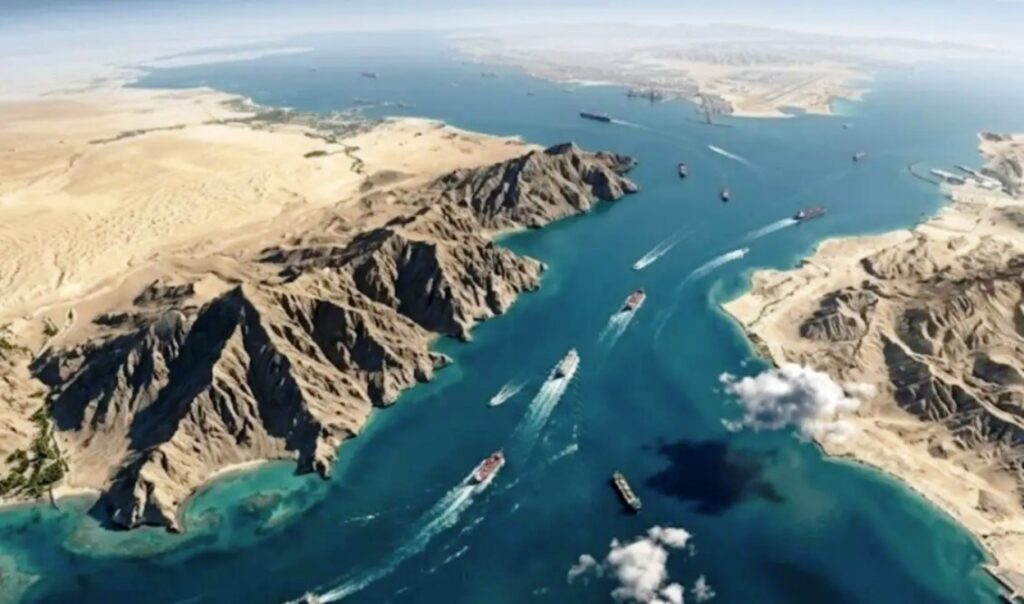
The strategic importance of the Strait of Hormuz remains Tehran’s main negotiating card, as the ability to restrict navigation can directly affect international energy prices and global economic stability.
Trump’s statements and the threat of military escalation
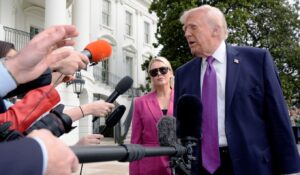
On the US side, Donald Trump has adopted a particularly tough stance, leaving open the possibility of new military strikes. Speaking to reporters, he warned that “if there’s no deal, we might start dropping bombs again.”
The American president also said he is considering extending the ceasefire, but made clear that the naval blockade will continue if there is no agreement. “Maybe I won’t extend it, but the blockade will remain,” he characteristically stated.
In other statements, he argued that a comprehensive agreement with Iran is “very close,” while mentioning that Tehran has agreed on key issues such as enriched uranium management, something that Iran denies, however.
International reactions and naval presence
The tension in the Strait of Hormuz has also caused mobilization at a European level. Britain and France announced plans to send a naval force aimed at protecting navigation, although they clarified that the mission would be activated only if there is a stable ceasefire agreement.
Trump, however, downplayed the European initiative, characterizing it as “ineffective” and a “paper tiger,” causing further friction with US allies in the Old Continent.
At the same time, according to American military sources, at least 21 ships have been ordered to change course since the start of the blockade of Iranian ports, while US naval forces continue patrols in the area.
The path to crisis in the Strait of Hormuz: a brief timeline
The current crisis represents the culmination of a series of events that escalated in recent weeks:
– After American attacks in late February, the Revolutionary Guards warned they would target ships in the Strait of Hormuz.
– In March, attacks on tankers and commercial vessels were recorded.
European countries rejected American requests for full-scale military intervention in the Strait.
– Trump set ultimatums for opening the Strait of Hormuz, which he subsequently turned into negotiations.
– In early April, talks began with limited results.
– On April 13, the US imposed a naval blockade on Iranian ports.
– On April 17, a temporary opening of the Strait of Hormuz was announced, but was denied a few hours later.
US & Iran talks: eyes on Islamabad
Meanwhile, diplomatic sources report that a new round of talks is expected to take place in Pakistan, which has assumed the role of mediator between Washington and Tehran.
Eyes are turning to Islamabad, where a second round of negotiations between Washington and Tehran is expected to take place on Monday, as Iranian sources told CNN.
About 20,000 security personnel have been deployed to protect the talks, while high-level contacts include officials from Iran, Pakistan and other countries in the region.