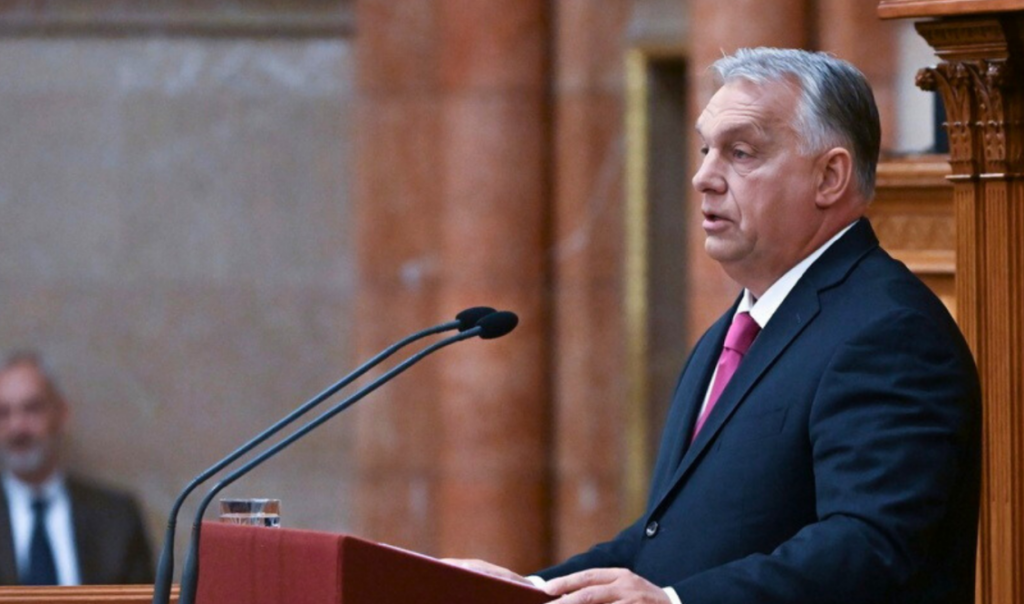
Hungary is experiencing moments that no one could have imagined until recently, following Viktor Orban’s defeat in Sunday’s elections, as the country will have a new government for the first time since 2010. According to CNN, the reason Orban’s campaign focused so heavily on foreign policy was his poor domestic image. This is another lesson from Orban’s defeat: populism relies on constant confrontation and continuously needs enemies. Orban found many: NGOs, liberal universities, George Soros, the LGBTQ movement, the European Union. But at some point, the “enemies” run out. A large part of his campaign targeted Ukraine. Budapest was filled with posters of President Volodymyr Zelensky with slogans like “Danger!” and “Don’t let him have the last laugh.”
Without a strong economy or effective healthcare system, his campaign tried to terrorize voters, presenting Fidesz as the “safe choice.” As Krastev said, presenting Ukraine as the main threat to Hungarian sovereignty ended up looking comical. Against these vague threats, Magyar simply showed the country’s internal situation, which did not satisfy Hungarians. Although polls predicted a clear victory for the opposition Tisza party of election winner Peter Magyar, everyone remained cautious until the last moment, and thus Orban’s defeat reminded many of a regime change.
As author and poet Andras Petocz told CNN, the feeling reminded him of the era of the Soviet Union’s collapse. “I was 30 years old when the communist regime ended. It’s the same feeling – exactly the same,” he said from the banks of the Danube, where thousands of Fidesz supporters had gathered to hear the results.
According to the American network’s analysis, “although much remains unclear — from the size of Tisza’s parliamentary majority to how it will begin dismantling the system Fidesz built — Orban’s defeat shows the limits of populism. His defeat offers lessons both for those who would like to imitate him and for those who are glad he’s gone.”
Orban’s defeat: The help he sought from foreign leaders
Despite statements by US Vice President JD Vance, who traveled all the way to Budapest to support the Trump administration’s closest ally in Europe, that “I will help Orban as much as I can,” and the even more intense urging by the American president to “get out and vote for Viktor Orban, a real friend, fighter and winner,” these interventions did not pay off.
“While some Hungarians may have felt flattered by a superpower’s attention, there is a contradiction in expecting citizens to vote for a nationalist politician because a foreign power tells them to,” CNN notes.
Before Orban’s defeat, political scientist Ivan Krastev, who has been studying the outgoing Hungarian prime minister since the early 1990s, commented: “The irony is that if he loses, he will lose as a champion of globalization. By asking for help from powerful friends abroad, Orban did exactly what one would expect from internationalist leaders.”
“For those who want to defeat populism, Orban’s defeat also offers lessons. Despite his victory, many liberal and left-wing Hungarians are not enthusiastic about Magyar, a former Fidesz official with conservative views. However, they rallied around him, considering him the best chance to defeat Orban. As political scientist Peter Kreko said, voters did not let the ‘perfect’ become the enemy of the ‘good,'” the CNN analysis states.
In his victory speech, Magyar acknowledged the challenges and called on Orban to function as a transitional leader without obstructing the new government. However, for his supporters, whether Tisza will be able to dismantle the Orban system and govern effectively remains a question for the future.
“‘It would be a welcome reversal if Hungary went from being an example of illiberalism and authoritarianism to an example of democratic change,’ Kreko said, but that remains to be seen,” CNN concludes.