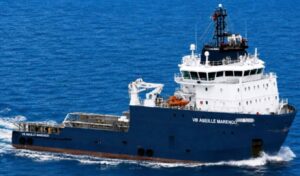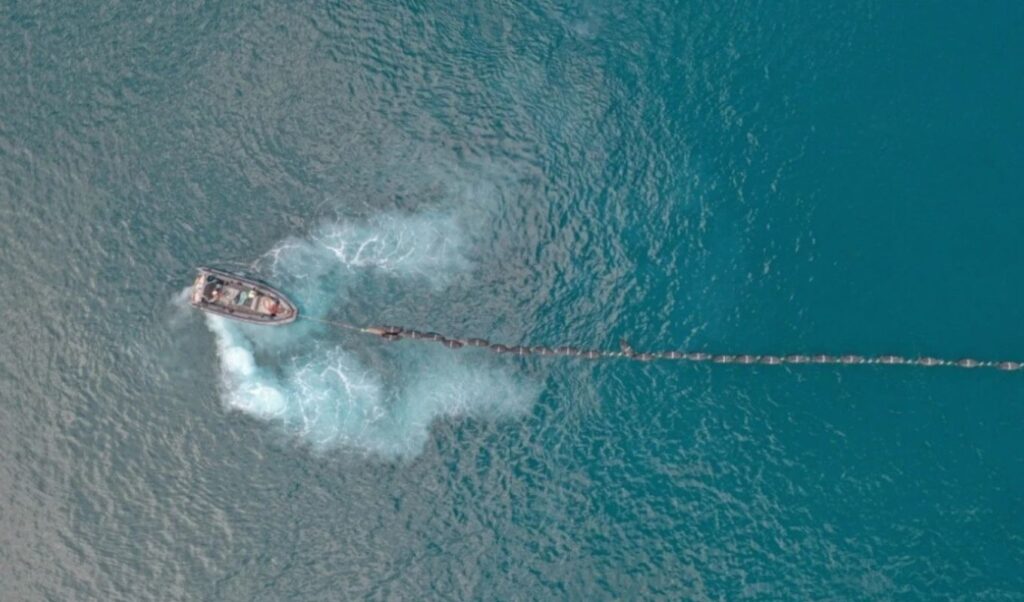
The Crete-Cyprus electrical interconnection (Great Sea Interconnector) is entering its final implementation phase following the launch of the licensing process for the works. With the submission of the relevant application to the Ministry of Shipping and its forwarding to the Ministry of Foreign Affairs, the process for preliminary oceanographic and bathymetric surveys has been set in motion. According to the relevant documents, the responsibility for conducting the surveys has been assumed by the company Next Geosolution Europe SA (commissioned by NEXANS SA), with a specialized vessel undertaking operations along the maritime route from Korakia in Heraklion to Cyprus.
Cable-laying works to remain within Greek territorial waters
It is particularly significant that, for the time being, the planned works are confined exclusively within Greek national territorial waters. The licensing process includes the submission of a request for the official commencement of works and the issuance of the necessary NAVTEX notices, with the project timeline targeting completion by December 31, 2026. By restricting activities to within 6 nautical miles, the current phase avoids the sensitive maritime zones of the Greek Exclusive Economic Zone (EEZ) and continental shelf east of Kasos — the very areas where Turkish objections are concentrated.
In the context of Greek-Turkish relations, the management of the project’s launch highlights the delicate diplomatic balancing act at play. Athens appears determined to press ahead with the project while simultaneously pursuing a de-escalation strategy. According to Antonis Klápsis, Professor of International Politics at the University of the Peloponnese, “the Greek side has publicly declared its intent and is committed to continuing the project. I don’t think it will back down on this. My question is: when the time comes to lay the cable outside Greek territorial waters, what will Turkey’s reaction be? Whether it will remain at the level of verbal threats, or whether it will attempt in some way to militarize the crisis — that is, send a warship, or take some other similar action in a practical attempt to prevent the cable-laying.”
As part of efforts to de-escalate tensions in Greek-Turkish relations, the Greek side has decided that research vessels will be accompanied by Hellenic Coast Guard ships rather than naval warships, as the Coast Guard holds operational responsibility for policing national territorial waters. This choice aims to keep tensions low, avoiding the militarization of the process within Greek territory — where Turkey would not be in a position to challenge Greek sovereignty in any case.
Klápsis: Turkey will react when works extend to international waters — the question is whether it will send a warship
Nevertheless, Ankara’s stance once the project moves beyond territorial waters remains an open question. Turkey does not formally oppose the cable-laying itself, but persists in its maritime zone claims — including by challenging the right of Greek islands to a continental shelf and EEZ beyond 6 nautical miles, and demanding that permission be sought from Turkey or that the Turkish Ministry of Foreign Affairs be directly notified by the flag state of the vessel, in order to assert its claims as a coastal state. Professor Klápsis expects Turkey to react once operations extend into international waters.
As he told parapolitika.gr: “Turkey will react in some way — I consider that a given. At a minimum, it will issue a statement declaring the Greek action provocative or illegal, something along those lines. The real question is whether it will send a ship. And what that ship will do. There’s a difference between a vessel being present at a distance of many miles and simply being there, approaching the area, harassing with wires, or actually obstructing the passage of the cable-laying vessel. We don’t know that yet — we’ll have to wait and see. Turkey, in any case, does not officially dispute or oppose the cable-laying itself. It’s not saying it shouldn’t happen. It’s saying they should be asked for permission for it to happen. That’s a different matter entirely. In other words, Turkey wants to assert that the area where the cable is being laid — which, in Turkey’s view, constitutes Turkish continental shelf or EEZ — must be confirmed through Turkish authorization.” Of particular note is the fact that the application submitted by the French company explicitly states that no changes are foreseen in the procedure or in the routing of the cable.