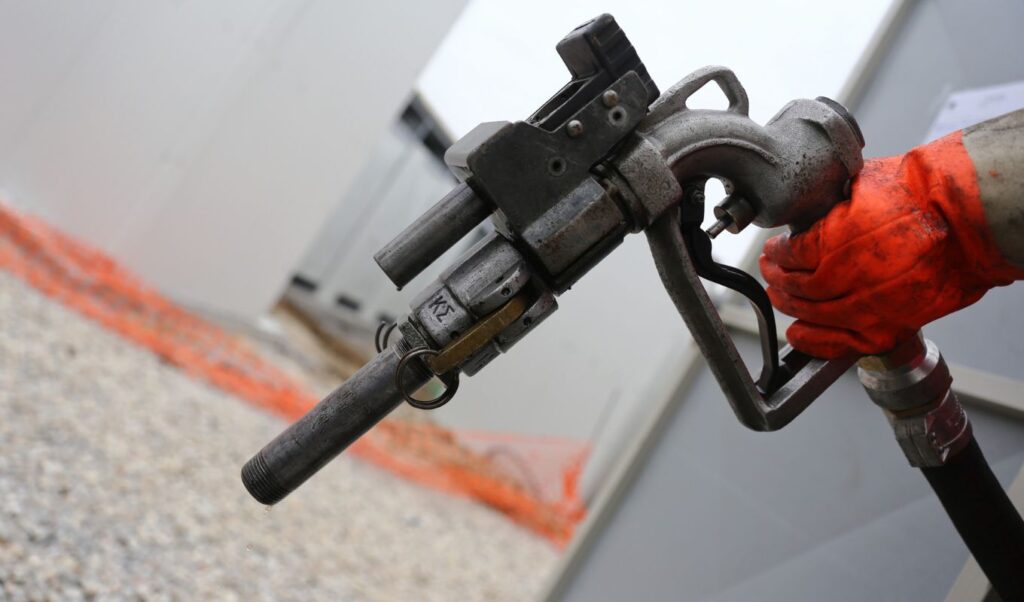
Today marks the official announcement day for diesel and heating oil, which will be available at fuel stations starting tomorrow. Without government intervention and subsidies, the price of heating oil would have hovered just below €2 per litre — a figure the government has been aware of for approximately a month, with the Prime Minister’s Office in constant coordination with the relevant Ministries of Finance and Energy to finalize the support measures. Official announcements are expected in the morning via press release, with further details to be provided shortly after by Stavros Papastavrou and Thanos Petralias.
Fuel subsidies: New support measures for heating oil and diesel — what changes and how much the allowance increases
The first measure was already announced yesterday by Kyriakos Pierrakakis: “In a challenging international environment, where the energy crisis is testing the resilience of households across the globe, our priority is to ease the pressure on families. That is why we are moving forward with a dual support package for heating oil — a direct pump subsidy that will immediately reduce prices, and a 30% increase in the heating allowance compared to last year, a measure that will benefit hundreds of thousands of families across the country,” said the Minister of National Economy and Finance, shortly before departing for the IMF’s annual meeting in Thailand.
Regarding the increased heating allowance for this year, the income eligibility criteria are not expected to change. Last year’s thresholds stood at an annual income of up to €16,000 for single individuals and €24,000 for married couples (with an additional €5,000 per child). The real estate asset limit was set at €200,000 for singles and €260,000 for married couples and single-parent families. It is worth noting that the heating allowance applies not only to households that heat with oil, but also to those using natural gas or firewood.
Regarding diesel fuel, Prime Minister Kyriakos Mitsotakis has already announced an increase in the pump subsidy — from €0.10 to €0.15 per litre — which has been in effect for the past two weeks and is expected to continue. Combined with a refinery discount, the total relief on diesel reaches €0.20 per litre.
Heating oil: How prices will drop below €1.60 per litre
With respect to heating oil, the Prime Minister has pledged a final consumer price lower than €1.75 — the level at which heating oil was priced at the end of last April, achieved through a combined subsidy from both the government and refineries. The new combined subsidy is expected to range between €0.35 and €0.40 per litre, bringing the price down from €1.96 to below €1.60 for consumers.
“The final consumer price for heating oil will be set on October 15th, at the start of the heating season, well below €1.75 per litre. Our intention — in a manner that will be specified tomorrow — is, on the one hand, to continue the subsidy on petrol and diesel and, on the other, to provide more substantial support for heating oil,” said Deputy Prime Minister Kostis Hatzidakis on Open TV. He also noted that, in addition to the government’s pump-level intervention and the increase in the heating allowance for vulnerable households, a third intervention would come directly from the refineries.
Mr. Hatzidakis emphasized that the fuel market crisis is not unique to Greece, but affects countries around the world. “We are doing our utmost to address it within an international environment made even more challenging by turbulence in the bond markets, centred on France. All of this demonstrates that we must be sensitive, of course, but also very serious and fiscally responsible. No government has a magic eraser to make these problems disappear.”
Energy crisis: Greece pushes Europe for new relief measures
Tomorrow morning marks the beginning of the two-day European Union Summit in Brussels, where Prime Minister Kyriakos Mitsotakis is set to renew Greece’s call for the flexibility to implement additional relief measures. “We want Europe to grant an exemption in the calculation of expenditures — essentially an escape clause for spending — given the need for additional emergency measures to address the energy crisis,” said government spokesperson Pavlos Marinakis, speaking to Naftemporiki.