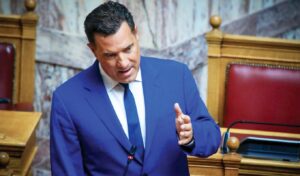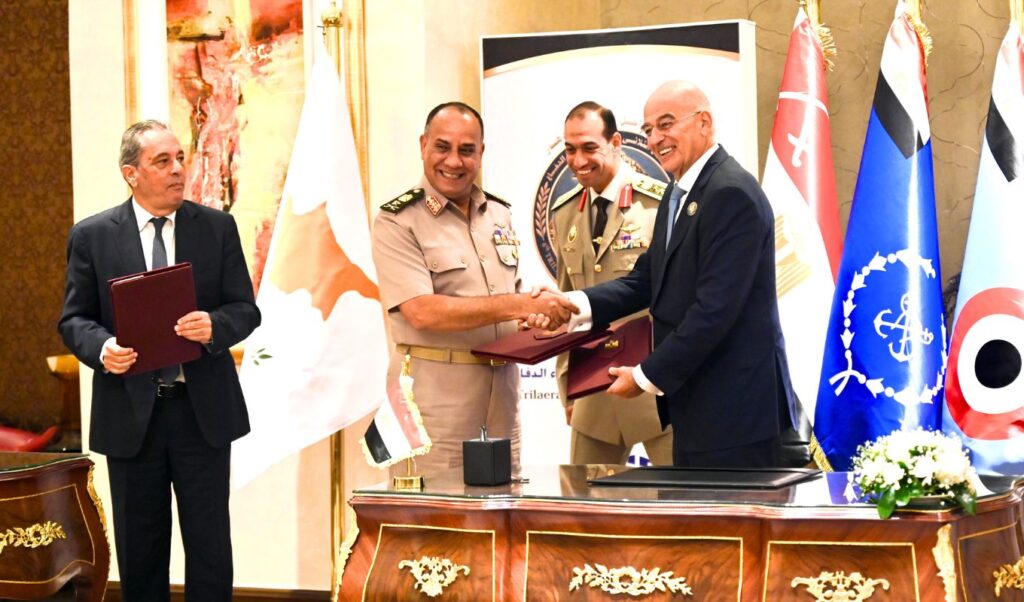
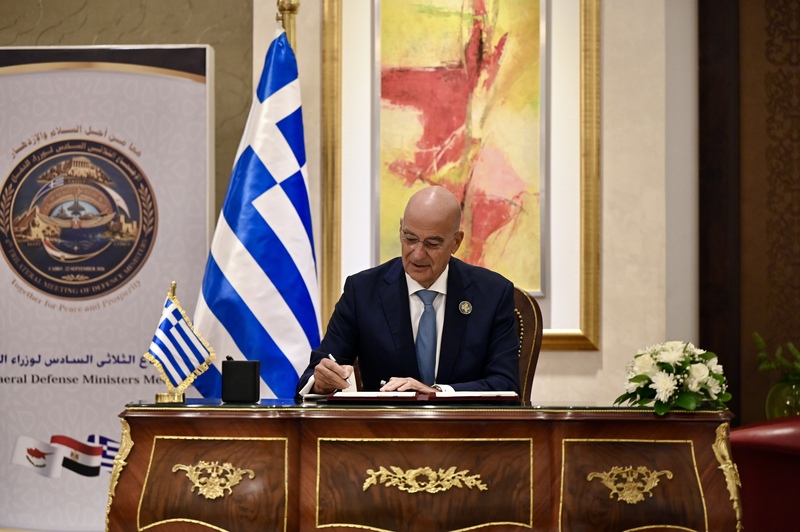
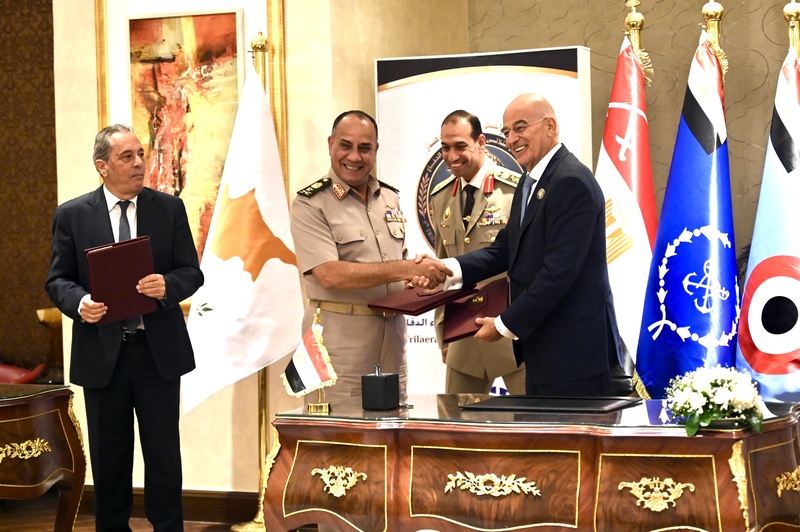
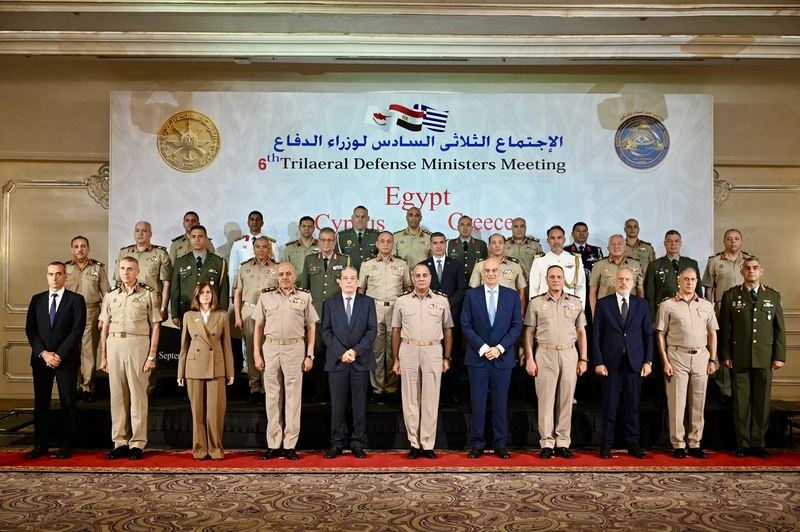
Nikos Dendias is returning from Cairo with significant results following the conclusion of the Greece-Egypt-Cyprus trilateral meeting on the afternoon of Tuesday, September 22. The Greek Defense Minister comes back bearing a joint statement that effectively “locks in” the defense axis among the three countries in the Eastern Mediterranean. The joint declaration was signed in the Egyptian capital at a critical juncture, as Turkey seeks to expand its influence across the region. The trilateral defense ministers’ meeting carries particular strategic weight, with the three countries agreeing to intensify coordination and upgrade operational cooperation in order to jointly address the emerging security challenges in the Eastern Mediterranean.
Dendias: “Egypt is a strategic and indispensable ally for Greece”
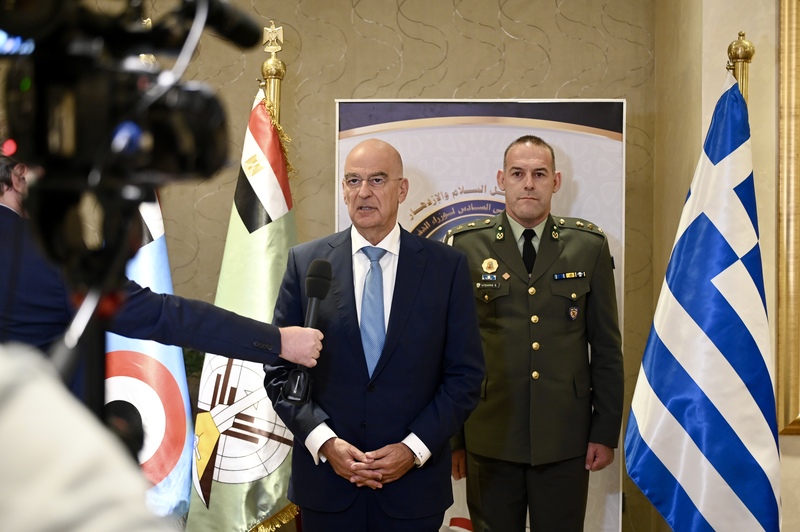
At the same time, Nikos Dendias sent a clear message, underscoring that the strategic relationship with Egypt has an autonomous and enduring character — at a moment when Turkey is seeking a stronger role in the region’s shifting balance of power. “Egypt is a strategic and indispensable ally for Greece and for Cyprus,” the Greek minister emphasized, making clear that Athens does not view its cooperation with Cairo as an alliance directed against any other state.
The message of the Greece-Cyprus-Egypt trilateral
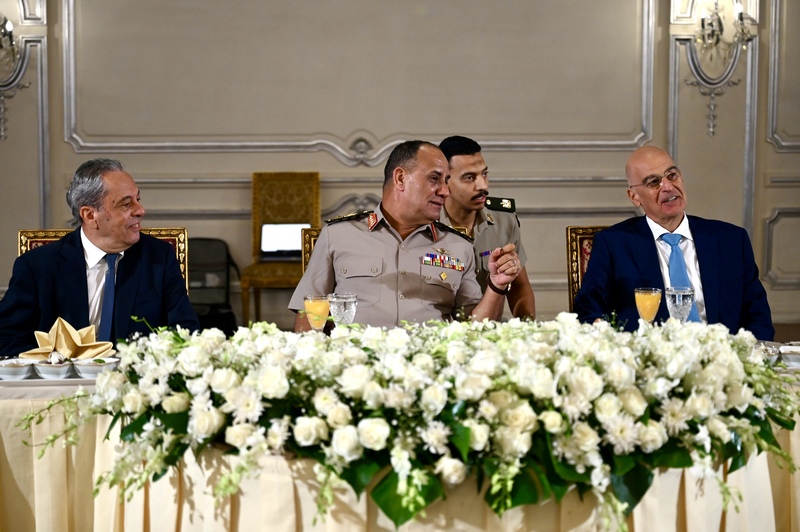
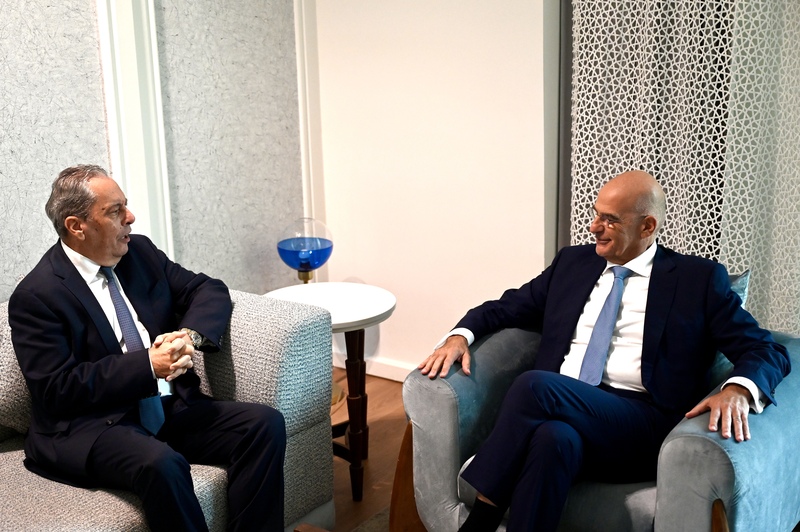
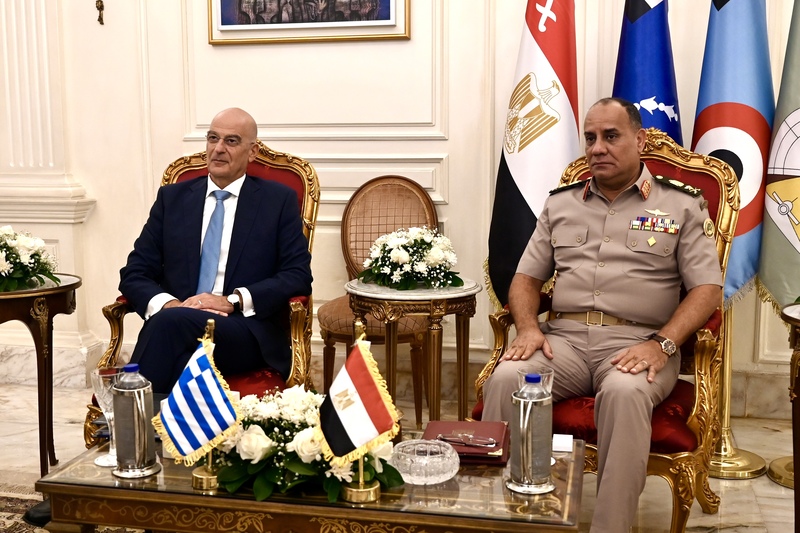
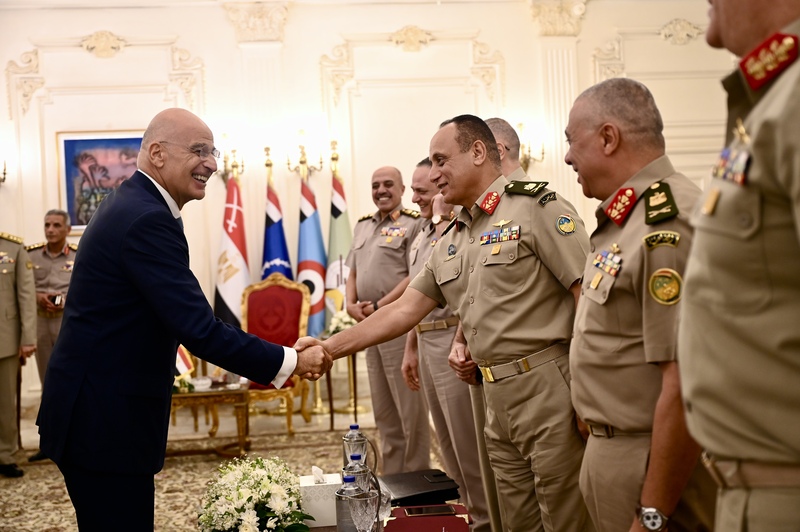
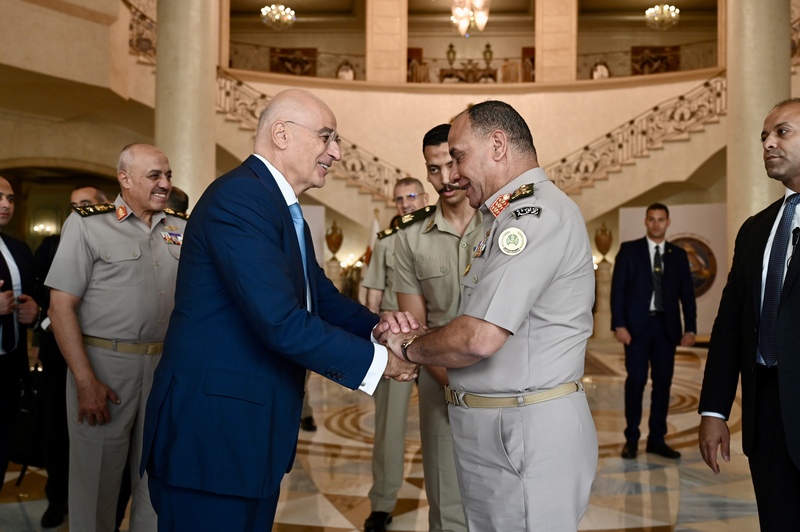
The trilateral meeting brought together Greek Defense Minister Nikos Dendias, Egypt’s Minister of Defense and Military Production General Ashraf Salem Zahr, and Cyprus’s Defense Minister Vasilis Palmas.
At the heart of the discussions was the further strengthening of military cooperation among the three nations’ armed forces, with emphasis on joint exercises, training activities, operational interoperability, emerging technologies, and defense innovation.
Particular significance attaches to the joint statement’s reference — according to the published text — to enhancing military and defense cooperation frameworks in order to support a collective capacity for “rapid and unified response” to future developments and threats.
This wording deepens the political and operational substance of the trilateral partnership. While it does not formally constitute a mutual defense clause, it reflects the clear will of Athens, Cairo, and Nicosia to increase their coordination in the event of new threats.
The Mecca agreement and Turkey’s moves
The trilateral meeting also carries notable geopolitical significance given its timing, as Ankara is simultaneously working to strengthen its participation in various security arrangements across the Middle East. Turkey has declared itself ready to provide military support to Saudi Arabia under the Mecca defense pact, which stipulates that an attack against one member is treated as an attack against all.
In this context, the deepening of cooperation between Greece, Egypt, and Cyprus serves as a stabilizing factor in an already established relationship in the Eastern Mediterranean — without the Greek side framing it as an anti-Turkish front.
“We Greeks do not condition our good relations with Egypt on our relations with any other state, nor do we view our relationship with Egypt as being directed against any other country,” Nikos Dendias noted.
“The remarkably clear and extensive joint communiqué speaks for itself”
Nikos Dendias appeared notably satisfied with the outcome of the meeting, pointing directly to the text signed by all three sides. “This is yet another step in deepening Greek-Egyptian-Cypriot relations,” he said, linking the defense ministers’ meeting to the recent trilateral summit at El Alamein.
When asked to assess the substance of the agreement, he chose a characteristically understated formulation: “The remarkably clear and extensive joint communiqué speaks for itself.”
The trilateral cooperation has already been built up over many years. The Greece–Egypt–Cyprus mechanism was launched in 2014, and at the recent El Alamein summit all three parties reaffirmed their commitment to its further development, anchored in the pillars of security, stability, and respect for international law.
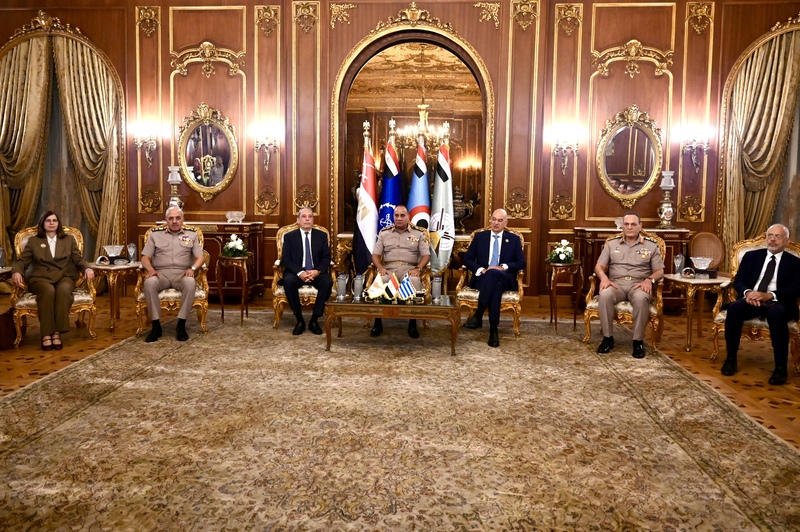
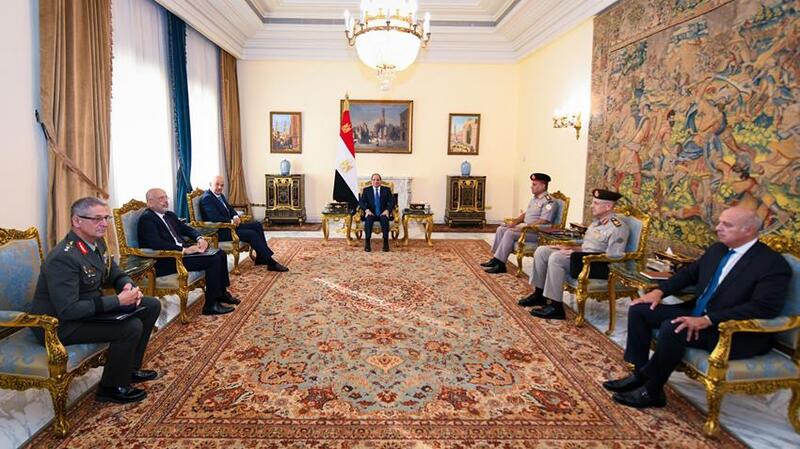
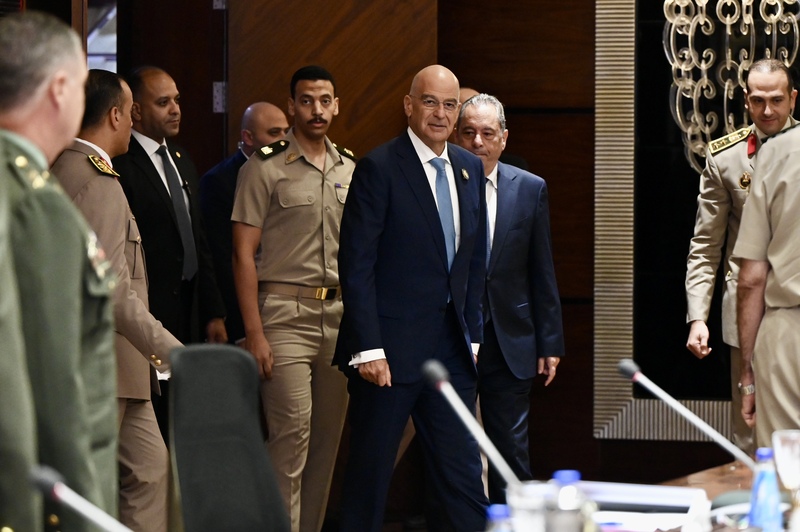
Dendias meets Egyptian President Abdel Fattah el-Sisi
Prior to the trilateral meeting, Nikos Dendias was received at the Al-Ittihadiya Presidential Palace by Egyptian President Abdel Fattah el-Sisi, to whom he conveyed the greetings of Prime Minister Kyriakos Mitsotakis.
The minister presented the Egyptian president with Greece’s perspective on developments in the Eastern Mediterranean, as well as on the reform of the Greek Armed Forces and the prospects for further deepening bilateral defense relations.
The discussion inevitably returned to the strategic foundation upon which Athens and Cairo have built their relationship: international law, and in particular the Law of the Sea.
In this context, Nikos Dendias recalled the Greece–Egypt agreement on the partial delimitation of their Exclusive Economic Zone — an agreement he had signed in 2020 as Foreign Minister with his Egyptian counterpart at the time, Sameh Shoukry.
This commitment was reaffirmed at El Alamein, where Greece, Egypt, and Cyprus underscored the importance of international law and the Law of the Sea, presenting their trilateral cooperation as a “pillar of security” rather than a framework directed against any other country.
“A very successful meeting, then — yet another step forward in Greek-Egyptian relations,” was Nikos Dendias’s closing assessment.