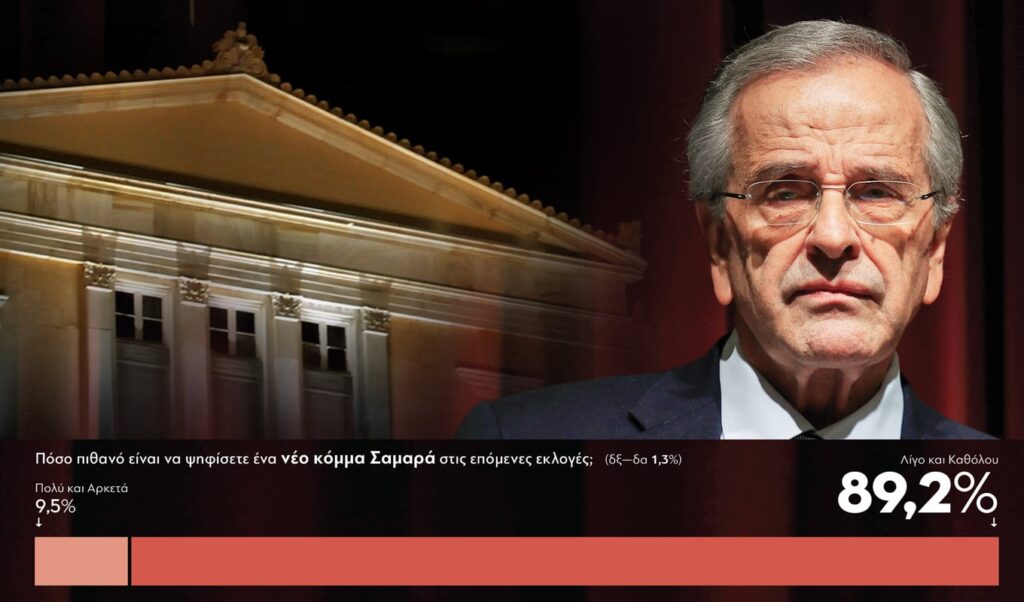
A large portion of the political debate has now shifted toward the prospect of a new party being founded by former Prime Minister Antonis Samaras, and the potential impact such a move could have both on New Democracy’s electoral performance and on the broader architecture of the post-election political landscape. Beyond measuring the potential vote share of such a venture, we sought to decode the political origins and implications that a Samaras party could generate — primarily within the New Democracy ecosystem.
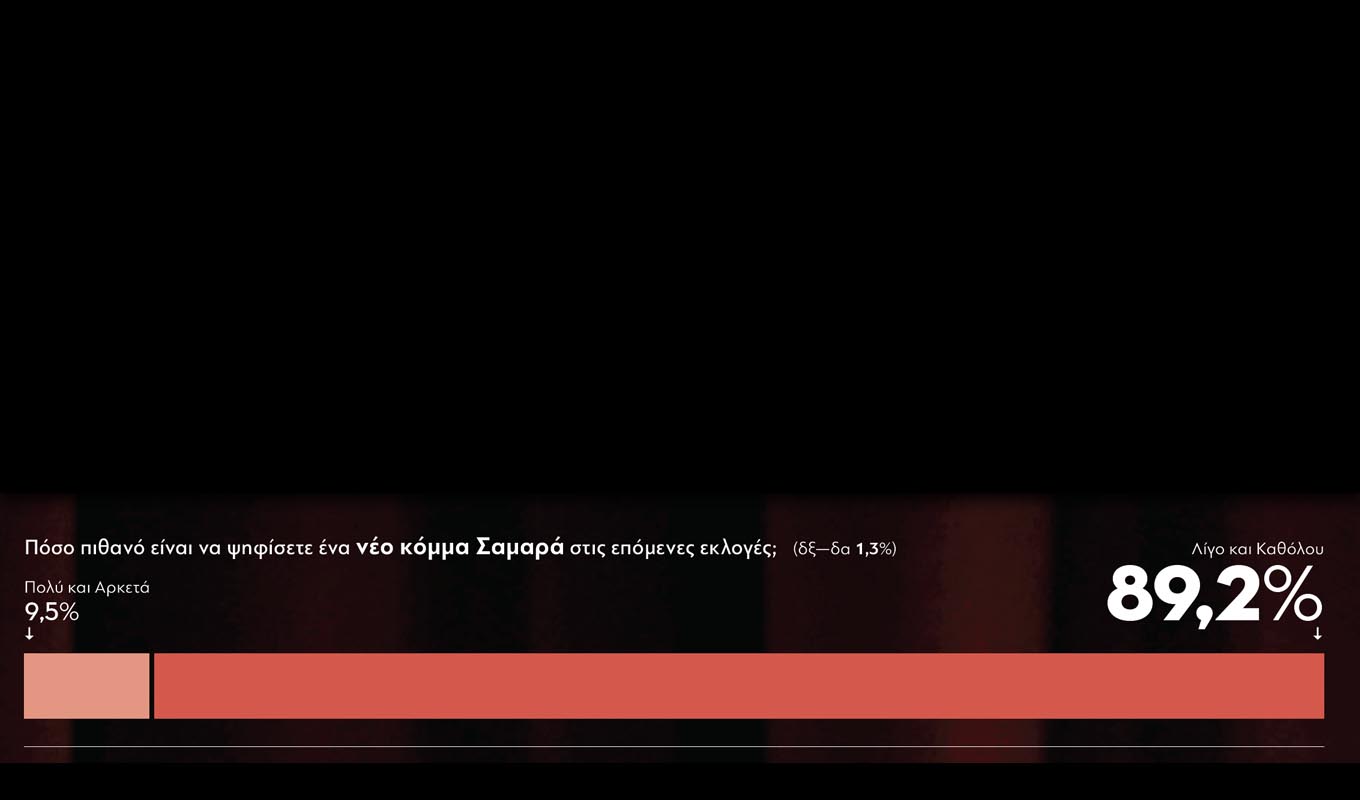
To begin with, when asked about their potential voting intention, 3.2% said they would certainly vote for the former Prime Minister’s new party, while 6.3% indicated they are seriously considering it. This creates an electoral pool of 9.5%, with the likely voter reservoirs identified mainly among supporters of Greek Solution, New Democracy, and PASOK. As we have noted in the past, we should be particularly cautious with this specific indicator — the case of M. Karystianou serves as the most telling example of the volatility and uncertainty that can accompany attempts to gauge support for parties that have not yet been officially announced.
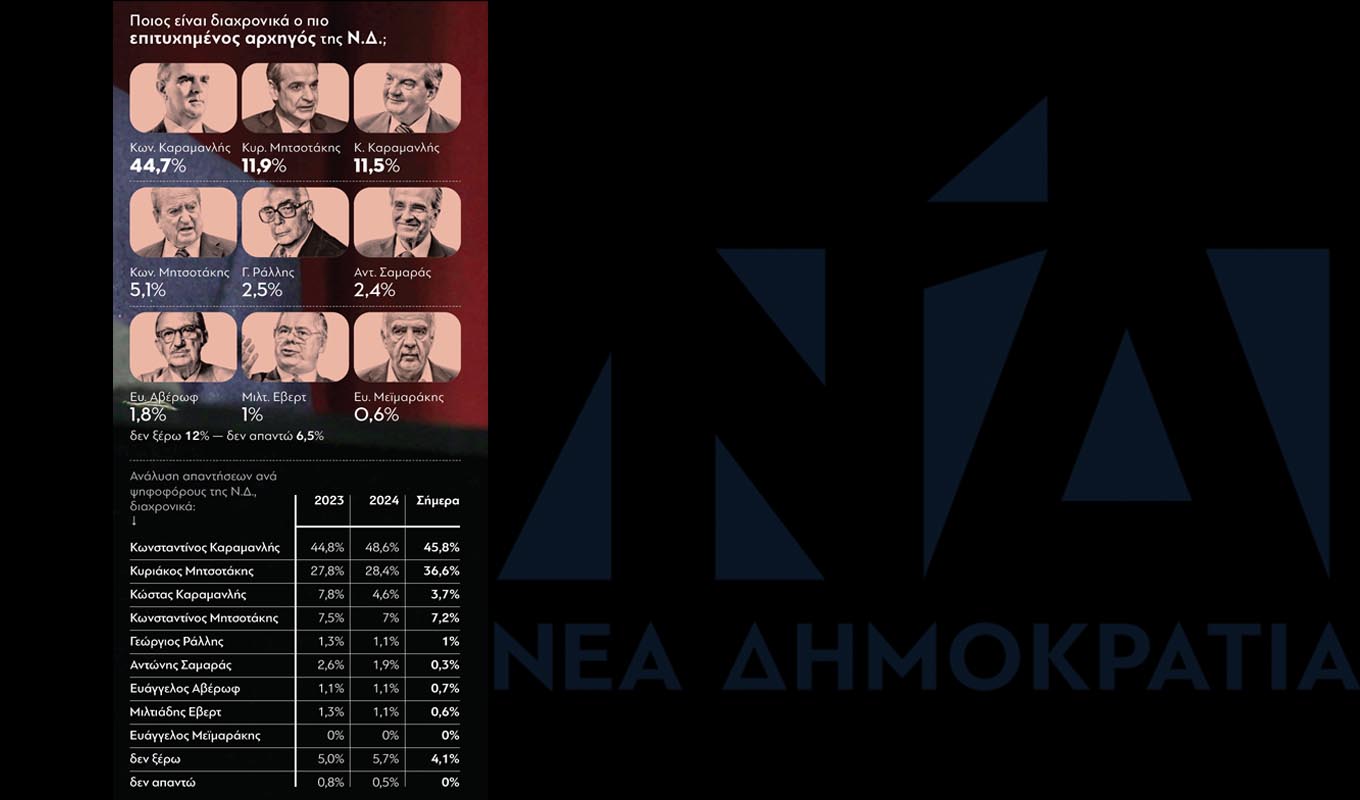
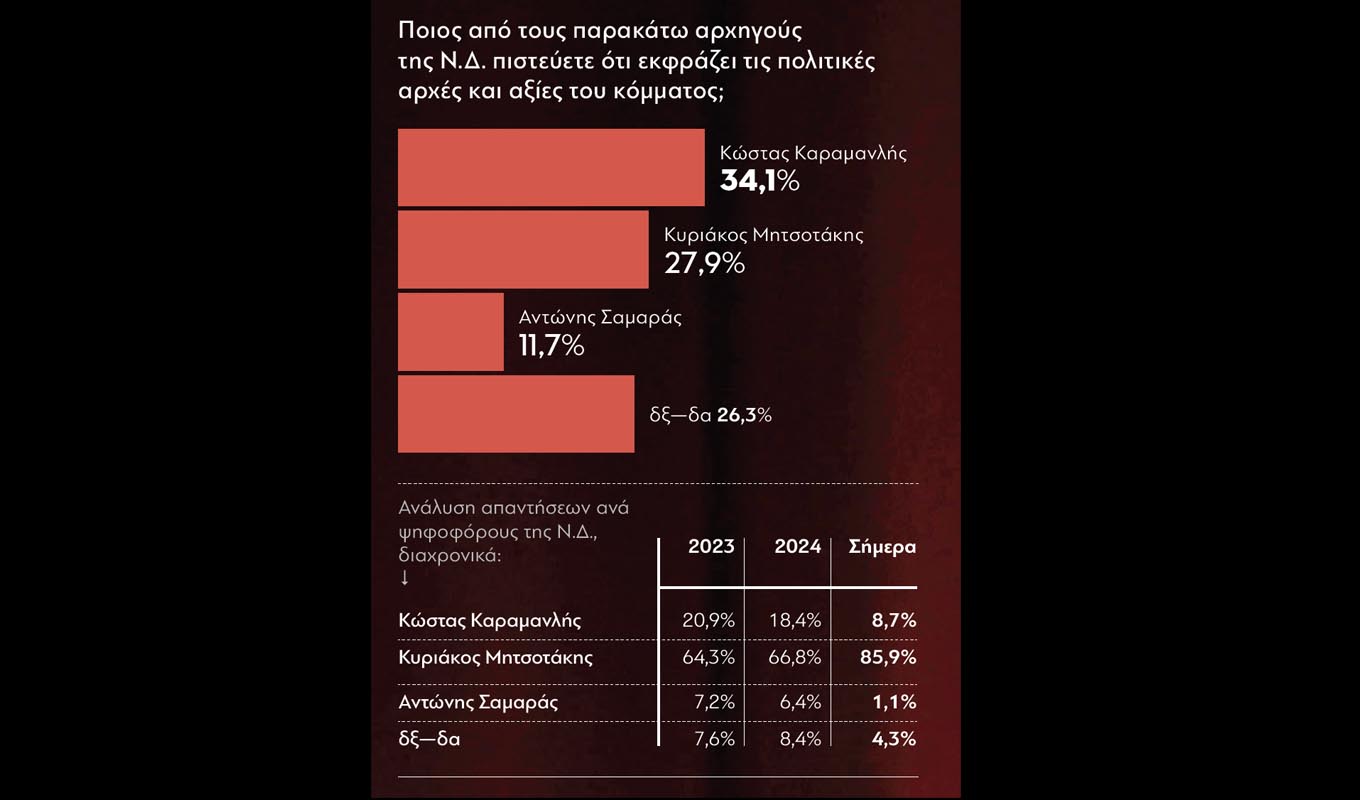
GPO poll: Results on the primary political representative of New Democracy’s principles and values
What we then attempted to do was map out the political and ideological environment within which potential shifts — primarily among New Democracy voters — are taking shape. An effort was made to capture perceptions regarding the role and influence of New Democracy’s party leaders as the principal representatives of the political currents that have historically defined the center-right party. The first question concerned the three most recent Prime Ministers from New Democracy, asking which of them best represents the party’s political principles and values today.
A key observation is that the results look very different when comparing the general population to the sub-groups of New Democracy voters examined — which were divided into three categories: voters from the 2023 national elections, voters from the 2024 European elections, and those who currently say they intend to vote for the party in the next election.
Among the general population, K. Karamanlis emerges as the primary political representative of the party’s principles and values, with 34.1%, followed by K. Mitsotakis at 27.9% and Ant. Samaras at 11.7%. The results are markedly different within New Democracy itself, where the current Prime Minister stands out as the party’s dominant figure, with approval ratings ranging from 64.3% among 2023 voters to as high as 85.9% among current intended voters. It is notable that the influence of the two former leaders is greater among voters from previous elections — a first indication of the political shift that has taken place within the ruling party in recent years, as well as of Mitsotakis’s political dominance, a result of successive electoral victories.
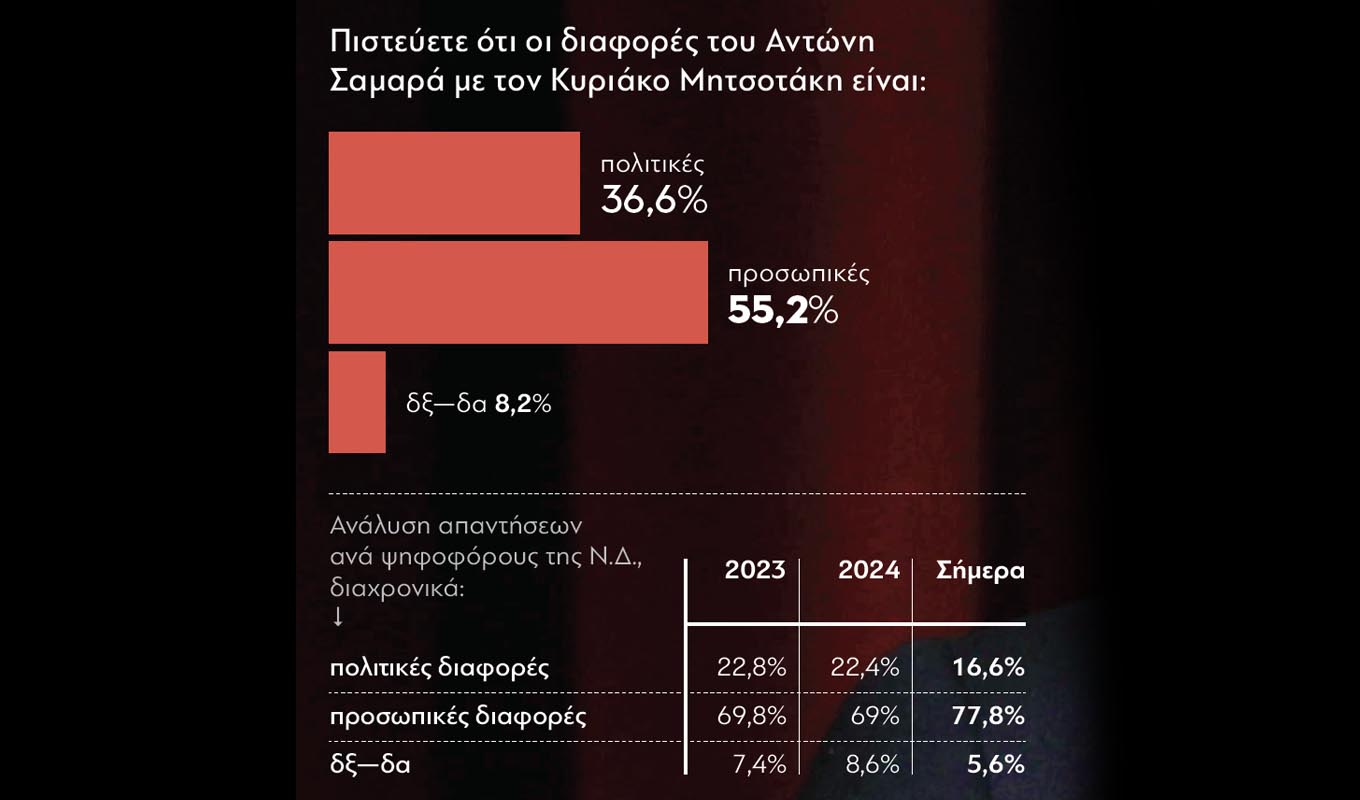
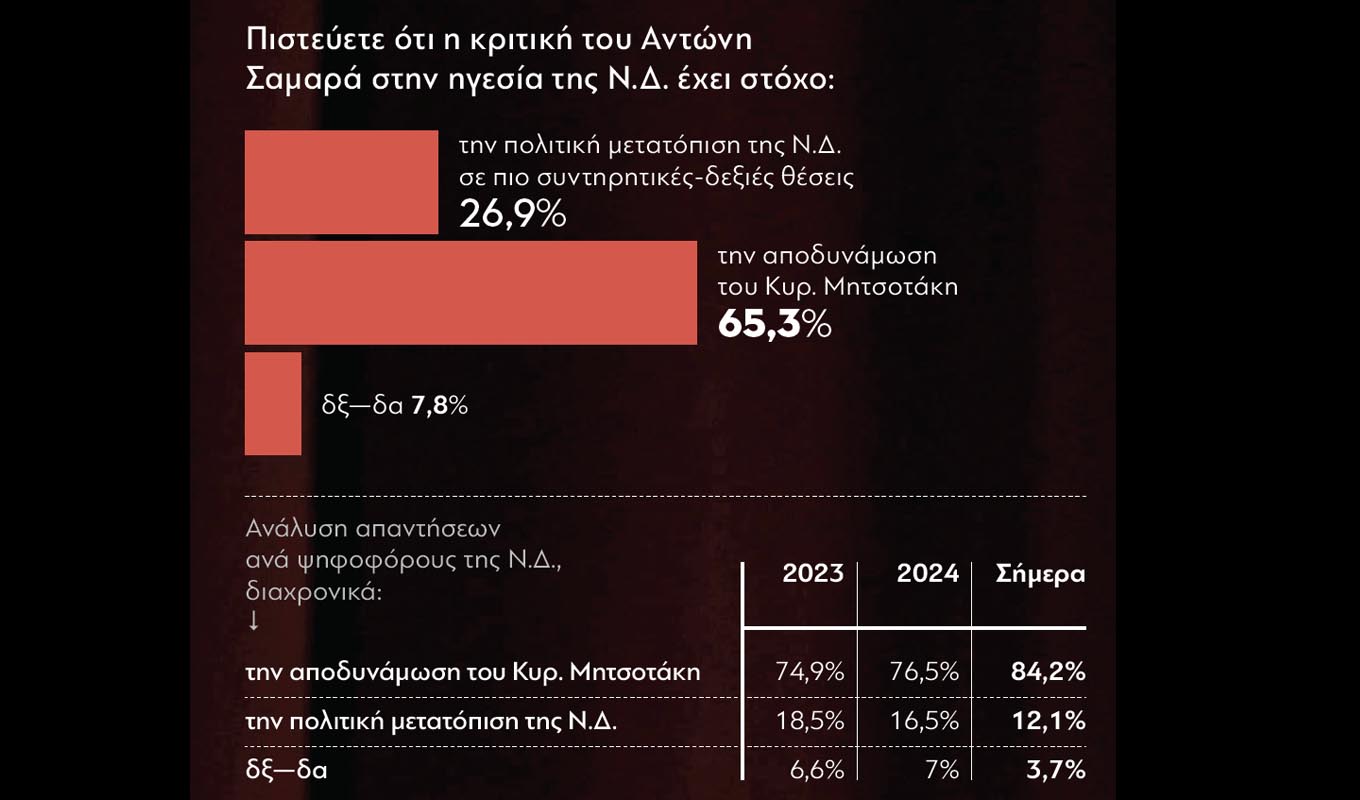
Regarding the differences between A. Samaras and K. Mitsotakis, both the general population (55.2%) and New Democracy voters view them as primarily personal rather than political in nature — aimed at weakening the current Prime Minister rather than at shifting the party toward more right-wing and traditional positions. Although the responses are clear-cut, the minority answers from those who believe Samaras’s ambitions and objections are political and ideological in character are also of considerable interest, as these responses reflect — to some degree — the share of people within the party who may also desire a rightward shift without necessarily being willing to follow the former Prime Minister in his new venture.
Finally, even the long-term evaluation of New Democracy’s leaders highlights — beyond the enduring recognition of the party’s founder, Konstantinos Karamanlis — the significant acknowledgment of Kyriakos Mitsotakis’s role in shaping the current political identity of New Democracy.
Poll methodology
RESEARCH FIRM: G.P.O. RESEARCH & COMMUNICATIONS S.A.
CLIENT: PARAPOLITIKA
PURPOSE: Research on political developments in Greece
FIELDWORK PERIOD: 14–16/09/26
SAMPLE: 1,000 individuals aged 17 and over. Conducted in its entirety.
SAMPLING METHOD: Stratified. The sample was distributed using the quota method, proportional to region, gender, age, and party preference.
DATA COLLECTION: Telephone and online interviews using CATI and CAWI systems with a structured questionnaire.
MARGIN OF ERROR: ± 2.95%.
We note that the findings presented here — and voting intention in particular — represent a snapshot of prevailing trends during the specific period in which the survey was conducted.