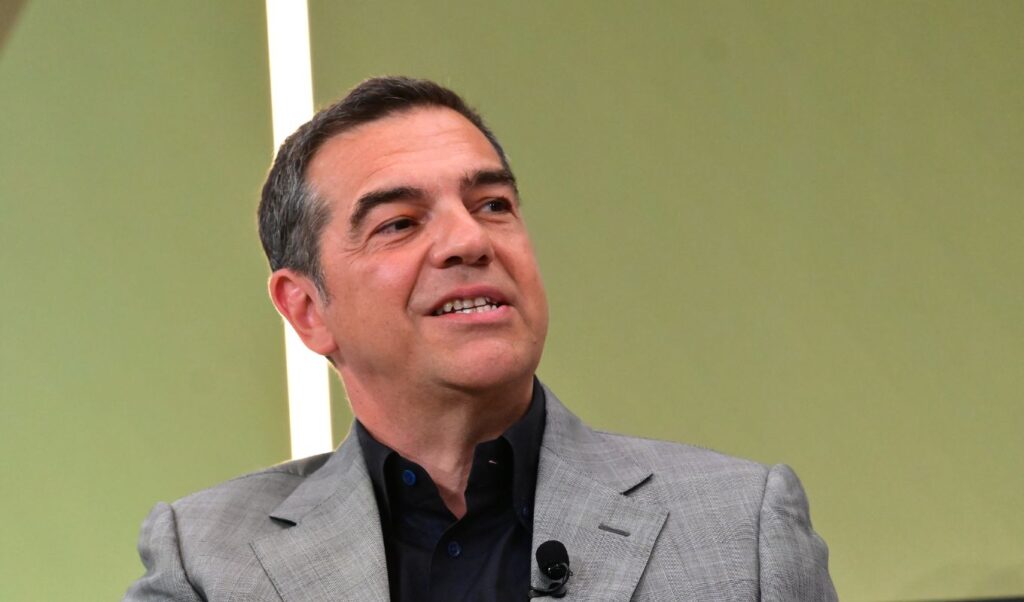
SYRIZA, New Left and MeRA25 are moving to redraw the political map of the Greek left, launching coordinated attacks against Alexis Tsipras and his newly formed party ELAS, accusing it of systemic adaptation, ideological drift and a rightward shift. The first major policy clash centers on private universities, triggered by statements from Ioanna Laliotu, who made clear that ELAS has no intention of abolishing non-state universities.
Laliotu, who serves as ELAS’s education policy spokesperson, cited legal certainty for students as her justification — a position that immediately sparked fierce backlash, as it marks a clear departure from the traditional stance of the Greek left on the issue. The objections voiced by SYRIZA suggest that, at least initially, the party’s “collective leadership” is acting in a coordinated fashion. Pavlos Polakis, the party’s head of political planning, was described as furious, though he stopped short of naming ELAS or Tsipras directly. In a Facebook post, Polakis dismissed the legal certainty argument and insisted that the only acceptable position is the preservation of Article 16 of the Constitution as it stands, along with the repeal of the Pierrakakis law and the closure of all private universities that have already opened. Rena Dourou, chair of SYRIZA’s parliamentary group, spoke through the party’s official statement, noting that “Alexis Tsipras’s party says it will vote against the revision of Article 16, while at the same time accepting the legal framework that circumvents it,” and adding that “the Pierrakakis law must be repealed and students enrolled in private universities must be absorbed into the public higher education system.” A few hours later, SYRIZA’s newly elected Central Committee Secretary, Nikos Pappas, escalated the confrontation, reminding viewers on Action24 that opposition to the revision of Article 16 and to the operation of private universities was a collectively adopted SYRIZA position. “Alexis Tsipras was at the party congress where we voted against private universities,” he noted, referring to what he described as “programmatic shifts” within ELAS.
New Left struck a similar tone, commenting that “invoking ‘the reality that has been created’ is a resounding declaration of surrender to the very idea of political change,” and highlighting what it called a striking contradiction: “ELAS is doing something paradoxical — choosing to maintain in practice what it claims not to accept institutionally.” MeRA25 also announced its opposition to ELAS’s stance, arguing that “Ioanna Laliotu effectively acknowledged that private universities are a ‘fait accompli'” and that “statements claiming ‘ELAS would not have founded private universities’ amount to tacit acceptance of the privatization of higher education.” Seasoned political analysts observe that the dispute over Article 16 marks the first battleground in what is shaping up to be a broader political conflict among Greece’s left-wing parties. They predict it will soon expand into other policy areas, as all these parties are competing for the same electorate and must draw clear distinctions between their political choices in order to carve out a recognizable identity of their own.