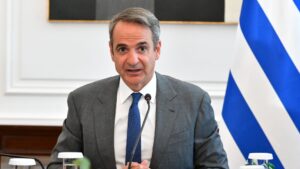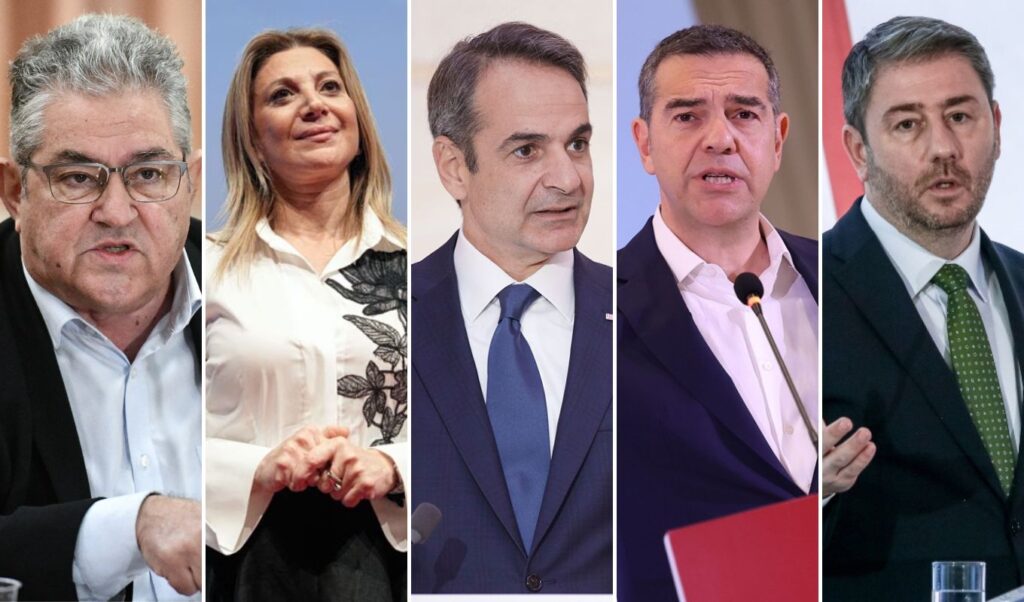
If anyone still doubts that Greece is in full pre-election mode — regardless of when the elections will actually take place — they need only look at the electoral dilemmas being openly posed by party leaders. It is a complex undertaking: the government is banking on a third consecutive majority term — a scenario that has become considerably harder to achieve — while opposition parties jostle for the best possible result at the ballot box, with any scenario of political convergence firmly off the table. For New Democracy, the dilemma was framed during a meeting of the party’s Central Committee, against the backdrop of the need for stability: “Will Greece remain safe, strong and stable on a path of progress, or will it risk its achievements and become a rudderless ship in uncharted international waters?” Kyriakos Mitsotakis is investing in political stability and the security he can offer citizens, particularly in an environment of violent geopolitical shifts — especially now that he faces what he himself described as “an erratic opposition.” At the same time, the narrative of stability and a roadmap for change through to 2030 is accompanied by the demand for an outright majority for a third consecutive term.
The battle of narratives
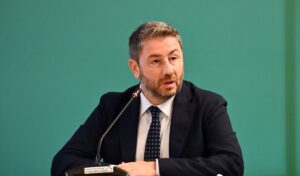
Nikos Androulakis is building his party’s dilemma around the goal of political change. “The real dilemma of the next election is not simply a rotation of individuals and parties in power. It is whether the country will develop a different culture of governance — whether it will move from managing decline to a new era of progress, meritocracy and respect for institutions,” he said at the SEV (Hellenic Federation of Enterprises) assembly. However, he also posed an opposition-facing dilemma, as the front against New Democracy now includes an open confrontation with the new party of Alexis Tsipras. He articulated this during a visit to the island of Karpathos: “To the dilemma of ‘either Kyriakos or what you lived through in 2015–19,’ our answer is: Forward with PASOK, with responsibility, a plan and seriousness.”
Just days after announcing the founding of his new party, ELAS (Greek Left), Alexis Tsipras attempted to articulate a dilemma that would dismantle the ruling party’s core slogan. “The dilemma of the elections is not stability or chaos, but stagnation or progress” (12/6/2026). That same month, he offered another version of the dilemma, grounded in the logic of political ethics, asking: “Corruption or integrity?“
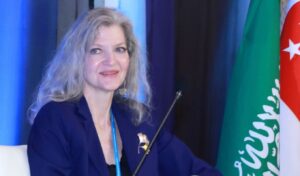
The leader of another newly founded party, Maria Karystianou, following the first wave of departures from her party’s ranks, went on the offensive with a post emphasizing that “the country needs catharsis, the country needs hope.” What came as a surprise, however, was the borrowing of a well-known old slogan — one dating back to the era when Alexis Tsipras led SYRIZA and was riding a wave of momentum toward power. “The struggle is one: either us or them. And this is truly our last chance,” she wrote in her post.
Also opposing what he calls the “stability of the system” is the General Secretary of the Communist Party of Greece (KKE), Dimitris Koutsoumbas, who in an interview (28/6/2026) made clear that “the dilemma in the elections is not whether the political forces defending the stability of the system of exploitation and war will be strengthened, so that capital wins, but whether the force fighting to overturn it will be strengthened, so that the people win — and that force is only the KKE.”
Do these dilemmas align with the social and economic reality of the country, with the real needs of citizens, with the demand for renewal and positive surprises in political life? Everyone is free to make their own assessment. What is certain, however, is that in a pre-election period marked by high tension and confrontation, every party leader seeks to articulate their own distinct set of dilemmas.
Polarization without limits
Despite their visible differences, the interventions of all party leaders converge on a common goal: shaping the political agenda and rallying their respective voter bases — bases that are, in any case, operating at low levels of engagement. Kyriakos Mitsotakis frames the dilemma as “stability or ungovernable chaos,” seeking to highlight the risks of political instability. Nikos Androulakis, for his part, champions the need for “political change,” even on the basis of a narrow PASOK lead. Alexis Tsipras highlights the binary of “corruption or integrity,” focusing on issues of governance and institutions. Meanwhile, other voices adopt a more confrontational rhetoric, with slogans of the “us or them” variety.
Behind the diversity of slogans, a common strategy emerges: polarization and the simplification of political choice into a clear-cut “yes or no.” The elections, in this framing, are presented not merely as a process for forming a government, but as a defining clash of narratives about the country’s future. Parallel lives — if not opposing ones — even in the way dilemmas are posed.
Originally published in Karfi