At the heart of the government’s economic policy agenda for the next two months, leading up to September, lie three core priorities. These are critical objectives targeting the fight against rising prices, income support, and the completion of the Recovery and Resilience Facility — a process considered pivotal to the country’s development trajectory.
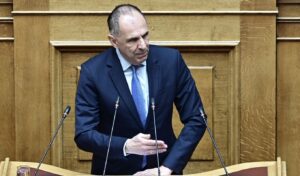
Based on these priorities, government initiatives on the economic front are already being planned — a fact confirmed by two key interventions made this week. The first is the agreement between the government and market players to reduce prices on essential goods starting in September, announced by Development Minister Takis Theodorikakos. The second is the abolition of widow’s pension cuts that were stipulated under the third memorandum, announced by Labour Minister Niki Kerameos.
The price agreement
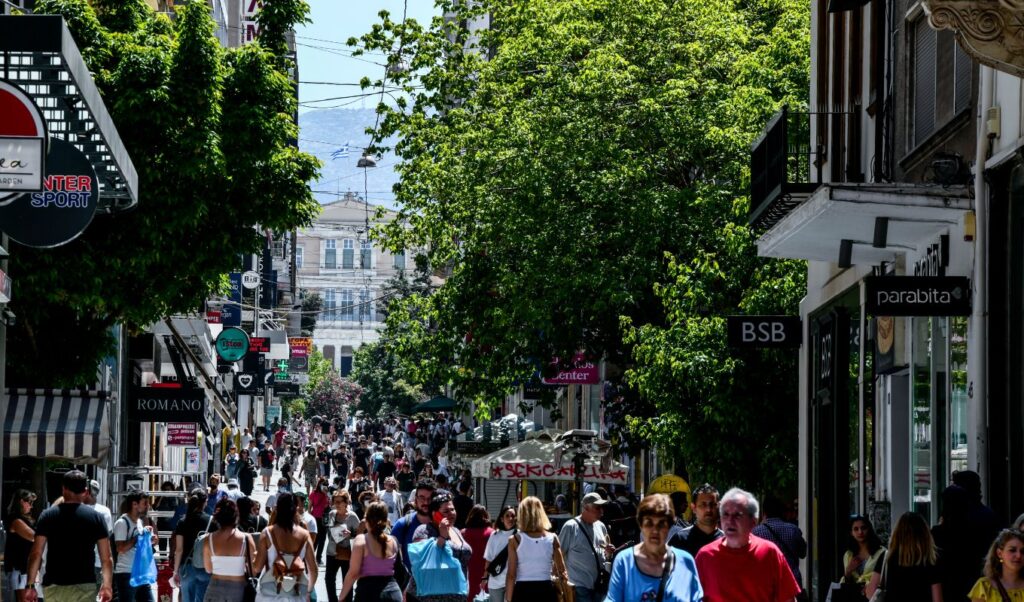
On the inflation front, the economic team’s primary objective is to ensure the full implementation of the first phase of the agreement with market stakeholders to maintain shelf prices. This is a prerequisite for advancing the second phase of the deal, which focuses on reducing prices across key product categories in supermarkets from September onwards. International developments are also pointing in the right direction, following the US-Iran ceasefire agreement and the de-escalation of tensions in the Persian Gulf.
These new conditions have contributed to a significant drop in global oil prices, which have fallen to around $70 per barrel — a shift that is already beginning to ease inflationary pressures in the market. Notably, according to preliminary Eurostat data, inflation in Greece fell by one percentage point in July, dropping to 3.9% from 4.9% in May. This is a substantial decline, indicating that the market has started responding to the new conditions created by the easing of shipping restrictions through the Strait of Hormuz.
The Thessaloniki International Fair package
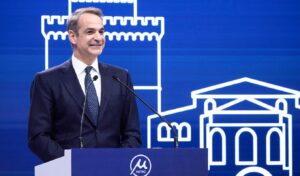
Minister of National Economy and Finance Kyriakos Pierrakakis has already announced that the government has €1 billion in fiscal space available for tax relief measures and financial support packages to be unveiled by Prime Minister Kyriakos Mitsotakis from the podium of the Thessaloniki International Fair (TIF) in September. This amount — which may be slightly higher once finalised — is expected to be directed toward new tax cuts for employees, self-employed professionals, and businesses, as well as financial support for low-income pensioners and other vulnerable groups, including recipients of the minimum guaranteed income. Final decisions are expected to be made by the Prime Minister in the second half of August, based on proposals submitted by the economic team.
Recovery and Resilience Facility
The area facing the greatest pressure at this moment is the Recovery and Resilience Facility. All targets and milestones must be completed by the end of August. Deputy Minister of National Economy and Finance Nikos Papathanasis reiterated this week, in response to a statement from PASOK, that not a single euro from the Recovery Fund will be lost. According to figures he made public, 68% of the total Recovery Fund — amounting to €24.6 billion — has been channelled into the economy in less than five years. This sum corresponds to 10.9% of GDP (as of 2023), placing Greece in first place among EU member states in terms of the significance of disbursements relative to economic output. He further clarified that the Greek plan is back-loaded by design, which explains the natural pace of project implementation, given that expenditures will continue through 2027, with the final disbursement scheduled for December 2026.