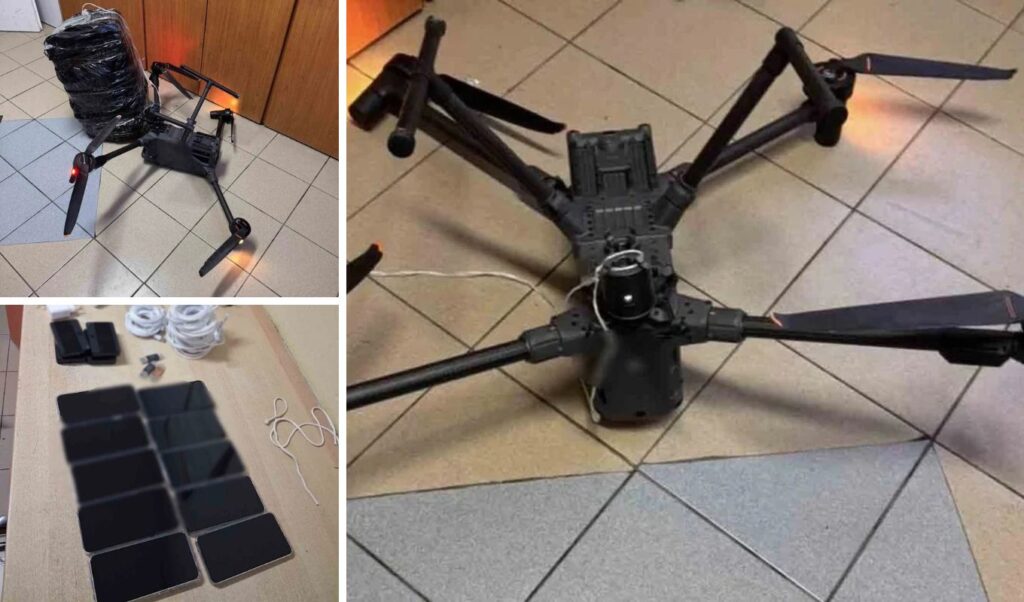
The incident that served as a catalyst involved a drone that attempted to drop a package inside Larissa Prison on Thursday, August 20, only to be detected and neutralized by the facility’s anti-drone system. According to sources from the Ministry of National Defence, which collaborated with the Ministry of Citizen Protection, the General Secretariat for Anti-Crime Policy is now significantly upgrading its defenses against unmanned aerial vehicle threats. As part of this upgrade, 25 “Teucros II” systems will be added to the existing fleet of “Teucros” units already in operation across Greek correctional facilities. The systems will be provided by the Hellenic National Defence General Staff (HNDGS)/KETAK, with the goal of further strengthening the security of Greek prisons.
“Demonstrating the potential of cutting-edge technology”
The Ministry of National Defence stated that the Larissa incident presents an opportunity for further fortification of Greek correctional facilities. “The successful operational use of these systems highlights the potential of technologies developed by the HNDGS/KETAK to address modern security challenges, as well as the contribution of the Armed Forces — through their expertise and innovative capabilities — in supporting agencies within the broader state apparatus,” ministry sources commented.
Timeline of the Larissa prison incident
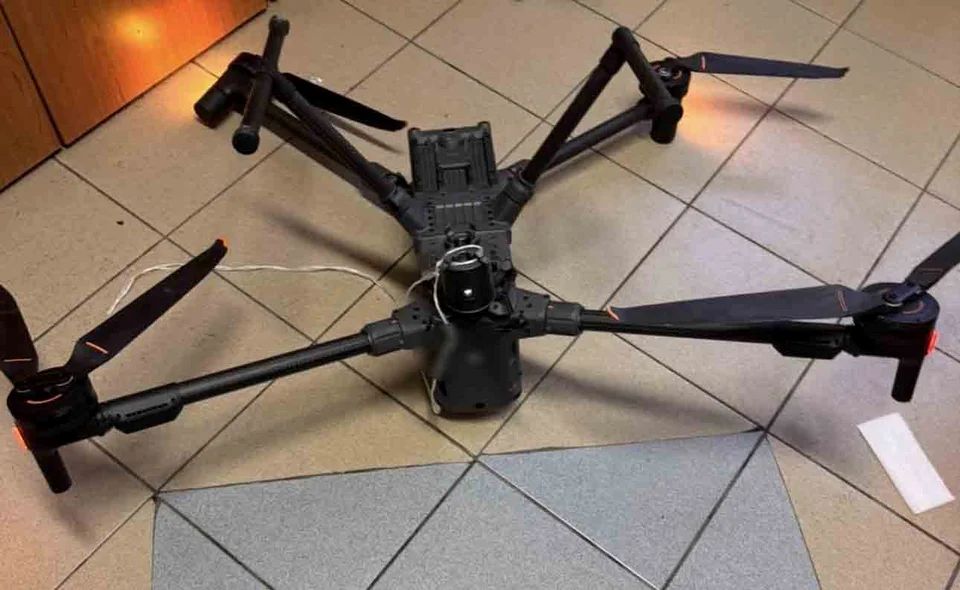
On the afternoon of Thursday, August 20, external prison guards and correctional officers thwarted an attempt to smuggle mobile phones and other electronic equipment into Larissa Prison using a drone. The unmanned aircraft was approaching the prison yard carrying a package when it was detected and brought down by the facility’s anti-drone system.
External guards spotted the drone as it neared the prison perimeter. The dedicated counter-drone system was immediately activated, causing the aircraft to crash inside one of the wing’s courtyards.
Correctional officers then recovered both the drone and the package it was carrying.


Larissa: What was inside the package
When officers opened the package, they discovered a large number of electronic devices and components intended to be smuggled inside the prison. The following items were seized:
12 mobile phones
21 SIM cards
4 wireless routers
3 USB sticks
18 charging cables
10 wired earphones
12 adapters
2 Bluetooth wireless earphones and two sets of spare parts.
The investigation to determine who sent the drone and which inmates the cargo was destined for has been taken over by the Larissa Criminal Investigation Sub-Directorate.
This is not the first time
Similar attempts have been recorded in the past at correctional facilities across Greece, as drones have increasingly become a method of choice for smuggling contraband into prisons.
In the Larissa case, the anti-drone system proved decisive, successfully detecting and neutralizing the unmanned aircraft before the package could reach any inmates.
This particular system was developed by the Research, Technological Development and Innovation Centre of the Hellenic National Defence General Staff.