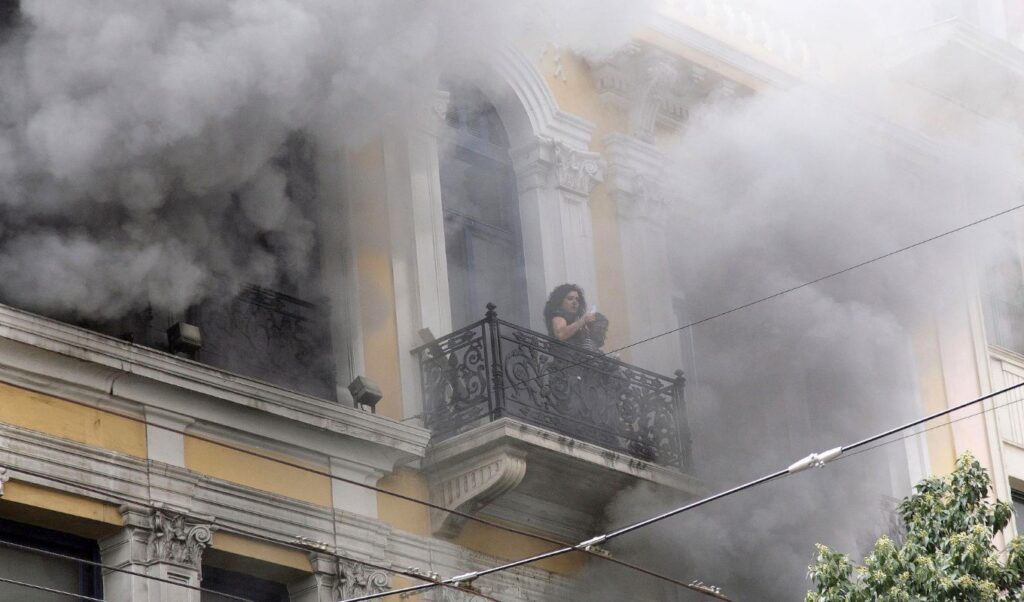
The perpetrator who threw the Molotov cocktail into the Marfin bank, triggering the deadly fire of May 5, 2010, is now firmly in the crosshairs of authorities. This individual was standing right next to the 42-year-old man arrested — a scion of a well-known family — at the moment the bank’s glass facade was smashed with a sledgehammer. The still-unidentified suspect is the one who then hurled the Molotov cocktail inside the building. According to a Star report, homicide detectives say they are one step away from making an arrest, with investigations now laser-focused on this individual.
Marfin case: One step away from arresting the man who threw the Molotov cocktail into the bank
As the Star report revealed, investigators already have detailed physical descriptions and body type characteristics of the suspect. However, a positive identification has not yet been possible, as the individual’s face is not clearly visible in available footage. This critical detail sits at the heart of the homicide unit’s ongoing investigation, as this is the man directly responsible for starting the deadly blaze at the Marfin bank, aided and abetted by the other members of the group.
As part of the investigation, officers are carrying out house searches, combing through computers and mobile phones in the belief that a digital footprint is hidden somewhere — the missing piece that could sharpen the blurred image of the suspect’s face and ultimately lead to his arrest, according to Star.
Marfin case: The nine witnesses who sealed the arrests
Furthermore, as Star revealed, investigators have built an airtight case backed by irrefutable witness testimony. There are at least nine eyewitness statements that have been corroborated by forensic laboratory findings.
Among the testimonies, some witnesses report hearing a woman’s voice shouting: “Burn them, burn them,” according to the same source. Additionally, Star sources report that the Forensic Investigations Division has described the evidence against at least two of the individuals as “unbreakable” — meaning the case against them is extremely difficult to challenge.