The investigation into the murder of Stavroula Leventaki in Chania has confirmed the extreme level of violence inflicted upon the victim, with forensic examination revealing that the woman did not die immediately after the initial attack. Forensic pathologist Grigoris Leon, speaking about the case on the show Truths with Zina, stressed that the blows were deliberately targeted at the chest area with lethal intent: “He wanted to make sure she wouldn’t survive.”
Stavroula Leventaki case: What the forensic examination revealed
A severe skull fracture caused by a blunt object was discovered on the 45-year-old’s cranium, resulting in serious traumatic brain injury. In addition, the body bore two stab wounds to the chest. As forensic pathologist Grigoris Leon stated: “He wanted to make sure she wouldn’t survive.” The body was also found bound with cable ties and wrapped in insulating tape. Leon emphasized that some of these actions were most likely carried out while the victim was still alive.
The restraints, however, are believed to have been applied after death to facilitate the transportation of the body. According to forensic pathologist Stamatis Belivаnis, the perpetrator had placed the body inside four black garbage bags.
Contradictions and the Bluestar method
According to reporter Spyros Darsinos, the first major breakthrough in the case came when the 43-year-old suspect — who was proven to have met Stavroula on the day of her disappearance — began to contradict himself. His claims failed to align with the evidence investigators were gathering, placing him firmly at the center of the inquiry.
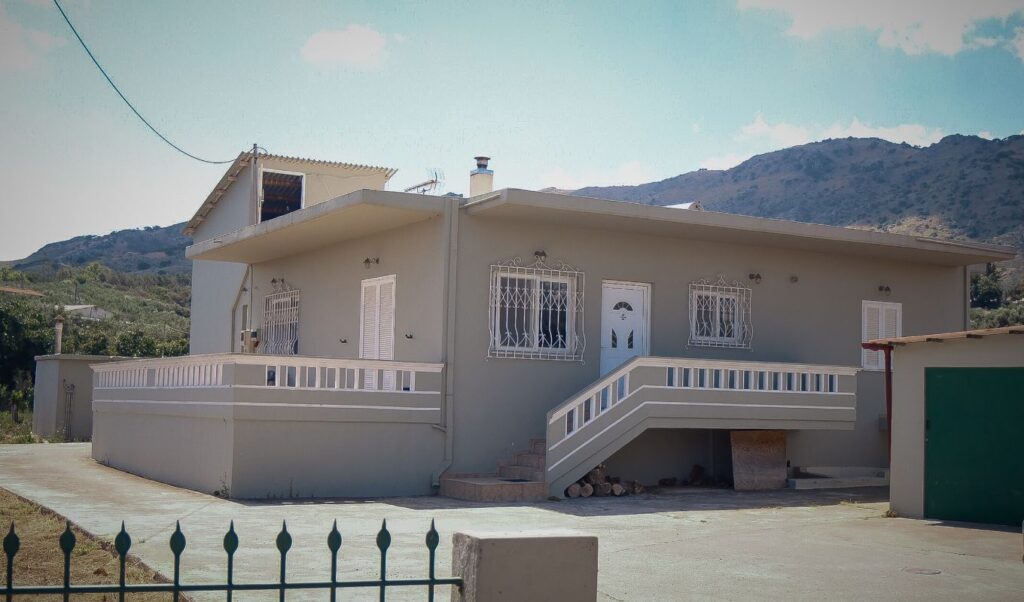
The forensic search of his home in Varypetrо, Chania, and of his vehicle proved to be decisive. Using specialized lighting equipment and the Bluestar luminescence method, officers detected blood stains at multiple locations. Laboratory analysis confirmed with an exceptionally high degree of certainty that the genetic material belonged to the 45-year-old victim.
The combined use of DNA findings, telecommunications data, witness testimony and surveillance camera footage built a comprehensive and airtight body of evidence from which the 43-year-old could not escape. Faced with the weight of the evidence against him, he confessed to the murder and directed police to the location where he had buried the woman’s body — in a field in Vatolakkos, Chania.