A new “defense” plan against the cost-of-living crisis is being drafted by Greece’s economic team, backed by a €300 million reserve. The package includes fuel cards (fuel pass), subsidies at the pump and on electricity bills, as well as income support for purchasing basic goods through a market pass. The plan comes as oil prices race toward $120 per barrel, intensifying fears that the energy crisis could spiral out of control. Against this challenging backdrop, the ferry sector is also among the areas targeted for intervention — with the aim of preventing the rising cost of diesel from being passed on to ticket prices. Authorities are even considering encouraging remote work wherever feasible, in order to reduce employee commuting and, by extension, fuel consumption.
Read also: Rent relief: Who risks missing out on November payments
The cost-of-living crisis and the pressure on Brussels
At the same time, the Greek government continues to press Brussels for greater fiscal flexibility, with senior officials describing the coming weeks as particularly critical. Key dates on the calendar include the Energy Ministers’ Council on October 29, the Eurogroup on November 9, an informal leaders’ summit in Dublin on November 13, and an extraordinary EU Summit on November 26–27. While the latter has been convened primarily to discuss the EU’s multiannual budget, Athens will attempt to bring the issue of fiscal flexibility back to the table.
According to the same sources, Greece will actively participate in European consultations, pushing for greater room to implement support measures — but has no intention of waiting indefinitely for a joint decision if conditions deteriorate. A needs assessment for limiting the impact on households and businesses is already being conducted on a fortnightly basis, as concerns grow over successive waves of price increases spreading from the energy crisis into transport, production, and the cost of basic goods, squeezing consumers’ disposable income.
Energy escape clause
Meanwhile, social unrest across European countries signals that public tolerance for rising prices is wearing thin, mounting pressure on governments to act. Central to Greece’s planning is a €1 billion energy escape clause. Athens is seeking Brussels’ approval to redirect €300–400 million of that total toward targeted support measures for vulnerable households, rather than channeling the funds exclusively into energy infrastructure investments. This is no easy task: the European Commission has expressed reservations about such a move, and Greece is actively seeking allies to advance its case.
While the European picture remains unclear, the government has already activated an initial package of measures aimed at containing the burden on fuel and heating costs. Of the original €400 million reserve set aside to address the energy crisis, €302 million remains — and it is this amount that underpins planning for the next phase of support.
The possible “tools”
Among the options being considered as potential support instruments are the following:
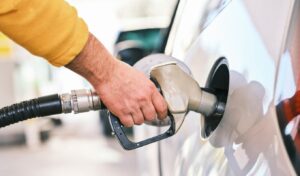
- Fuel pass with support of up to €60 for fuel costs: The reintroduction of the fuel pass is one of the options being explored to provide relief for drivers, should petrol and diesel prices remain elevated. The model under consideration would provide support ranging from €25 to €60, depending on the vehicle category and place of residence, with the aim of covering part of the additional expense of daily commuting. The final fiscal cost will be determined by the level of support, income criteria, number of eligible recipients, and duration of the scheme.
- Market pass for food and essential goods: Also on the table is the reintroduction of a support measure designed to act as a buffer against supermarket price hikes. The scenario envisages amounts of €100 to €200 for households meeting specific income and asset criteria, targeting primarily low-income families for whom food and basic necessities consume a large share of their monthly budget. Such an intervention could offer temporary relief in the face of rising prices.
- Subsidy of up to 60% of additional electricity bill charges: Another option involves covering part of the increases in electricity bills, should wholesale price rises be passed on to consumers. Under the main scenario, the subsidy could reach up to 60% of the additional burden for a defined period. A key factor will be the methodology for calculating the increase, ensuring the subsidy covers only the additional charge rather than the entire bill. The measure would apply to specific income brackets.
- Remote work: Among the measures under consideration is the promotion of remote working wherever the nature of the job allows. Reducing daily commutes can lower fuel consumption for both employees and businesses, serving as a complementary measure to financial support. However, its implementation cannot be universal, as it depends on the needs of each sector and the feasibility of working from home.
- Ferry sector intervention: The ferry industry is also in the spotlight, with a focus on addressing the rising cost of diesel used by vessels. Authorities are exploring ways to absorb part of the burden so it is not passed on to passengers — and in particular to island residents — through higher ticket prices.
Published in Parapolitika