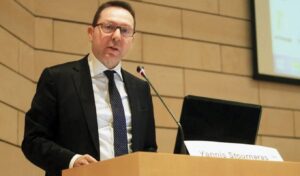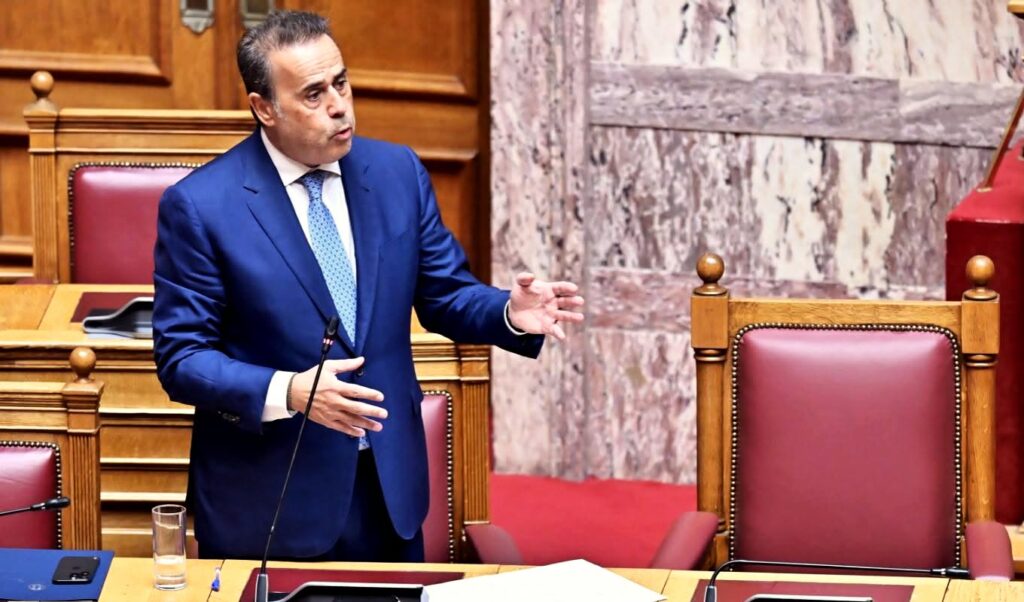
Greek Environment and Energy Minister Stavros Papastávrou highlighted the commitment of participating countries at the 2nd Quadrilateral Ministerial Meeting on Energy and Interconnectivity in Southeast Europe to expand the Vertical Gas Corridor with the inclusion of Serbia and North Macedonia. The meeting, concluded today (6/10) in Belgrade, brought together Greece, Serbia, Bulgaria, and North Macedonia, with discussions centered, as Minister Papastávrou noted, on the development of the Vertical Natural Gas Corridor.
Read also: Vertical Corridor: The quadrilateral conference unlocking the major project — The dual message from Athens and Belgrade
Vertical Corridor: Strengthening its role as a reliable energy gateway to Southeast and Central Europe and the Western Balkans
The ministers reaffirmed their commitment to strengthening the Vertical Corridor’s role as a reliable energy gateway to Southeast and Central Europe and the Western Balkans, as well as the imminent launch of construction on the natural gas interconnection between the two countries. Attendees included Greek Minister of Environment and Energy Stavros Papastávrou, Serbian Energy Minister Dubravka Handanović, North Macedonia’s Minister of Energy, Mining and Mineral Resources Sanja Božinovska, and Bulgarian Energy Minister Iva Petrova, along with the heads of the Natural Gas and Electricity Transmission System Operators from all four countries.
The ministers also discussed the potential development of the southeastern hub of the national petroleum products pipeline system. As stated in the joint communiqué: “The ministers discussed the potential development of the southeastern hub of the national petroleum products pipeline system along the Thessaloniki–Skopje–Niš route, which could further connect Serbia, via North Macedonia, to the energy infrastructure and the port of Thessaloniki.” It is worth noting that, since the beginning of the year, the Thessaloniki–Skopje pipeline — in which HELLENiQ Energy is the major shareholder — has resumed operations, transporting diesel fuel to OKTA’s facilities in North Macedonia, also owned by HELLENiQ.
Energy security
The first Quadrilateral Meeting had previously taken place in Athens last May, at Greece’s initiative, affirming the four countries’ commitment to strengthening regional energy coordination. Central to the discussions were the enhancement of energy security, the diversification of supply sources and routes, the development of energy interconnections, and the further integration of electricity and natural gas markets.
The ministers also discussed strengthening electricity interconnections and transmission networks, the development of renewable energy, storage, and pumped hydro projects, as well as the further integration of Energy Community member states’ electricity markets with the European Union’s single market.
At the conclusion of the meeting, all four countries underscored Greece’s pivotal role as an energy gateway and transmission corridor to Southeast and Central Europe and the Western Balkans.
Papastávrou: “The next meeting will take place in Sofia”
Following the meeting, Minister Papastávrou stated: “Since our last meeting in Athens in May, significant progress has been made. On September 4th, in Thessaloniki, 11 Transmission System Operators from 9 countries in Southern and Central Europe agreed to expand the Vertical Corridor to include Serbia and North Macedonia.
This development takes on particular significance in light of the European Union’s decision to end its dependence on Russian natural gas, as Central Europe is expected to face the need to replace approximately 20 billion cubic meters of natural gas.”
“Today, all ministers reaffirmed our strong commitment to expanding the Vertical Corridor with the inclusion of Serbia and North Macedonia. Its expansion reinforces our country’s strategic role,” Papastávrou added, concluding: “The next meeting will take place in Sofia, where we will have the opportunity to assess progress on all these issues.”