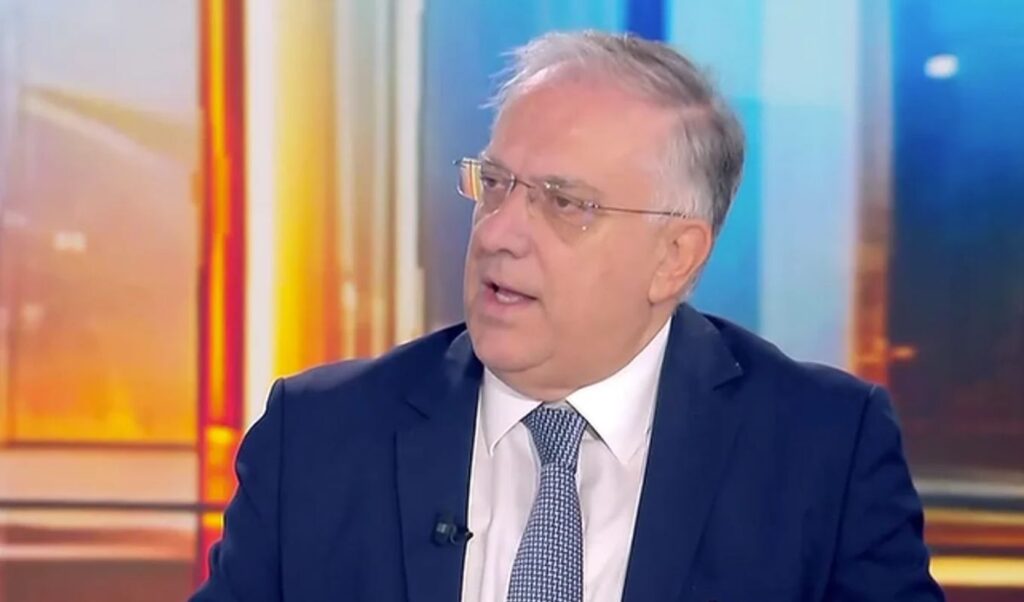
Greece’s Minister of Development, Takis Theodorikakos, spoke in a television interview on Thursday (1/10) about the government’s new plan to attract productive investments, as well as measures to support households and businesses.
Read also: Takis Theodorikakos: “The 120-installment plan and diesel subsidy are critical interventions”
Interventions on fuel prices and supermarkets
Speaking on SKAI television, the Minister of Development addressed the government’s measures in the fight against the rising cost of living. He placed particular emphasis on the intervention targeting diesel fuel, pointing out that diesel costs directly affect transportation and, by extension, the final prices of goods. For the first two weeks of October, the total relief on diesel amounts to €0.20 per liter, with the government’s intervention focusing on containing transportation costs and their knock-on effects on consumer prices.
Regarding supermarkets, the minister referred to the National Price Reduction Initiative, under which 1,740 product codes have been included. According to data presented by the Ministry of Development, the reductions cover food items, essential goods, school supplies, and private-label products. Theodorikakos stressed that, based on relevant calculations, an average household spending €500–600 per month at the supermarket could save approximately €39–40 per month. He noted that the initiative’s progress will be reviewed, while market inspections continue with the aim of identifying unjustified price hikes and violations of consumer protection legislation.
Serving citizens with humility
Reflecting on the atmosphere at Wednesday’s (30/9) cabinet meeting and the Prime Minister’s guidance to government members, the minister stated that “those of us in public life have one and only one job: to serve citizens with humility, to work hard, and to correct our mistakes.” Commenting on a recent statement by a member of parliament regarding travel expenses, he described it as unfortunate and stressed that the governing party must, in his view, remain close to citizens facing the greatest financial hardship, as well as to the middle class.
On the subject of the upcoming elections, Takis Theodorikakos noted that they will take place at the end of the four-year term, while also expressing confidence that the government’s track record could attract a significant share of voters who currently describe themselves as undecided.
Investments backed by tax incentives and faster licensing
The Minister of Development announced the upcoming submission of a new bill to parliament, with a focus on industry, manufacturing, and new technologies — sectors the government is seeking to direct more productive investment toward. This strategic direction is linked to the Ministry of Development’s broader strategy to strengthen the country’s productive base and attract investment, at a time when 928 investment plans with a total value of €3.1 billion have already been approved under the new Development Law.
As Theodorikakos clarified, the new intervention will not rely solely on direct financial grants but rather on measures that reduce the cost and time required to implement investments. “We will not be handing out cash subsidies — instead, we will make things easier through faster licensing procedures and tax incentives.” The goal, according to the minister, is to create more well-paying jobs and strengthen the conditions for the return of skilled young Greeks who left the country during the years of the economic crisis. The government has placed the support of industry and manufacturing at the core of its development strategy.
The 120-installment plan and changes to debt servicers
On the topic of measures for self-employed professionals and businesses, the minister highlighted the new 120-installment plan for settling old debts owed to the tax authority and social security funds, which replaces the previous 72-installment scheme. Theodorikakos argued that the option of more installments represents a significant relief for professionals who are trying to remain compliant with their obligations during a period when international geopolitical developments and ongoing conflicts continue to put pressure on the global economy.
He also addressed the new regulations for funds and debt servicers, with the key change being a 15% cap on the upfront payments that can be demanded when restructuring debts. The new framework also introduces stricter rules for debt management companies and greater transparency obligations toward borrowers.