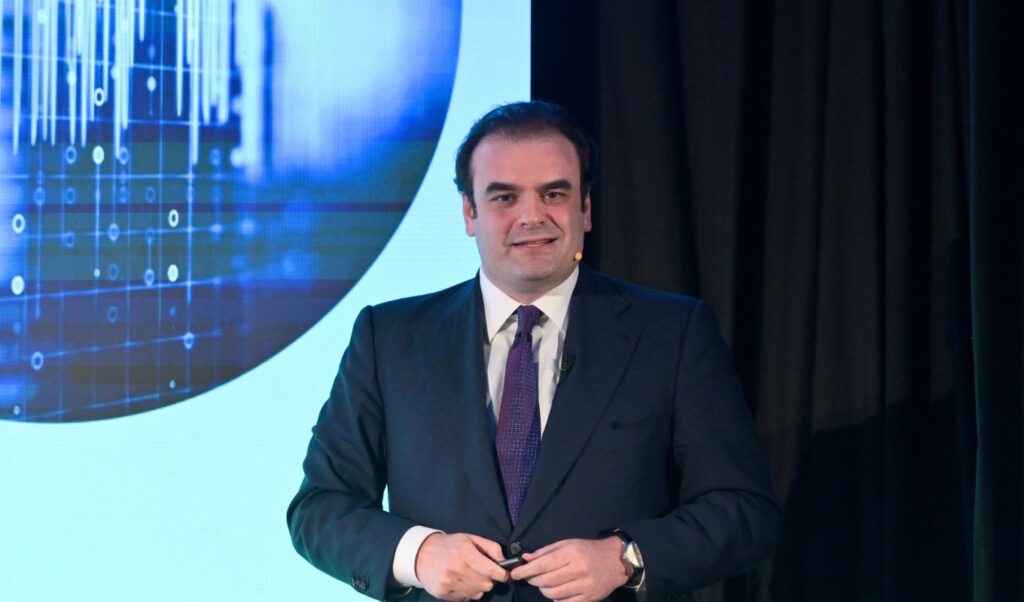
A new European funding source, with potential revenues of €12 to €15 billion, is being proposed by Greece, linking future spectrum auctions for 6G mobile networks to the financing of strategic technology investments across the European Union. The Greek proposal, according to Reuters, envisions the creation of a “European Spectrum Union,” through which a portion of the revenues member states collect from granting 6G spectrum usage rights could be channeled for use at the European level. The initiative was developed under Eurogroup President Kyriakos Pierrakakis and was presented to European ministers on Tuesday. According to the proposal document, “the potential initial funding scale could be approximately €12–15 billion.”
It is clarified, however, that this figure currently represents a planning assumption rather than an official valuation or forecast, and does not include potential future revenues from selected 5G frequency rights.
EU: How the ‘Spectrum Union’ would work
The core idea is that member states would continue to conduct spectrum auctions at the national level, but a portion of future revenues would be funneled into a shared European mechanism. The funds could be used to invest in strategic technologies and digital infrastructure, while simultaneously reducing the need to source additional resources from the EU’s common budget.
The Greek proposal was presented on September 22 at the General Affairs Council in Brussels by Deputy Foreign Minister Tasos Chatzivasileiou, as part of broader discussions on new own resources for the EU.
The tough bargain over the €2 trillion budget
The initiative comes at a time when difficult negotiations are underway over the European Union’s multiannual budget for the 2028–2034 period, which the European Commission has proposed at the level of €2 trillion.
Governments are being asked to fund new and particularly costly priorities — such as defense, technological competitiveness, and the strengthening of European industry — without abandoning traditional policies such as agricultural funding and cohesion funds.
Already, five countries — Germany, Denmark, Finland, the Netherlands, and Austria — have called for a smaller increase in the next European budget, arguing that new financing needs cannot simply be passed on to national budgets and European taxpayers.
The proposal to generate revenue from 6G spectrum auctions is designed precisely to create new fiscal space without requiring corresponding additional national contributions.
From CO2 allowances to crypto and online gambling taxes
The “European Spectrum Union” is just one of the options on the table for identifying new EU revenue streams.
Among the proposals under consideration is directing a portion of revenues that member states collect from CO2 emissions trading auctions into the EU budget, as well as revenues linked to the European Carbon Border Adjustment Mechanism applied to imported goods.
Also on the table are options such as a levy on uncollected electronic waste, a share of tobacco excise duties, and fixed contributions from large companies operating within the single market.
Other ideas put forward include levies on extreme wealth, digital services, online gambling, and capital gains from cryptocurrencies. These proposals have not been agreed upon, and several are facing resistance from member states.
The critical obstacle remains that the final financing package for the European budget requires unanimous agreement among all 27 member states — a factor that makes the negotiations exceptionally complex.