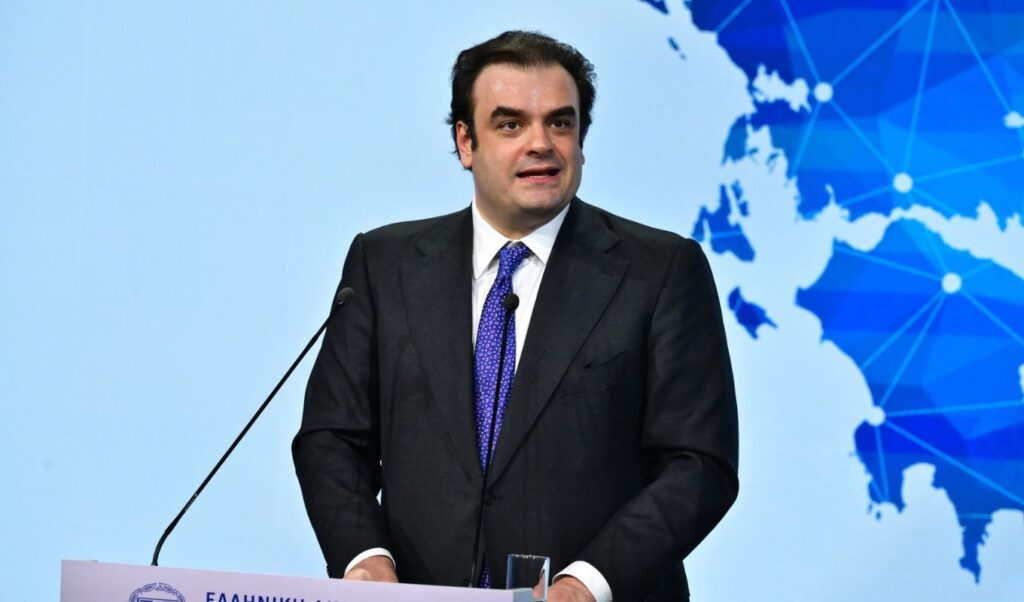
Following opposition party announcements regarding Greece’s early debt repayment, Kyriakos Pierrakakis responded by outlining the key benefits of the move. The Minister of National Economy and Finance emphasized that by repaying €12.8 billion ahead of schedule, Greece stands to save €2.6 billion in interest over a seven-year period: “For every €1 billion repaid early, we save approximately €30 million in interest per year,” the Finance Minister noted, explaining that the early repayment of €12.8 billion translates to savings of €370 million annually — or €2.6 billion over seven years. He stressed, however, that these funds cannot be distributed as direct benefits to citizens, but that the savings significantly expand the country’s fiscal space.
What Kyriakos Pierrakakis said
In the video accompanying his post, Kyriakos Pierrakakis stated the following:
“How do we save money by paying off our debt earlier? For every €1 billion in early repayment, we save approximately €30 million in annual interest. Of the €52.9 billion in loans under the first memorandum, we have already repaid €26.5 billion ahead of schedule by the end of 2025 — in other words, half of the total.
This year, we are repaying €12.8 billion early, and from this alone we are saving €370 million per year — that’s €2.6 billion over seven years. What does the opposition say? The opposition asks why we aren’t giving this money directly to citizens. The answer is simple: because it’s not possible. And they know that.
European rules do not allow these funds to be converted into direct benefits. However, they can be used to reduce the national debt and the interest we pay every year. What does this mean in practice? It means more fiscal space to support citizens and drive growth. It means greater freedom for our country — the freedom to chart its own course. To stop being one of the most indebted countries in the world and the most indebted country in Europe. And to ensure we never again pass the bill on to our children. Our generation inherited this burden, and we will not hand it on to the next.”