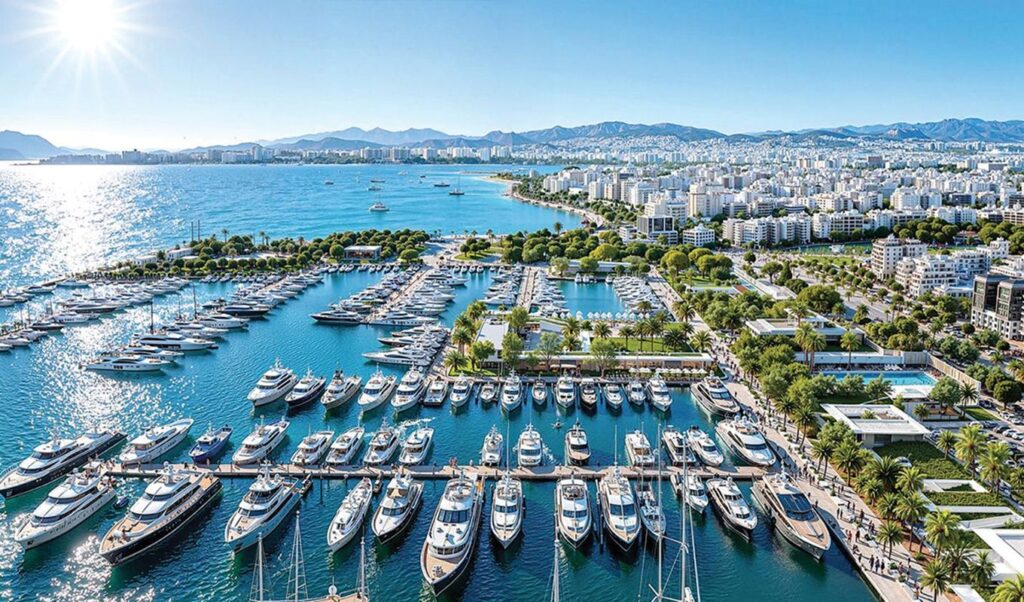
Once simple boat-berthing facilities, marinas are evolving into complex investment assets with real estate characteristics. Marinas are now at the center of a new development cycle in Greek tourism, as major capital is being invested in projects that combine yachting, luxury hospitality, high-end residences, and commercial uses. Greece, despite its strong natural advantage thanks to its coastline and strategic position in the Mediterranean, had for years lacked sufficient infrastructure to claim a larger share of the premium yachting market. These new projects signal a shift in that model, with marinas becoming a core component of large-scale tourism and real estate developments.
Marinas: The major projects in Astakos, Alimos, and Crete
One of the biggest bets is the Nautilus Project in Platygiali, Astakos — an investment exceeding €500 million — which aims to transform a long-dormant port property into an international maritime tourism destination.
The project, which has been classified under Greece’s Strategic Investments framework, is being developed across approximately 1,778 acres in the Gulf of Astakos. It involves the redevelopment of an area originally designed for industrial use, now pivoting toward high-value-added tourism. The centerpiece of the development is the conversion of the existing commercial port into a home port for mega yachts. The new marina is planned to offer more than 350 berths, of which 105 will accommodate vessels exceeding 40 meters in length — placing Astakos firmly on the map of international luxury yachting.
The plan envisions a fully integrated mixed-use destination featuring five-star hotels with a combined capacity of 565 rooms, luxury residences, apartments, retail spaces, restaurants, conference facilities, sports infrastructure, and cultural and leisure venues. It also includes a low-impact business park, innovation facilities, exhibition spaces, and even film production studios.
A three-phase development plan
The investment will be carried out in three phases, with an overall timeline of seven years. The first phase, valued at approximately €524 million, covers the core port and technical infrastructure, while total construction costs are estimated at around €434 million. The project’s development and execution is being led by Cyprus-based MYMAR Nautilus Investments Limited as master developer, while the shareholder of Astakos Terminal is APE Investment Property, a joint venture between Alpha Bank and Piraeus Bank.
In Attica, the investment in Alimos Marina represents one of the most significant coastal zone upgrade projects in the country. Greece’s largest marina is moving from the licensing phase into the construction period, with the goal of becoming a modern maritime tourism hub for the Eastern Mediterranean. The investment plan includes upgrades to port facilities, approximately 18,000 sq.m. of new building infrastructure for retail, dining, and offices, as well as a comprehensive redevelopment of the land zone with expanded green spaces, pedestrian paths, and cycling lanes.
The strategic importance of this investment is directly tied to the broader transformation of the Athens Riviera, where the value of coastal assets continues to rise on the back of major tourism and real estate developments.
Crete: 950 acres in the Gulf of Mirabello for Elounda Hills
In Crete, Elounda Hills stands as one of the largest ultra-luxury tourism projects currently underway in Greece. The investment by Mirum Hellas, owned by Vitaly Borisov, is valued at approximately €800 million and spans around 950 acres in the Gulf of Mirabello.
The project is a prime example of the international “resort plus marina” model, where the marina serves as the central pillar of an integrated development encompassing residences, hotels, and premium-grade services. The first phase includes the Hilltop component, featuring a 129-room hotel, branded villas, apartments, restaurants, retail spaces, and sports facilities, along with development of the waterfront area with a Marina Village, beach clubs, and a boutique hotel.
Early Contractor Involvement agreements have already been signed with AKTOR and Domiki Kritis for the construction phase, with intensive works scheduled to begin in 2027–2028, targeting completion before the end of the decade.
The sector’s momentum is also reflected internationally. The recent change of ownership of D-Marin — sold by CVC to InfraVia in a transaction valued at over €1 billion — confirmed that premium marinas have firmly entered the radar of private equity funds as assets offering stable cash flows and long-term value. The key challenge for Greece is whether it can leverage its natural advantages and compete with countries such as Italy, Croatia, and Turkey, which have already made substantial investments in yachting infrastructure. Marinas are no longer simply port facilities. They are complex tourism and real estate projects, poised to become the next major chapter in Greece’s economic development.
Published in Money Pro by Parapolitika