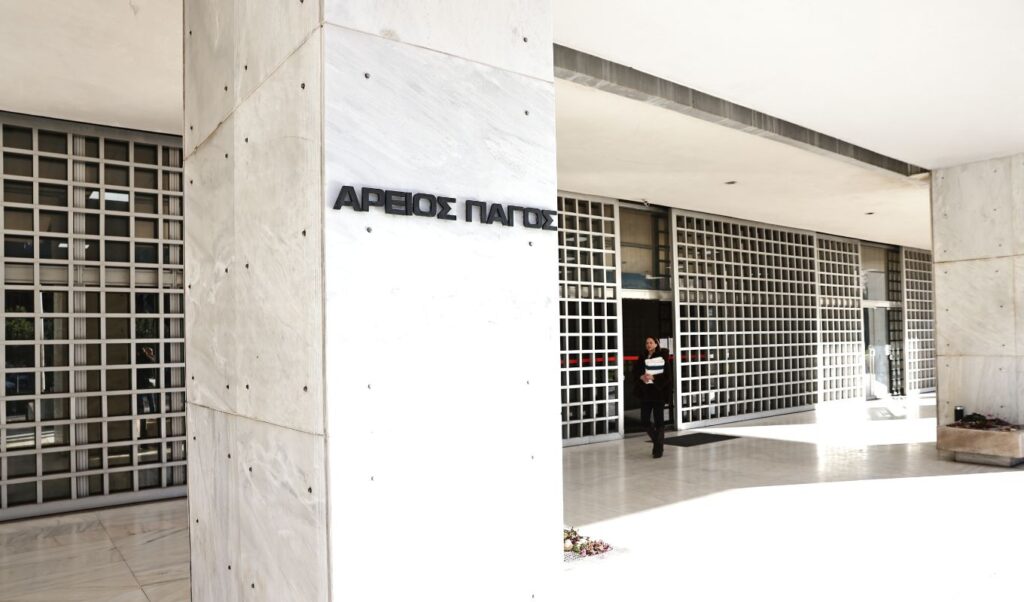
Significant developments for thousands of borrowers who have been subject to the Katseli Law (Law 3869/2010) emerge from the clarification of the recent decision by the Full Court of the Supreme Court, which clarifies the method of calculating interest in primary residence protection arrangements.
Read: Supreme Court decision on Katseli Law loans in effect – Monthly installment calculation basis
Speaking on the show “Morning Departure” on Parapolitika 90.1 FM to journalist Eris Panagou, lawyer Katerina Berdou explained that the decision concerns exclusively the interpretation of Article 9 paragraph 2 of Law 3869/2010 and specifically the method by which interest is calculated on installments imposed by judicial decisions for home protection.
Katseli Law: Interest calculated on monthly installment, not total debt
As Ms. Berdou clarified, the Supreme Court Full Court ruled that interest must be calculated on the monthly installment determined by the judicial decision and not on the total capital of the debt. “The decision does not constitute a general review of banking practices regarding interest rates, but specifically concerns the interpretation of Article 9 paragraph 2 of the Katseli Law,” she emphasized.
This development is expected to lead to significant reduction in installments for thousands of borrowers who have been subject to this specific legislative framework.
Issue of returning overpaid amounts
The lawyer pointed out that the decision interprets a law that has been in effect since 2010 and, therefore, creates serious issues regarding amounts that were paid in previous years based on incorrect calculations.
According to her, borrowers can request:
- recalculation of their installments,
- new payment schedule,
- complete analysis of charges and transactions from banks or servicers,
- offset or return of amounts paid without being owed.
“The first practical consequence is the demand for new calculation of installments and possible offset of amounts that were paid without being owed,” she noted.
Impact on foreclosures and enforcement measures
She made particular reference to cases of borrowers who faced enforcement measures or even foreclosures, based on claims that may have been calculated incorrectly.
As she emphasized, in cases where the burden led to loss of property or other adverse consequences, compensation claims may arise, which should be examined case by case through appropriate judicial procedures.
Applies only to Katseli Law
Ms. Berdou clarified that the decision directly affects only arrangements that have been subject to the Katseli Law and does not automatically extend:
- to other non-performing loans,
- to the new Bankruptcy Law,
- nor to the out-of-court debt settlement mechanism.
However, she estimated that the reasoning of the decision could constitute an important legal precedent for future claims in other categories of arrangements as well.
“The decision has a specific scope of application, but its reasoning regarding the social character of arrangements and avoiding disproportionate burdens may open new legal discussions in other procedures as well, such as the out-of-court mechanism,” she stated.
Detailed reasoning awaited
The full assessment of the decision’s consequences will be possible after studying its detailed reasoning, which is expected to provide clearer answers about the extent of borrowers’ rights and the obligations of banks and debt management companies.
What is certain is that the decision represents one of the most significant judicial developments in recent years for borrowers protected by the Katseli Law, directly affecting how their debts are calculated and opening discussion about redressing any past injustices.