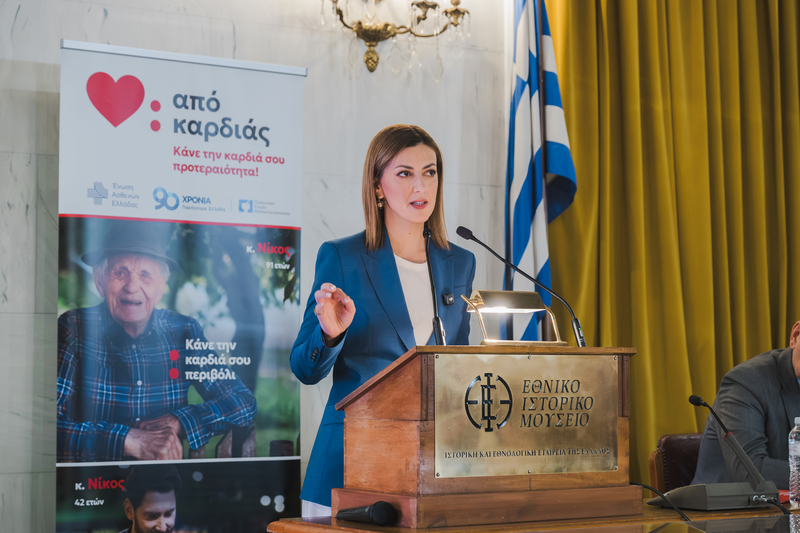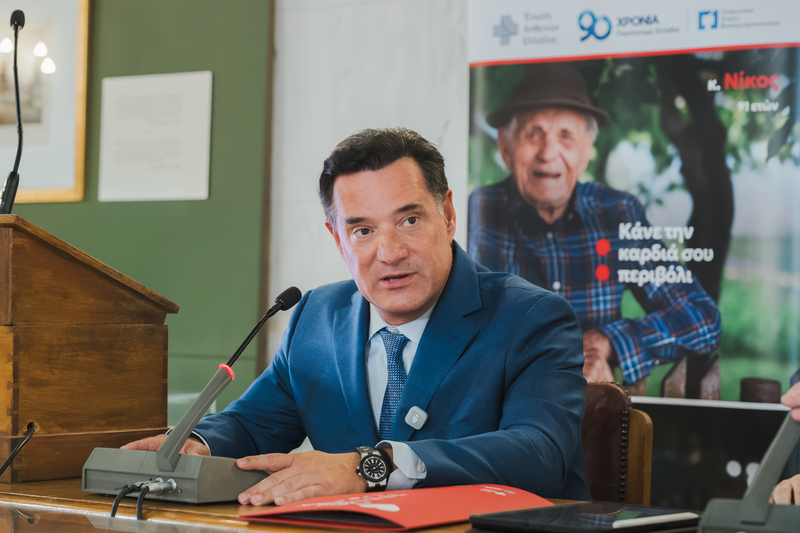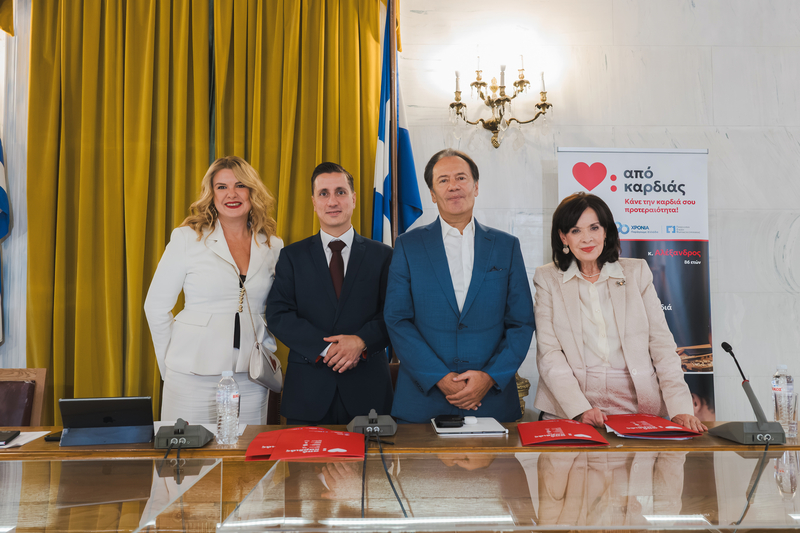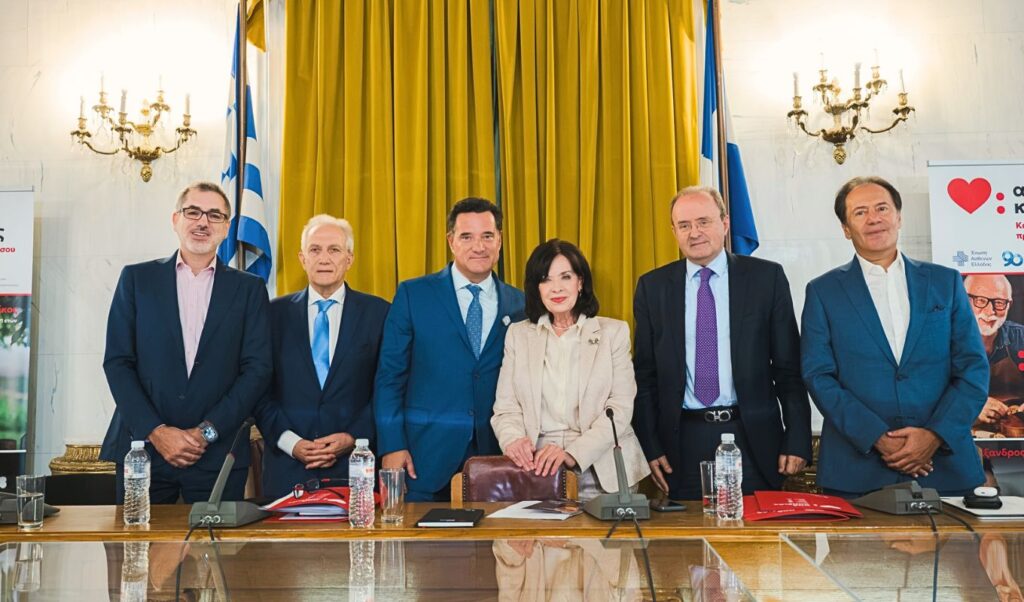
The need for Greece to move from fragmented interventions toward a cohesive cardiovascular health strategy — with clear objectives, continuity of care, and outcome evaluation — was the central theme of the inaugural institutional event of the nationwide campaign “from the heart,” held today at the National Historical Museum – Old Parliament Building, on the occasion of World Heart Day.
The event marked the launch of a strategic partnership between the Panhellenic Union of Pharmaceutical Industries (PEF) and the Patient Union of Greece (EN.AS.EL.) for a nationwide effort that bridges two areas often treated separately: prevention and early risk detection on one hand, and access to appropriate treatment, medication adherence, and continuity of care on the other. The discussion carries particular significance at a time when the “PROLAMVANO” (I Prevent) program is being established as a permanent national policy through 2030, and Europe now has, through the Safe Hearts Plan, a common framework for cardiovascular health.
Prevention cannot stop at screening
The opening of proceedings was welcomed by former Secretary General of Public Health Mr. Panagiotis Prezerakos, representing the President of the Hellenic Parliament Mr. Nikitas Kaklamanis; Archpriest Vasileios Chavatzas, on behalf of His Beatitude Archbishop of Athens and All Greece Ieronymos II; Mr. Athanasios Zamanis, Governor of EOPYY (National Health Services Organization); and Mr. Giorgos Patoulis, President of the Athens Medical Association. Also in attendance were Ms. Daphne-Eleni Nikolaou, Secretary General for Strategic Planning of the Ministry of Health, and Mr. Georgios Stylios, Chair of the Standing Committee on Social Affairs and Member of Parliament for Arta.
The common thread running through the event was that the value of prevention is not measured solely by the number of tests conducted. It is assessed by whether risk is identified in time, whether citizens understand what their results mean, whether they are referred to the appropriate care, and whether a meaningful reduction in risk is ultimately achieved.
Two thematic roundtables addressed the current landscape of cardiovascular risk in Greece and the priorities for developing effective prevention and management strategies.
The cardiovascular burden demands earlier prevention and therapeutic continuity
At the first roundtable, “Cardiovascular Risk in Greece,” speakers focused on early prevention and the comprehensive management of risk factors. Moderating the discussion, Ms. Katerina Koutsogiannis, Vice President of the Board of the Patient Union of Greece, highlighted geographic and social inequalities in prevention. As she noted, “Place of residence, income, and access to information all affect an individual’s ability to participate in preventive screening. We need community-level interventions that strengthen health literacy and ensure clear referral pathways for every citizen who requires further assessment.”
In her address, Ms. Eirini Agapidaki, Deputy Minister of Health, emphasized that prevention is now a central pillar of public health policy, with the goal of reaching every citizen equally, regardless of where they live or their financial means. “From near last place in 2022, Greece is now at the forefront of Europe in prevention, with the national ‘PROLAMVANO’ program serving as a model for the new European policy on cardiovascular disease prevention. The value of prevention is not measured only in resources, but in years of quality life. Through free check-ups for millions of our fellow citizens, we are changing the culture around health and building a new relationship of trust with doctors. ‘PROLAMVANO’ is now becoming a permanent pillar of the NHS. It is estimated that, to date, our country has prevented 70,000 heart attacks and strokes — meaning tens of thousands of families today do not have a loved one who is ill or, worse, who has lost their life to cardiovascular disease. Prevention is the most important act of care and social justice. Warm congratulations to the Panhellenic Union of Pharmaceutical Industries and the Patient Union of Greece for organizing the ‘LISTEN TO YOUR HEART’ event.”
Professor of Cardiology at the University of Athens Mr. Konstantinos Toutouzas, President of the Hellenic Cardiology Society, stressed that “cardiovascular diseases continue to represent one of the most significant public health challenges. Early identification and systematic monitoring of modifiable risk factors, the adoption of a healthy lifestyle, and, where necessary, appropriate pharmacological treatment can significantly reduce the risk of serious cardiovascular events. Prevention is everyone’s responsibility and the most effective investment for fewer heart attacks, strokes, and premature deaths.”
Presenting Greek epidemiological data, Professor of Biostatistics and Epidemiology Demosthenes Panagiotakos, President of the Hellenic Atherosclerosis Society, noted that “cardiovascular diseases remain the leading cause of death in Greece. In 2023, 40,474 people lost their lives to circulatory system diseases — nearly one in three deaths. At the same time, the ATTICA study showed that 36% of participants experienced a cardiovascular event over a twenty-year period. These findings highlight the need for prevention, systematic risk factor monitoring, equal access to diagnosis, treatment and rehabilitation, and the cultivation of health literacy from childhood.”
Professor Konstantinos Tsioufis, President of the Hellenic Society of Hypertension, addressed the importance of effective blood pressure control. “Diagnosis must be followed by effective and sustainable management. Systematic measurement, overall risk assessment, individualized treatment, and medication adherence can significantly reduce the risk of heart attack and stroke,” he noted.
Referring to the management of diabetes mellitus, Professor Konstantinos Makrilakis, President of the Hellenic Diabetes Association, pointed out that “a glycemic target alone is not enough. A comprehensive assessment of blood pressure, lipids, weight, kidney function, and cardiovascular risk is needed — along with continuity of care and therapeutic choices that reduce complications.”
The importance of therapeutic coverage was underscored by Mr. Kostas Panagoulias, Vice President of VIANEX: “Listening to our heart means acting in time. The pharmaceutical industry offers effective medicines and new diagnostic capabilities. Their true value, however, emerges when the medical community and healthcare professionals put them to proper use, based on each person’s needs. This is how we can prevent serious cardiovascular events, reduce hospitalizations, and offer more years and a better quality of life. The benefit also returns to the state: lower healthcare expenditure, reduced loss of productivity, a stronger society. This is the message of the ‘Listen to Your Heart’ campaign: prevention gains power when it is connected to diagnosis and appropriate treatment.”
National planning and coordination of services
At the second roundtable, “Designing Prevention and Management Strategies for Cardiovascular Disease in Greece,” discussions centered on the integration of services, equitable access, and outcome evaluation. Moderating the session, Mr. Nikos Dedes, Secretary General of the Board of the Patient Union of Greece, placed continuity of care for people living with multiple conditions at the center of the debate. “The personal physician, inter-specialty collaboration, and the electronic health record can support patients at every step. We also need to assess quality of life and the lived experience of patients themselves,” he stressed.
On behalf of the government, Mr. Adonis Georgiadis, Minister of Health, spoke about the long-term nature of the national prevention program and its connection to a broader cultural shift within the Greek population: “Prevention is a central priority of our health policy. With the ‘PROLAMVANO’ program, we have taken an important step by enabling citizens to undergo free preventive screenings and detect risk factors early, particularly for cardiovascular diseases. We want citizens to take care of their health before they need to become patients. In this effort, cooperation with associations and the Patient Union of Greece is invaluable, because patients are not merely recipients of health policy — they are essential partners in shaping it,” said Minister of Health Adonis Georgiadis. The Minister also referred to the strength of the Greek pharmaceutical industry, highlighting the importance of the investment clawback mechanism for its further development and for creating the conditions that will enable it to reach an even higher level in the years ahead. He further emphasized that the collaboration between the Patient Union of Greece and the Panhellenic Union of Pharmaceutical Industries is a significant guarantee for the success of the campaign, as the partnership between patients and the Greek pharmaceutical industry can substantially strengthen public awareness and engagement around cardiovascular disease prevention, given its real-world impact on real people in real time.
On behalf of the Hellenic Cardiology Society, its Secretary General and Coordinating Director of the Cardiology Clinic at Athens General Hospital “Evangelismos,” Mr. Athanasios Trikas, emphasized that “the effective management of cardiovascular diseases requires a comprehensive strategy, with prevention at its core. This calls for systematic risk factor management, strengthening of Primary Health Care, and access to timely diagnosis, modern therapeutic options, and organized follow-up. Contemporary cardiology has effective tools at its disposal — the challenge is ensuring they reach every citizen in time.”
Mr. Apostolos Valtas, President of the Panhellenic Pharmaceutical Association, reflected on the role of the community pharmacy: “Heart care must not begin only when a problem arises. Prevention requires a comprehensive national action plan, with continuity, clear responsibilities, and collaboration among all healthcare professionals. The community pharmacy, as the most accessible point of healthcare, can play a meaningful role in raising awareness, identifying risk factors, providing timely referrals to physicians, and supporting the safe and correct administration of treatment.”
Mr. Theodoros Tryfon, Chairman of the Board of PEF and Co-CEO of ELPEN, addressed the contribution of domestic production to access and supply security: “As PEF, we are at the forefront of informing citizens about cardiovascular disease prevention. For patients, what is critical is having stable access to appropriate treatment and being able to follow it consistently. The Greek pharmaceutical industry offers effective, high-quality, and affordable therapeutic options, covering a significant share of patient needs. At the same time, strong domestic production enhances medicine supply security and shields the healthcare system against supply chain disruptions.”
In her address, Ms. Memi Tsekura, President of the Board of the Patient Union of Greece, identified the next step as linking organized prevention with a comprehensive cardiovascular care pathway: “‘PROLAMVANO’ has created a significant foundation for organized prevention. The challenge now is to build on this success so that no person identified early is lost along the way — from referral and diagnosis, to appropriate treatment, the achievement of therapeutic goals, and long-term follow-up. We need a cohesive National Action Plan for Cardiovascular Health, with clear targets, measurable outcomes, and a focus on reducing geographic and socioeconomic inequalities. And we need to design it from the outset together with patients, drawing on both data and their lived experience.”
Key messages
Four core messages emerged from the discussion on the prevention and more effective management of cardiovascular diseases:
- Prevention gains real value when it is sustained — ensuring that every significant finding leads, where needed, to timely diagnosis, appropriate treatment, and systematic follow-up.
- Effective cardiovascular disease management requires coordination and measurable targets, making full use of Primary Health Care and available data, with a strong emphasis on reducing social and geographic inequalities.
- Public and patient awareness and active engagement are decisive — both for understanding and reducing cardiovascular risk, and for maintaining treatment and ongoing care.
- Equal access to effective and affordable treatments depends on adequate and consistent medicine supply. The Greek pharmaceutical industry makes a meaningful contribution to meeting patient needs and strengthening the resilience of the healthcare system.
From institutional dialogue to communities
The strategic partnership between the Patient Union of Greece and PEF brings together two institutional stakeholders in the healthcare sector in a shared effort for cardiovascular prevention. The Union contributes policy proposals, insight into the needs and barriers faced by patients, and its network of member associations, with an emphasis on health literacy, equitable access, and direct engagement with local communities. PEF contributes the dimension of therapeutic coverage, access, continuity, and domestic production capacity. The shared goal is for prevention to become understandable and actionable in everyday life — and for patients, when risk or disease is detected, not to be lost along the way.
The first community event will take place in Peristeri on October 22, 2026, with an open public action at the Peristeri Town Hall from 2:00 p.m. to 8:30 p.m. In November, an institutional event in Thessaloniki and a community action in Kalamaria will follow, while during the first quarter of 2027, institutional events are planned in Patras and Larissa, along with community actions in Kalamata and Trikala.