This year’s PwC Global CEO Survey reveals that business leaders are facing a complex corporate reality, shaped by technological, economic, and geopolitical shifts that are creating an increasingly demanding environment. More than 4,000 CEOs worldwide participated in the survey, including 62 from Greece. According to the results, more than half of Greek CEOs are questioning whether their businesses are transforming fast enough to keep pace with technological developments and Artificial Intelligence. 40% do not take their company’s long-term viability for granted, while one in three believes their organization’s capacity for innovation is insufficient.
This reality is also reflected in how business leaders allocate their time and set their strategic priorities. Greek CEOs dedicate just 8% of their time to long-term activities, and fewer than half place innovation among their core strategic priorities — despite the fact that nearly seven in ten acknowledge its importance to the future of their businesses.
The biggest challenge, however, appears to be the transition from recognizing the need for change to actually implementing it. Only one quarter of businesses collaborate extensively with external partners to develop new ideas, while a similar proportion systematically tests new proposals with customers. Even more limited is the existence of organized business development and innovation structures — just 5% have a dedicated Innovation Department in place.
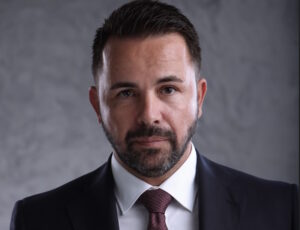
“In times of intense change and rapidly shifting business environments, leaders are called upon to make timely decisions and systematically invest in the technological infrastructure and skills that will define the future growth of their organizations,” said Aimilios Melis, Partner and Head of Strategy at PwC Greece.
Artificial Intelligence now sits firmly at the center of the business agenda. Most Greek CEOs appear optimistic about its potential, with 75% believing their organization is ready to leverage it. However, results have yet to validate this optimism. Only 10% report having simultaneously achieved revenue growth and cost reduction through AI adoption, while more than 60% have not yet seen any meaningful financial benefit.
This suggests that for many businesses, AI remains primarily a tool for improving individual functions and processes. Only one third of CEOs are using AI to inform strategic decision-making, indicating that the shift from operational use to strategic application is still in its early stages.
Yet transformation is not only about technology. It is equally about people, skills, organizational models, and the way decisions are made. The impact of AI on the workforce is already considered significant. 57% of leaders believe there will be fewer entry-level jobs in the future, while 63% express concern about finding employees with the right skill sets.
Despite these challenges, there are also many encouraging signs. Nearly half of Greek businesses have already expanded into new sectors of activity, and on average, 23% of their revenues come from products and services brought to market within the past three years. These figures suggest that Greek businesses are already investing in innovation and building new sources of growth.
“The survey’s findings confirm that Greek businesses have now recognized the urgent need for change and innovation. The challenge is to translate this awareness into decisive strategic choices and consistent execution — strengthening their resilience, competitiveness, and long-term growth,” noted Aimilios Melis, Partner and Head of Strategy at PwC Greece.