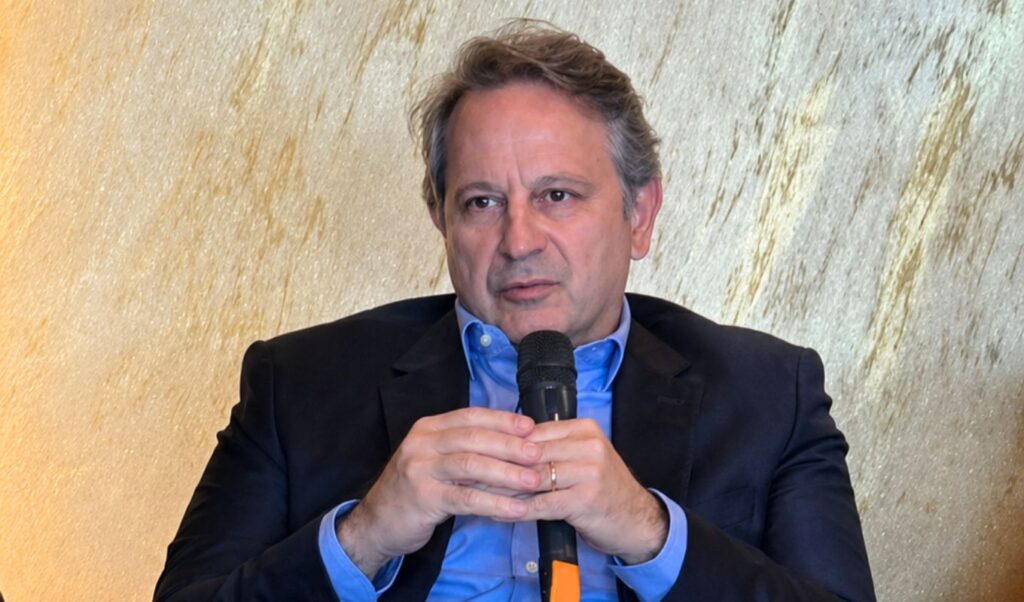
The major investments being implemented by GEK TERNA in Northern Greece were highlighted by the Group’s Managing Director, Petros Souretis, during the “Macedonia of Sunday” newspaper conference on “Thessaloniki of tomorrow”. “The infrastructure we are implementing serves as development catalysts for Thessaloniki and all of Northern Greece,” he noted characteristically.
Read: Souretis: Incentives must be given to young people to work in the construction sector
Souretis: Egnatia Highway holds a key position in the Group’s planning
Egnatia Highway holds a pivotal position in the Group’s planning, which paid 1.275 billion euros to undertake the 35-year concession (financing, operation, maintenance and exploitation). With a horizon to 2030, as Mr. Souretis emphasized, GEK TERNA will invest an additional 500 million euros for the upgrade of the main axis and the enhancement of its vertical roads. In total, just in the last 18 months, the Group has invested 5 billion euros in critical infrastructure of the country – capital that also contributed to the immediate reduction of public debt.
As he added, the prestige, reliability and investment credibility of GEK TERNA are reflected both in the Group’s operational and financial results and in the positive evaluations of international assessment and credit rating agencies, which recognize the strategic position and dynamics of its portfolio of activities.
The new era of Egnatia Highway
Egnatia Highway is one of the most challenging infrastructure projects in Greece. As Mr. Souretis explained, the studies were conducted in the 1990s and construction, through fragmented contracts, lasted from 1998 to 2009, creating significant heterogeneities in technical solutions and equipment. Additionally, 100 km of the road axis correspond to tunnels, whose certification in category “E” was the obligation of the former Egnatia S.A., but this obligation was never fulfilled. As a result, the new concessionaire received infrastructure without certification, which has not been substantially maintained in recent years.
“For the tunnels to acquire the specifications of the Tunnel Administrative Authority (TAA), heavy maintenance works are required, which will take time due to their complexity. Until the completion of certification, the tunnels will continue to operate with temporary restrictions and transitional safety measures. These are necessary measures that include, among others, maintaining – where required – one traffic lane as an emergency evacuation lane in case of accidents, aimed at ensuring user safety,” Mr. Souretis emphasized.
“Through investments of 500 million euros within the next five years, Egnatia Highway will be transformed into a safe, smart, green and energy-autonomous highway, with advanced traffic management systems, justifying its role as a European central artery, gateway to the Balkans and development catalyst for Northern Greece,” he concluded.