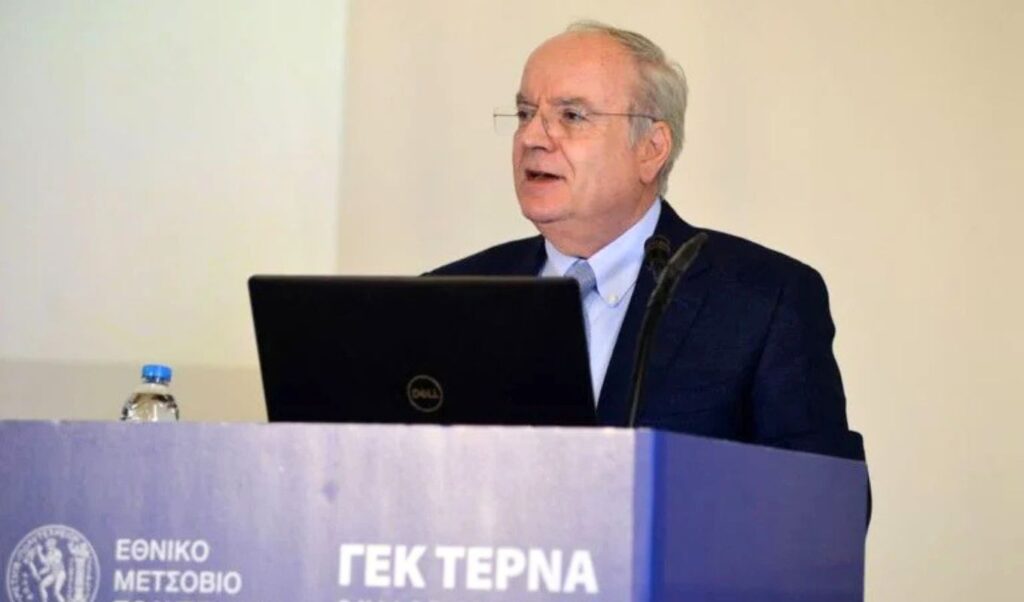
The ink had barely dried on Moody‘s announcement granting investment grade status to GEK TERNA when another major international rating agency followed suit. S&P has also initiated coverage of the group with a long-term credit rating of BBB- with stable outlook.
The international agency estimates that the company’s credit profile will continue strengthening during 2026-2028, thanks to strong growth prospects and improving financial performance. In this context, it expects EBITDA to increase to approximately €750 million in 2028 (from €609 million in 2025), with EBITDA margins expanding to 23%-24% by 2028, from 15% in 2025. The agency emphasizes that the stable outlook also takes into account management’s commitment to maintaining investment grade status, as well as maintaining very limited net leverage at the parent company and construction activity level.
As stated in its announcement, S&P notes that GEK TERNA is Greece’s largest infrastructure and construction group, with a strong portfolio of very long-term road concessions — approximately 85% of Greek toll roads, with a weighted average duration exceeding 25 years — which benefit from a supportive contractual and regulatory framework and constitute a key driver of the company’s profitability.
The international agency emphasizes that GEK TERNA’s vertically integrated business model, covering both concession operations and construction, offers significant synergies. It mentions major ongoing projects such as VOAK and Kastelli International Airport in Crete, noting that the signed backlog in the construction sector has doubled in recent years, reaching approximately €7 billion. It also highlights that the group has a track record of above-average profitability as well as proven risk management capability from fixed-price contracts.
S&P anticipates that GEK TERNA will remain committed to maintaining investment grade status and strong liquidity. Over the past two years, it has strategically focused on infrastructure concessions, generating significant cash reserves both at the parent company and operating subsidiaries — €851 million and €842 million, respectively, at the end of 2025.
As noted, the company has demonstrated financial discipline, improving its financial safety margin while implementing growth plans. The agency expects it to maintain significant cash reserves during the phase of high capital expenditures and development.
It concludes that the company’s continued focus on prudent financial management, including low leverage at the parent company level, as well as its ability to manage potential challenges, will be key factors for its future creditworthiness.