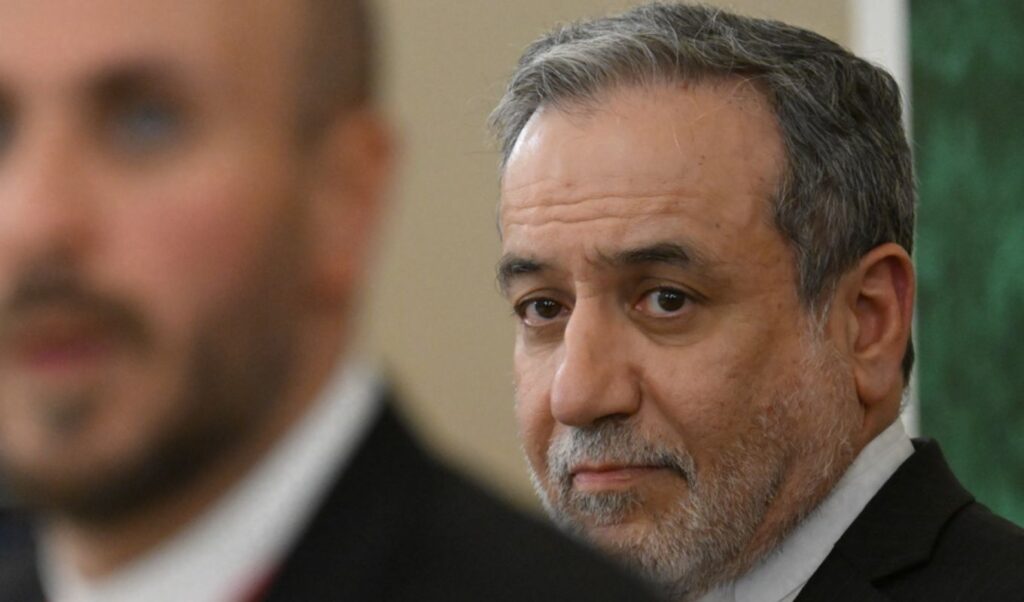
Donald Trump acknowledged that the war with Iran was one of the key factors that left Republicans in a difficult position, as reflected in the results of the U.S. midterm elections. It was also cited as one of the main reasons behind the sharp rise in oil prices. However, negotiations that had been underway prior to the elections have come to a temporary halt, as the U.S. administration searches for a path forward. Meanwhile, Democrats lack the authority to intervene directly in foreign policy, yet continue to push for an end to the war. Foreign Minister Abbas Araghchi addressed the breakdown in diplomatic talks, posting on platform X that he is awaiting the implementation of Iran’s proposed plan for the Strait of Hormuz.
Read more: Iran slams U.S. over “Iron Gate” plan — “They will not succeed in imposing an economic blockade”
Iran: “The Strait proposal is still on the table”
“In recent days, there have been no further visits from mediators, and the reason is the shock that the American election results caused everyone,” Araghchi said in a statement to state television. He added: “It will take some time before the atmosphere becomes conducive to resuming mediator visits. We must be patient.”
“American voters have made their choice. It is now time for the White House to make its own,” he wrote, insisting that Tehran’s proposal to conditionally reopen the strategically vital waterway “remains valid.” “Meet the conditions — including ending the war on all fronts — and you will see results. Or choose war, and you will see our vigilant, battle-hardened warriors unleash hell,” he warned.
Economic pressure mounts
While diplomatic efforts toward a deal that would bring a definitive ceasefire in Iran had been gaining momentum, the midterm election results dealt a significant blow to those efforts. Qatar’s Prime Minister Mohammed bin Abdulrahman Al Thani, whose country has been serving as a key mediator, stated on the evening of Friday, November 6, that from the American side, “the intention remained, as did the will to take steps toward finding a solution.”
However, U.S. armed forces announced on Saturday, November 7, that they are planning to establish a task force to block land routes into Iran — through which, according to the U.S. military, weapons and illegal goods are being transported — further intensifying economic pressure on the country. Iran’s ports are already subject to a U.S. naval blockade, imposed in response to Tehran’s closure of the Strait of Hormuz. On the same day, CENTCOM announced strikes on a commercial vessel in the Gulf of Oman.
Iran has signaled its readiness to reopen the Strait within two days, provided Washington agreed — in addition to a ceasefire — to unfreeze Iranian assets held abroad, lift sanctions on its oil sector, and end the naval blockade. The U.S. had rejected an initial proposal along these lines over the summer.
Trump rules out new strikes
On his part, Donald Trump ruled out new strikes against Iran on Sunday, November 8, once progress is made in talks, CNN reported. “It depends on whether or not they sign a very powerful deal,” Trump said, according to CNN, in a phone interview. “The answer is that it is extremely unlikely that such a thing would become necessary.” The U.S. President, however, confirmed in response to an unspecified question that the United States has identified potential infrastructure targets — including 38 bridges, “which we can literally level within an hour,” he said.