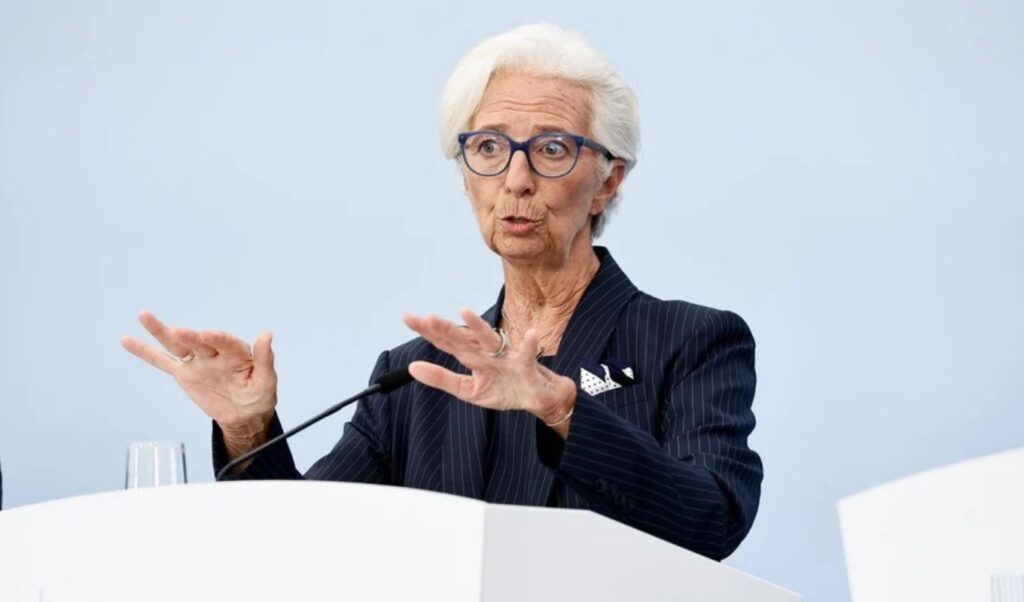
The European Central Bank kept interest rates unchanged at its meeting today (29/10), despite ongoing energy cost risks — but the day’s real surprise was Christine Lagarde‘s announcement that she will step down as ECB president. The Governing Council reaffirmed its ability to navigate the current heightened uncertainty, stating it will continue making decisions on a “meeting-by-meeting” basis without committing to any future course of action.
According to the rationale behind today’s decision, energy prices have continued to rise, creating upside risks to the inflation outlook and downside risks to growth prospects. While the effects of the energy shock continue to ripple across the economy, underlying inflation has broadly remained stable so far, and wages have shown no significant reaction at this stage.
ECB: Christine Lagarde announces her resignation as president
The heightened intensity and duration of the energy shock, along with the impact of indirect and second-round effects, are likely to push inflation higher and slow economic growth. Financing conditions have tightened since the Governing Council’s last meeting — a development that could weigh negatively on both inflation and growth.
Against this backdrop, ECB interest rates are currently set as follows:
- Deposit facility rate: 2.50%
- Main refinancing operations (fixed rate): 2.65%
- Marginal lending facility: 2.90%
The Governing Council has committed to setting monetary policy in a way that ensures inflation stabilizes at its 2% medium-term target.
When was Christine Lagarde’s term originally set to end?
Christine Lagarde’s decision to leave the European Central Bank on February 7, 2027 became public on the morning of Thursday (29/10), when she personally informed the Governing Council and European Council President António Costa. Her term as ECB president had been due to expire in October 2027, and her early departure has reignited speculation about her next career move.
The unexpected development is also set to trigger broader reshuffles at the ECB’s top levels, while giving European Union leaders an opportunity to appoint a new ECB president ahead of the French presidential election scheduled for spring.