The whispers have turned into shouts, and the open secrets in the corridors of Frankfurt have become official news: Christine Lagarde is stepping down from the leadership of the European Central Bank, at a time when the Eurozone is facing fresh inflationary pressures, energy uncertainty, and mounting economic challenges. Her departure, set for February 7, 2027, accelerates the succession battle, while a new energy shock is forcing the ECB to strike a delicate balance between tackling inflation and managing growing risks to the broader economy. The race to succeed Lagarde is now underway in an environment of heightened uncertainty for Europe, with Klaas Knot and Pablo Hernández de Cos emerging as the leading candidates, an energy crisis fueling new inflationary pressures, and monetary policy facing a series of difficult decisions.
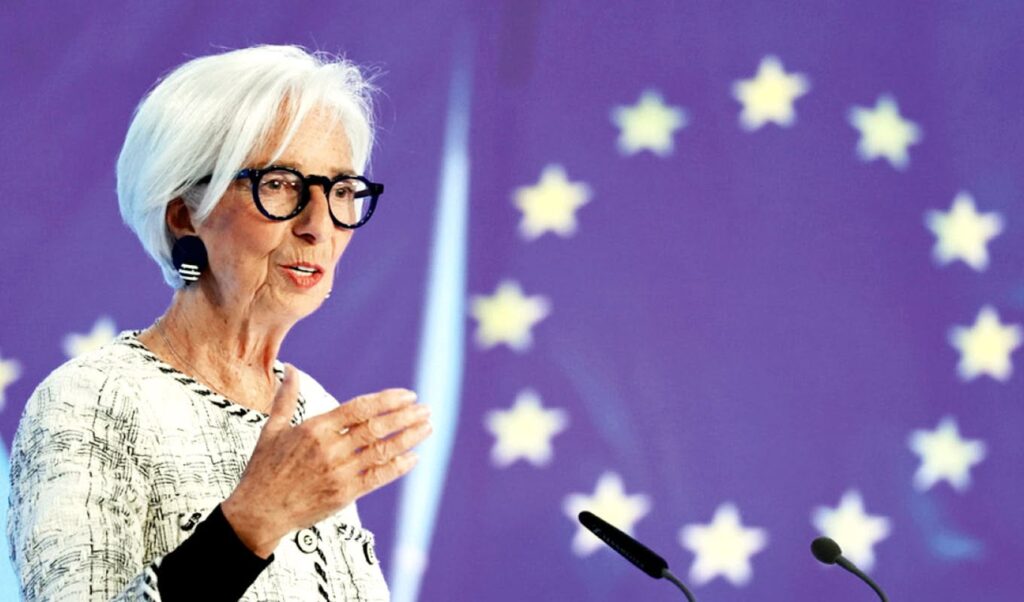
Christine Lagarde is stepping down as President of the European Central Bank approximately eight months before her term was due to expire, triggering an early succession process at an exceptionally challenging moment for the Eurozone economy. The ECB announced on Thursday that Lagarde had informed the Governing Council and European Council President António Costa of her decision. The announcement follows months of speculation about a possible early departure, with no official personal reason cited for her choice.
According to reports, one of the likely next chapters for Lagarde is the presidency of the World Economic Forum, the organization behind the annual gathering in Davos. However, the timing of her departure carries broader political significance: it allows current European leaders to select the ECB’s new head before France’s presidential elections in spring 2027. The succession, therefore, is not merely a change of faces — it is also a reshaping of the political equilibrium that will define Europe’s economic leadership for years to come.
ECB: Energy crisis and new inflationary pressures
Lagarde’s exit comes as the ECB confronts a fresh surge in inflation, driven primarily by rising energy costs stemming from the war with Iran and disruptions to oil and natural gas supplies. Soaring energy prices are once again raising the specter of prolonged inflationary pressures, as households and businesses continue to struggle with elevated living costs and tighter financing conditions.
According to data cited in recent analyses, energy inflation reached 18% in September — the highest level since the onset of the war. Morgan Stanley economist Jens Eisenschmid estimates that headline inflation in the Eurozone could approach 4% in the coming months, as diesel shortages may persist and winter is expected to intensify pressure on fuel prices. In his assessment, no meaningful easing is anticipated before February 2027.
The challenge for the ECB is that an energy-driven price spike may prove temporary — but it can also gradually pass through to the prices of other goods and services, as well as to wages. The central bank must therefore act to prevent inflation from becoming entrenched, while avoiding an undue drag on economic growth.
Who is in the running to succeed Lagarde
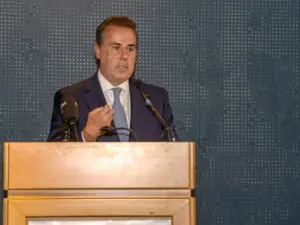
Among the leading candidates to replace Lagarde are former Dutch central bank governor Klaas Knot and former Bank of Spain governor Pablo Hernández de Cos. Neither has formally declared candidacy, and the final selection will hinge on negotiations between Eurozone member states and the balance of power shaping concurrent leadership changes at the ECB.
Under the established procedure, the European Council will appoint the new president on a recommendation from the Council of the European Union, following consultations with the European Parliament and the ECB’s Governing Council. The appointment will require a qualified majority and broad intergovernmental consensus.
Interest rates: Caught between inflation and growth
The ECB has already implemented two interest rate increases, raising the deposit facility rate to 2.5%. According to a Bloomberg survey, virtually all participating economists expect rates to be held steady at the scheduled October 29 meeting. Markets, however, continue to price in the possibility of one further hike in December, when the bank’s updated macroeconomic projections are set to be released.
That outcome is far from certain. Eisenschmid argues that monetary policy has already contributed to a significant tightening of financial conditions and warns that a further rise in long-term yields could impose an unjustified burden on the economy. Economists who anticipate a December hike, by contrast, believe that inflationary pressures may require additional intervention before a pivot toward lower rates becomes feasible in the years ahead.
The challenge is a complex one: raising interest rates can curb demand and limit the second-round effects of inflation, but it cannot directly restore supplies of oil or natural gas. At the same time, higher borrowing costs translate into more expensive financing for businesses, households, and governments alike.
France in the bond market spotlight
Adding to the equation is the fiscal and political uncertainty surrounding France, the Eurozone’s second-largest economy. The government is struggling to secure the parliamentary majority needed to pass its 2027 budget, which aims to rein in the country’s elevated public debt. Investor anxiety is being reflected in rising borrowing costs for the country.
The yield spread on French ten-year government bonds over their German counterparts — widely regarded as the Eurozone’s safe-haven benchmark — has reached 175 basis points, a level not seen since 2011. Holger Schmieding, Chief Economist at Berenberg, notes that since September 8, yields on French ten-year bonds have risen by 78 basis points and Italian yields by 38 basis points, while German yields have remained broadly stable.
This divergence underscores that financial conditions are not deteriorating uniformly across the Eurozone.
The next ECB president will take office during a period in which energy instability, inflation, diverging sovereign bond yields, and political pressures are all testing Europe’s economic cohesion. The task ahead will not simply be returning inflation to the 2% target — it will also be ensuring that the effort to do so does not deepen the already significant disparities in financing conditions between Eurozone member states.