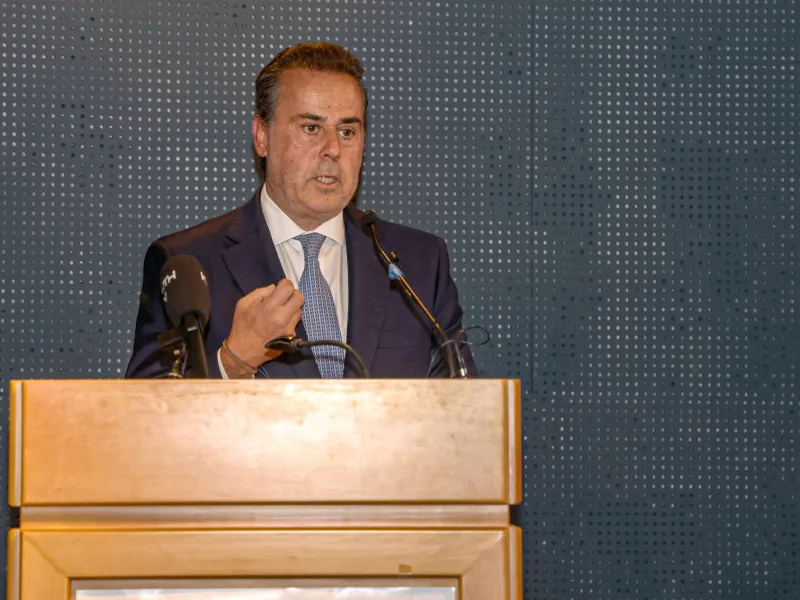
The need to leverage the flexibility provided by the escape clause in order to immediately implement targeted and temporary measures to reduce energy costs for households and businesses was underlined by the Minister of Environment and Energy, Stavros Papastaurou, upon arriving at the EU Energy Ministers’ Council in Luxembourg.
Also on the agenda for discussion are energy security ahead of winter, network charges, and European targets beyond 2030. As stated in his remarks, Mr. Papastaurou will brief his counterparts on the progress of the Greece-Cyprus electricity interconnection and the next steps for the project’s implementation.
Papastaurou: We must build an Energy Union that includes all member states
“Today, at the Energy Ministers’ Council, we are discussing energy security for the coming winter, network charges, and European targets beyond 2030. Greece’s position is clear. We need the necessary flexibility within the escape clause framework to take targeted and temporary support measures now — measures that will reduce energy costs for households and businesses, and in doing so, provide real, meaningful support to citizens.
Long-term energy planning is essential. However, during times of crisis such as these, it must be accompanied by immediate interventions with measurable results on energy bills.
We will also be discussing electricity interconnections. I will update my counterparts on the progress made in implementing the Greece-Cyprus electricity interconnection, as well as the next steps. This is a project of European strategic importance, moving forward with purpose and determination, always in accordance with International Law and the Law of the Sea — a project that will end Cyprus’s energy isolation.
We have an obligation to build an Energy Union that includes all member states and delivers tangible benefits to all citizens.”