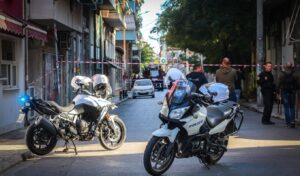
New and significant details are emerging about the explosion that occurred on Wednesday afternoon (21/10) at an apartment building on 107 Platonos Street, in the Kolonos neighborhood of Athens, which left two police officers and two civilians injured. According to the latest information, the explosive device was detonated remotely — a development that investigators are treating as a key focus of the inquiry. During the search of the scene, authorities recovered an electric detonator, batteries, and a quantity of low-yield explosive material. It has also been confirmed that the bag in which the device had been placed contained packets of narcotics and a precision weighing scale.
Read also: Kolonos explosion: Terrorism scenario ruled out — investigation shifts focus to organized crime unit (Images & Video)
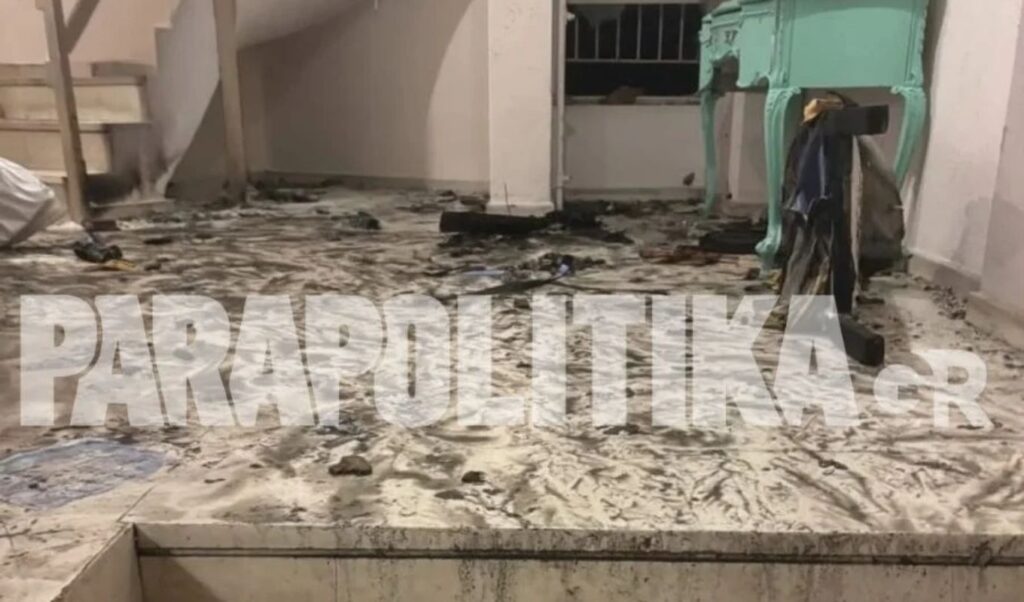
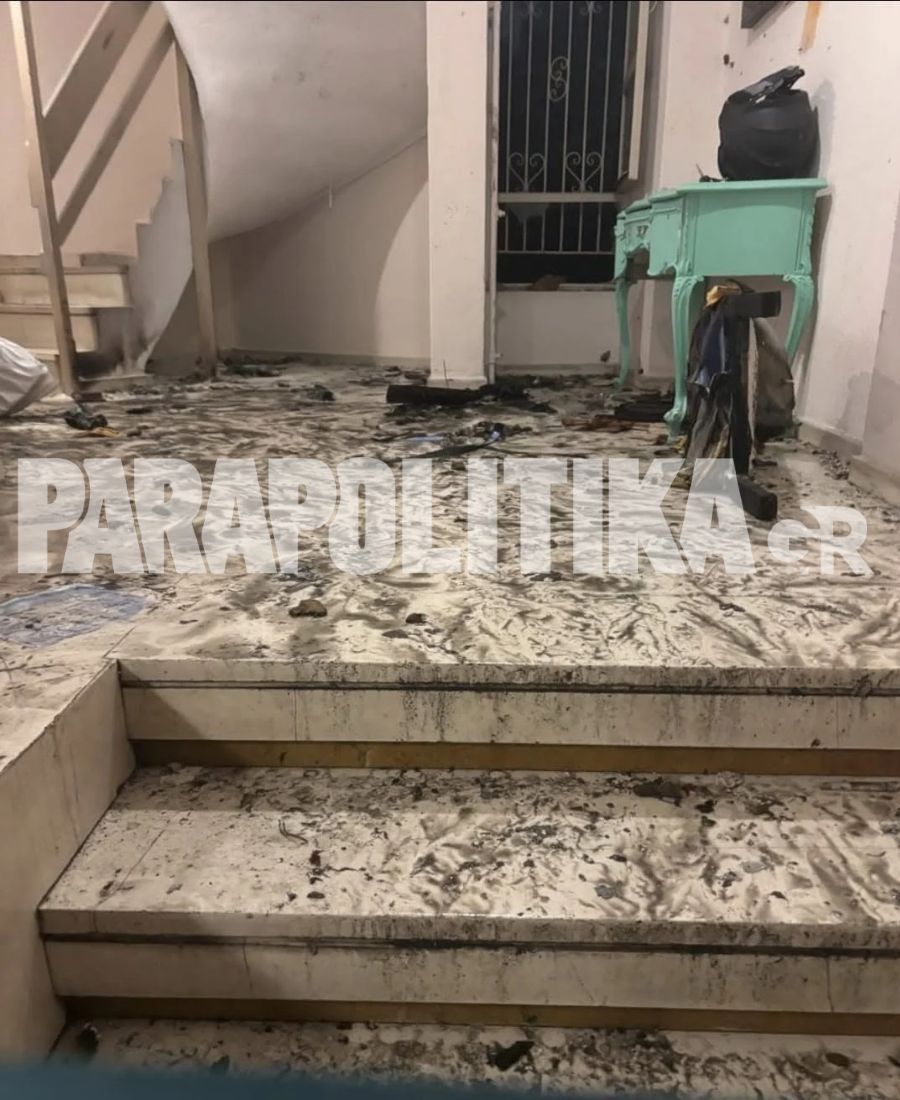
Kolonos: The remains of the explosive device
Parapolitika.gr is publishing a photograph from the scene of the explosion — specifically from the mezzanine level of the apartment building on Platonos Street. The image captures the limited extent of the structural damage caused by the blast, as well as the remnants of the explosive device.
The drug tip-off call and the explosion
It all began when an unknown individual contacted the emergency dispatch center, reporting that drug trafficking was taking place at the specific address. Officers from the local police precinct responded to the scene and, during their search, discovered a bag on the mezzanine level of the building. The explosion occurred the moment they attempted to open it.
One male officer was seriously injured in the blast, sustaining wounds to his head and body, while a female colleague suffered lighter injuries. The two officers were transferred to the 401 General Military Hospital of Athens, while the two injured civilians were taken to Evangelismos Hospital.
Eighteen firefighters arrived on scene with six vehicles, and searches were also conducted for the possible presence of a second explosive device.
Homicide unit takes over — terrorism scenario ruled out
The investigation has now been handed to the Crimes Against Life Division of the Hellenic Police — commonly known as the Homicide Unit — with investigators focusing on the circumstances surrounding the placement and detonation of the device, as well as the identities of those responsible.
Initially, a counter-terrorism unit also attended the scene to assess the findings. However, according to police sources, the evidence gathered so far does not appear to point toward a terrorist attack, nor to an accidental detonation during the preparation of an explosive device, as had been the case in the Ambelokipi incident. Instead, investigators are increasingly turning their attention to a possible connection between the explosion and ordinary criminal activity.
Members of the Drug Enforcement Sub-Directorate of the Organized Crime Division also participated in the investigation, given that the initial tip-off concerned drug trafficking — and the discovery of narcotics and a precision scale inside the bag is being treated as an additional lead. Nevertheless, according to information available so far, checks have not revealed that any resident of the building has a prior record for similar offenses.
Key questions surrounding the remote-detonated explosion
The finding that the device was triggered remotely adds a new dimension to the investigation. Authorities must now determine who activated the device, from where the detonation signal was sent, and whether there was deliberate intent to injure the officers who responded to the call.
Investigators are also examining whether the anonymous call to the emergency dispatch center was directly connected to the placement of the bag, and whether the drugs found inside were used as part of a carefully laid trap. These are the questions that the Homicide Unit is working to answer — though, as of now, neither the motive behind the act nor the identity of the person who triggered the device has been established.