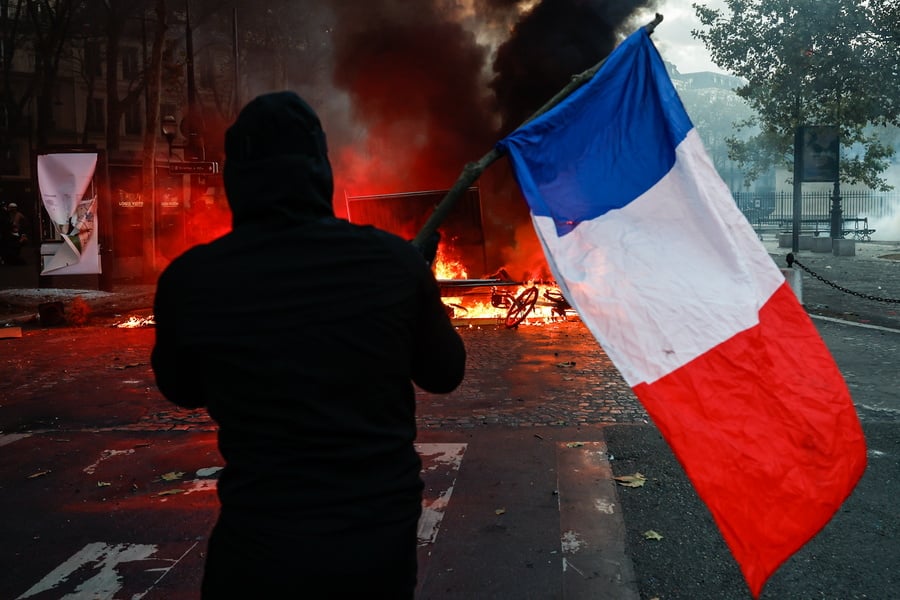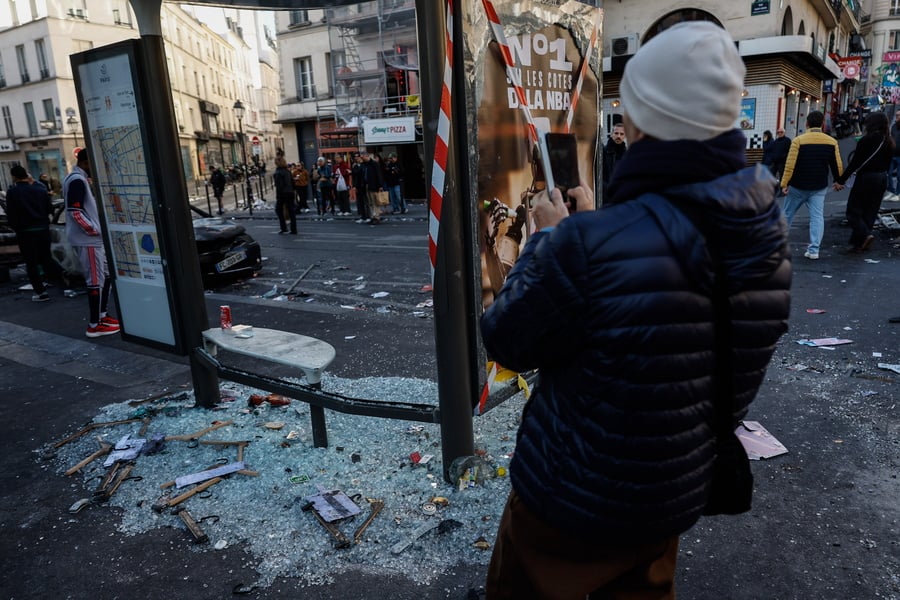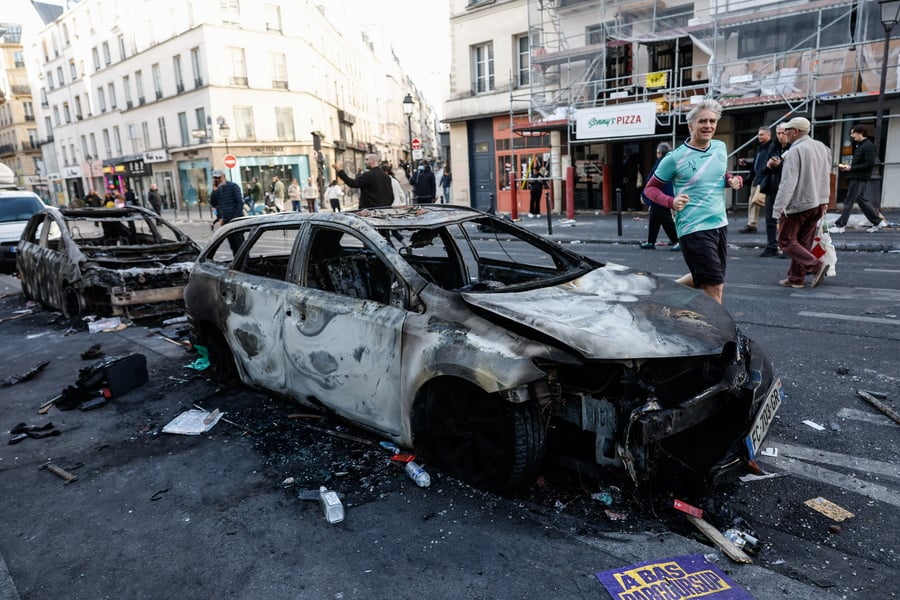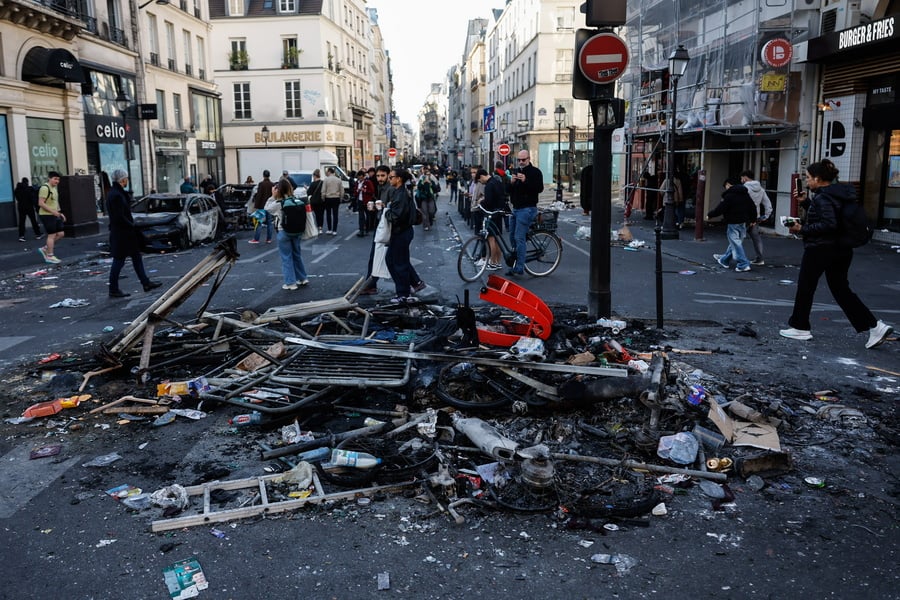
Social outrage is boiling over in France, as protests take on a clear social dimension and, increasingly, the hallmarks of a full-scale uprising — representing a direct challenge to and a vote of no confidence in the French government’s handling of the crisis. This comes at a time when inflationary pressures and a surging cost-of-living crisis are shaping an exceptionally demanding social and economic landscape. Meanwhile, elections are drawing closer: in roughly six months, millions of citizens are expected to head to the polls, with the rise of the far right deepening political uncertainty. Polls reflect a profound sense of social exhaustion and growing disillusionment with the political establishment.
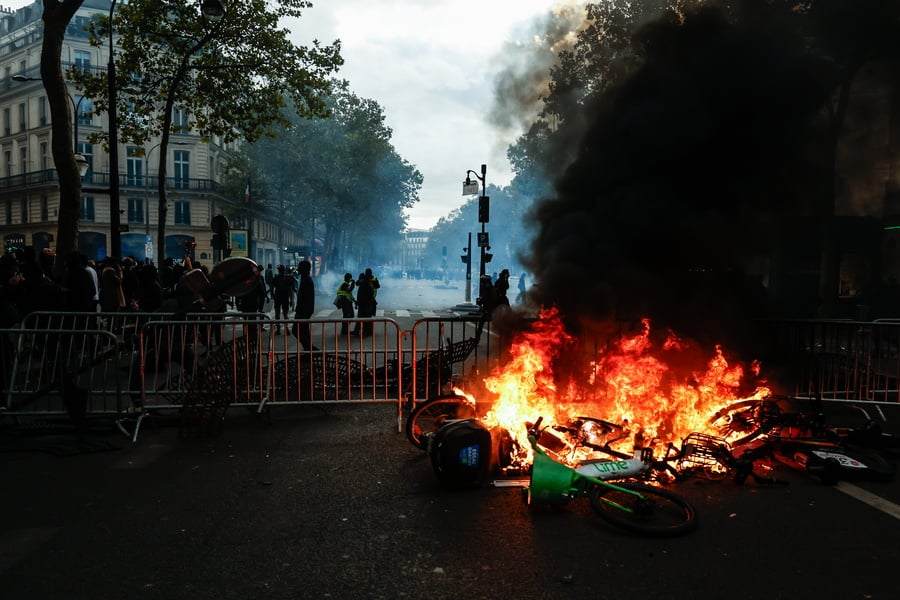
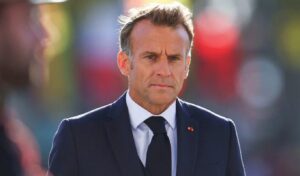
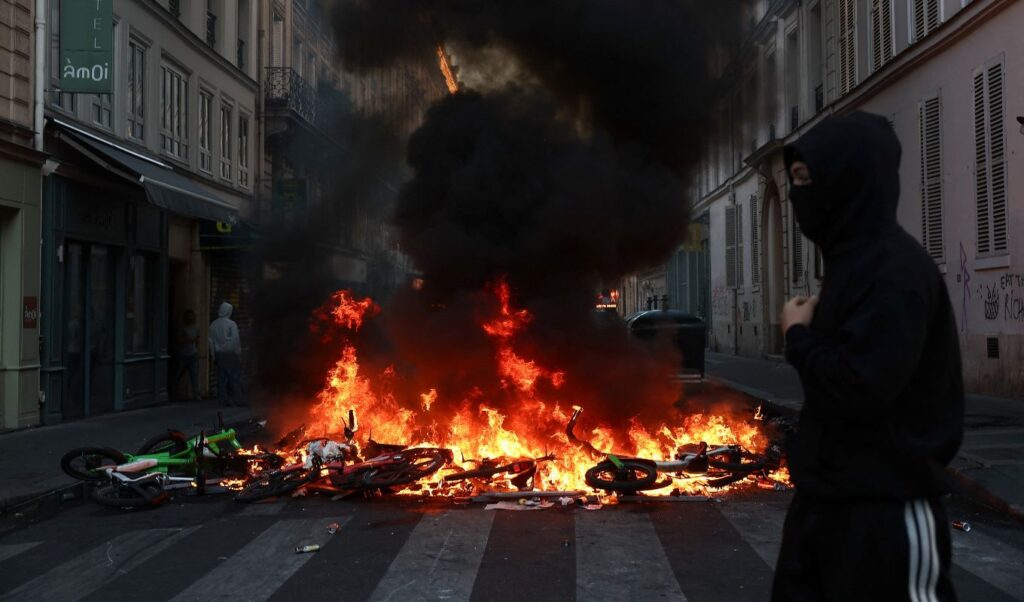
Against a backdrop of mass and bloody protests — leaving one dead and dozens injured — looting, attacks on public buildings, and hundreds of arrests, French President Emmanuel Macron is attempting to restore order and reclaim the political initiative. Yet the crisis is exposing deeper social fault lines, while the opposition challenges his approach and the international environment adds further economic uncertainty. In a bid to regain control of the political agenda, Emmanuel Macron addressed the French public in a televised speech on Sunday, October 18, describing the situation as “extremely serious.” The address came in the wake of Saturday’s massive mobilization, which was marked by both mass participation and widespread violence.
In the aftermath of these grave developments, the statement issued by Marine Le Pen, leader of the National Rally (RN), carries its own symbolic weight. She described the unrest as “a threat to democracy,” condemning what she called “state incompetence” and a profound crisis of trust. Le Pen portrayed the Macron government as an exhausted and directionless political system, incapable of guaranteeing order and security. The American president, for his part, intervened with a post on Truth Social, attributing the unrest to France’s immigration policy. “France is on fire!” he wrote, arguing that the arrival of people from “a completely different world” who, in his words, “carry hatred in their hearts,” has destroyed what was once a great country.
Emmanuel Macron: Decoding the national address
In his message, Macron chose to condemn the left — and specifically, as he put it, the violence he claimed was incited by it — while making no mention of calling early elections. On the contrary, he insisted that the electoral process would proceed on schedule, and announced support measures for those affected by the destruction. However, he stopped short of announcing new emergency security measures, failed to specify the scope of assistance to local authorities, and presented no concrete interventions to address the underlying social and economic grievances driving the protests.
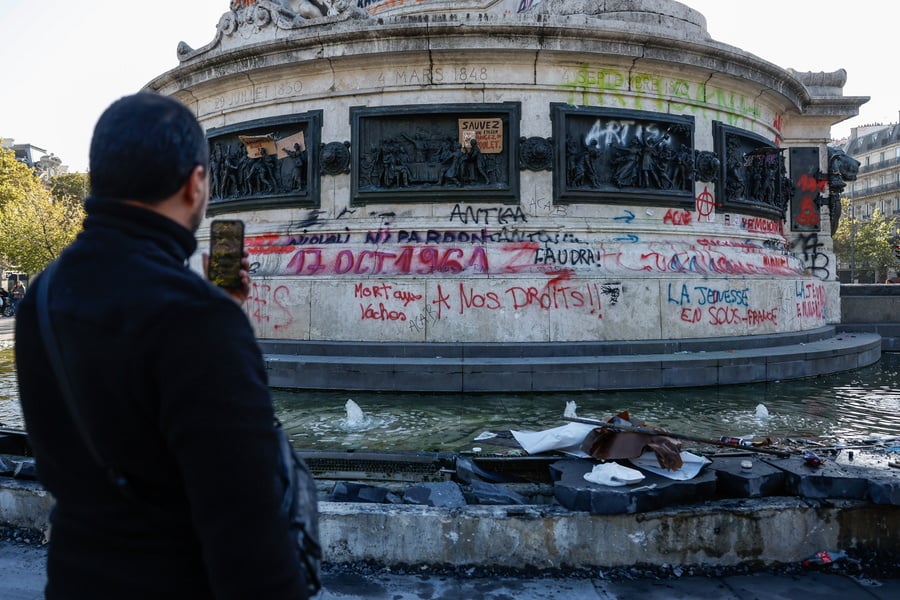
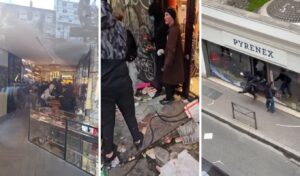
According to the French Interior Ministry, approximately 550,000 demonstrators took to the streets, while organizers put the figure at 800,000. The protests, which began with demands over the cost of living and living conditions, were accompanied in several cities by looting, arson, and attacks on public buildings. The town hall in Limoges suffered fire damage, and the tourist office in Lyon was also vandalized.
Macron attributed the violence to far-left groups, which he claimed were joined by criminal elements. He condemned the destruction and looting, calling for those responsible to be identified and prosecuted. He also announced the activation of a crisis management mechanism and pledged a tougher judicial response to offenders. He left open the possibility of banning specific gatherings if deemed necessary to protect public safety.
What is really happening in France
Behind the images of clashes lies a society strained by the cost of living, economic insecurity, and growing distrust in political institutions. Rising everyday costs, fuel prices, and income anxiety have created a broad field of discontent that cuts across political affiliations and social groups.
The protests have drawn in workers, students, trade unions, and citizens demonstrating for a range of reasons. Young people occupy a particularly prominent place, voicing their anxiety over conditions in schools, teacher shortages, access to higher education, and bleak employment prospects. What began as an educational grievance gradually merged with wider demands for better wages, improved pensions, and a lower cost of living.
At the same time, the violence is reshaping the dynamics of the movement. Attacks on public buildings and looting are shifting attention away from the social demands and intensifying pressure for tougher security measures. The government argues that organized groups are exploiting the protests to sow chaos. However, blaming specific political circles is not, on its own, sufficient to explain the scale of the mobilization or its broad social base.
The question of policing adds yet another dimension to the crisis. France faces a dual challenge: protecting citizens and institutions from acts of violence, without treating social protest as a whole as a threat. The challenge for the government is to translate an acknowledgment of the problems into concrete policy action.
Security or political crisis management?
In his address, the French president attempted to strike a balance between condemning the violence and acknowledging the social grievances. He expressed support for security forces, mayors, and business owners who suffered losses, while stressing that peaceful protesters must not be conflated with those who looted or caused destruction.
He also acknowledged concerns over the cost of living and the difficulties facing young people. This acknowledgment, however, was accompanied by references to existing consultation processes, without presenting a comprehensive new package of social measures in that section of his speech.
This is where the core weakness of his political approach lies: restoring order is necessary, but it does not automatically address the grievances that drove hundreds of thousands of people into the streets. If citizens conclude that political leadership is focused solely on suppression rather than tackling economic hardship, the discontent may remain very much alive.
The opposition and the electoral stakes
The reactions of political forces reflect starkly different approaches to the crisis. Communist leader Fabien Roussel accused Macron of failing to offer real answers to young people, workers, and pensioners on the cost of living, calling for the protests to continue. Green Party leader Marine Tondelier expressed her disappointment at the absence of any self-criticism in the president’s address.
On the other side, right-wing politician Bruno Retailleau called for a declaration of a state of emergency, arguing that the government is failing to adequately protect its citizens. The confrontation highlights two competing priorities: on one hand, strengthening social policy and sustaining the demands of protesters; on the other, cracking down harder on violence.
The electoral stakes depend in large part on the ability of political leadership to restore public trust and deliver answers on the issues of everyday life.
The defining gamble
France is confronting a crisis that cannot be resolved by policing and judicial measures alone. Protecting citizens, businesses, and public infrastructure is essential — but so is addressing the cost of living, educational insecurity, and the disillusionment of younger generations.
For Emmanuel Macron, the real gamble is not simply restoring order on the streets. It is proving that the state is capable of listening to society and delivering effective responses — without capitulating to violence. Whether the crisis leads to de-escalation or to an even deeper political and social polarization will depend, in large measure, on how well he manages that balance.