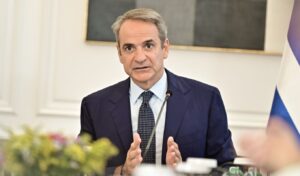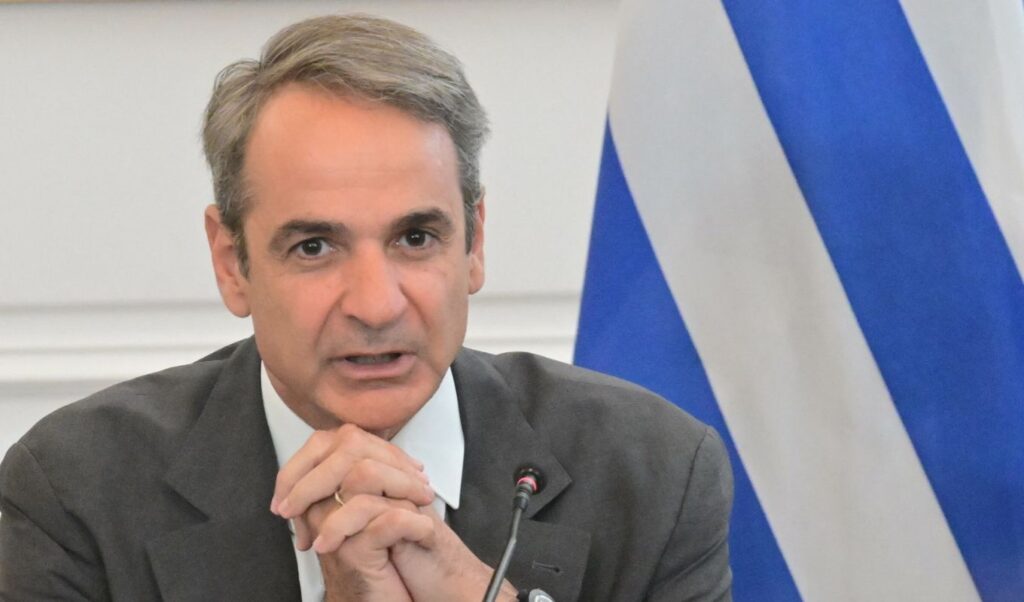
The Greek government is searching for the European Commission’s “key” that will unlock the door to new support measures, with the Prime Minister leaving this prospect open. “I know that pressures remain significant and no single measure alone is enough to make them disappear. That is why we will monitor international developments and adapt our interventions, keeping resources in reserve for the difficult months ahead,” wrote Kyriakos Mitsotakis in his regular Sunday Facebook post.
Government studies new support measures, seeks “key” from the Commission
The government is now rolling out the full range of measures it has announced, with horizontal subsidies on diesel fuel for vehicles and heating, as well as on unleaded petrol, already in effect. Meanwhile, the Ministry of National Economy and Finance has put out for public consultation the draft legislation covering the measures announced at the Thessaloniki International Fair, including tax and contribution cuts, income support, and more.
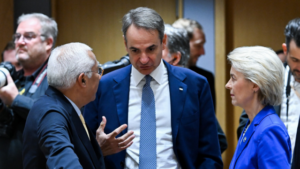
“What we are asking for — and what the European Commission is listening to — is greater fiscal flexibility for targeted and temporary measures. I stress: targeted and temporary. These would allow us to add further measures to the arsenal we have already announced, measures that would carry exactly that character,” Kyriakos Mitsotakis emphasized during his statements on Friday evening in Brussels.
What does the agreement reached by the leaders of the EU’s 27 member states actually include, as reflected in the Summit’s conclusions document? On this key issue, EU leaders — and the precise wording matters here — “called on the Commission to examine and, where deemed necessary, to propose further short-term measures to address the surge in energy prices, taking into account the different conditions in member states, including differences in electricity prices.”
Greece, as government sources stress, succeeded in having the need for additional targeted and temporary measures to address high energy prices reflected in the European Council’s conclusions on energy. Particularly significant, the same sources emphasize, is the reference to the different conditions prevailing across member states, as it acknowledges the need to take individual national circumstances into account. They add that the conclusions move in the direction championed by the Prime Minister, keeping the need for additional interventions on the European table, with the next objective being the examination of specific targeted and temporary measures that will respond to the pressure being felt by households and businesses.
New investments of €1 billion
Government spokesperson Pavlos Marinakis described the outcome as “an important first step,” signaling the government’s optimism about achieving this goal. “The need to examine a degree of flexibility has been included in the conclusions, so that countries — and Greece in particular — are given the ability to provide even more relief beyond what has already been granted, extending it for as long as the need exists to address an emergency crisis,” he said in a subsequent television interview on Open. Recently, the Commission approved Greece’s request from the Ministry of National Economy and Finance to extend the scope of the existing national escape clause to include measures that strengthen the country’s energy resilience.
New investments are expected to approach €1 billion by 2028 and will be funded through national resources. In essence, Greece is now seeking to have the scope extended to cover additional support measures for households and businesses facing rising energy costs, using additional national funds to be allocated in a temporary and targeted manner so as to reach the most vulnerable.