Following the agreement with Donald Trump, Russia — through Deputy Prime Minister Alexander Novak, who made the forecast — expects to restore its diesel exports to historically familiar levels, reaching 3 to 3.5 million tons per month by the end of 2026. According to Reuters, Novak told the state broadcaster Rossiya-24 that additional volumes of Russian diesel, under the deal struck with U.S. President Donald Trump, will help partially rebalance global supply and demand. America’s appetite for lower fuel prices created an opening, and Russia is wasting no time seizing it. The Trump deal, however, is raising alarm across the West, as it offers no guarantee that economic pressure on Moscow over the war in Ukraine will continue.
⚡️🇷🇺⛽️ 🇪🇺 Les Européens ont acheté des énergies à la Russie pour 320,7 milliards de dollars depuis 2022, a déclaré Alexander Novak
Seulement au cours des neuf premiers mois de 2026, des combustibles d'une valeur de 21,3 milliards de dollars ont été livrés aux pays de l'UE, a… https://t.co/fJJm06yxAc pic.twitter.com/8gUYxqQEMZ
— X⚡️INFOLIVE (@xinfolive) October 12, 2026
Russia: The question of prices
With Donald Trump‘s deal with Vladimir Putin for the immediate export of 300,000 tons of Russian diesel — and 3.4 million tons in total — onto global markets, the U.S. President believes this will bring fuel prices down. Reuters, however, is not so convinced. According to the agency, it is far from certain that the market will be sufficiently relieved to actually trigger a price drop. Based on its reporting, Russia plans to release 500,000 tons in November and an additional one million tons at a later stage. Reuters also notes that 300,000 tons of diesel does not even equal a single day of U.S. consumption, where daily usage stands at 2.94 million barrels.
The two factors that will determine whether exports actually increase
Donald Trump announced an energy ceasefire agreement between Ukraine and Russia, most likely to ensure that Ukrainians would refrain from striking Russian refineries again. The situation took a dramatic turn on the evening of Sunday, October 11, following alleged Russian strikes on energy infrastructure in Kyiv and Kharkiv, which reportedly continued into the morning of Monday, October 12. What emerged was that Russia had never actually agreed to the ceasefire, and that the U.S. President had effectively put Ukrainian President Volodymyr Zelensky on the spot — Zelensky condemned the attacks, having earlier stated that Ukraine would not target refineries as long as Russia did not bomb energy infrastructure.
Russia, meanwhile, has its own serious challenges. There are significant questions about the state of its refineries, given that sustained Ukrainian drone strikes have been deliberately targeting them. On top of that, many sanctions imposed on Russia directly affect its tanker fleet — the very vessels needed to ship the diesel. Reuters notes that Russia was transporting around 100,000 tons of diesel per day before Ukraine began its strikes in 2024. This means that if attacks on energy facilities halt and key refineries are restored to operation, the country could potentially meet Washington’s initial request — but that remains a major if.
Domestic opposition
According to Reuters, Russia stands to gain revenue from this deal, though the state itself will see very little of the money. Trump is facing domestic criticism, even from within Republican ranks, with some arguing that the U.S. should not be softening its stance toward Moscow and should instead be applying greater pressure. Zelensky, for his part, has warned that importing Russian fuel could strengthen Moscow’s war effort and lead to greater losses for Ukraine.
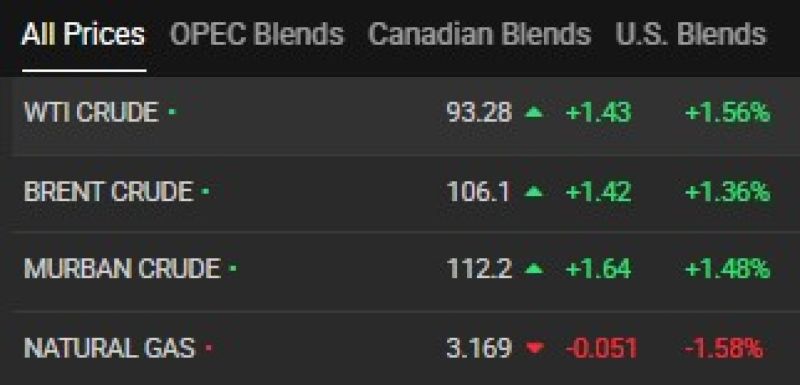
At the same time, fuel shipments through the Persian Gulf have slowed considerably, largely due to escalating tensions in the Middle East — particularly involving Iran. Taken together, these factors suggest that Russian diesel exports are unlikely to meaningfully ease the market, regardless of whether Trump chooses to use the deal as a talking point ahead of the midterm elections. As of the evening of Monday, October 12, fuel prices showed no signs of falling.