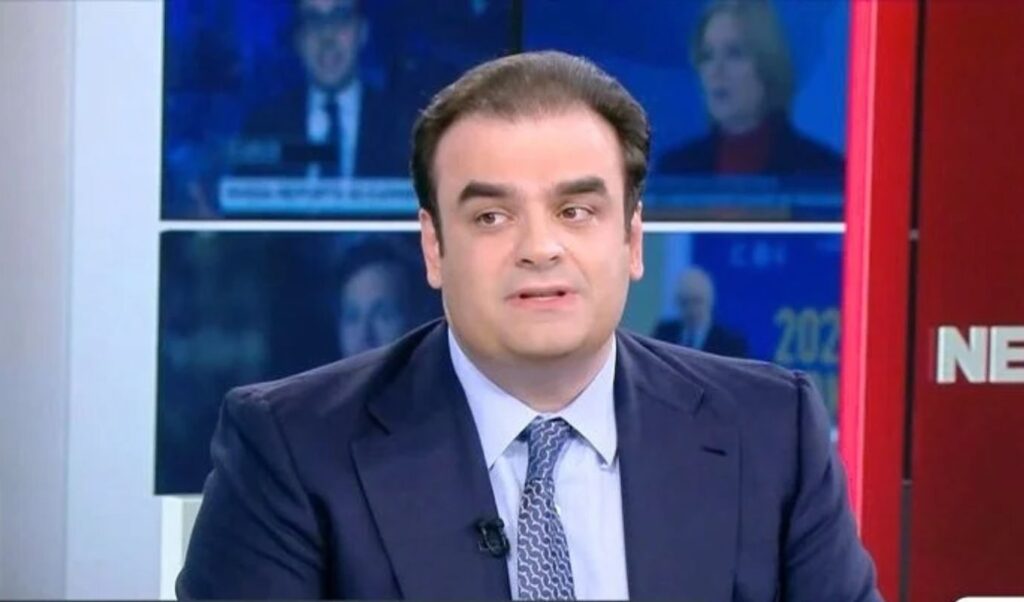
Greece’s Minister of National Economy and Finance, Kyriakos Pierrakakis, spoke about the government’s interventions to address the impact of the energy crisis during an interview on Alpha TV, stressing that a total of €1 billion has been allocated in support measures for citizens since the crisis began. “We have been by the side of citizens from the very first day the energy crisis started,” the minister said, adding that citizens “should not feel insecure.” He noted that the government will continue to closely monitor the evolution of international oil prices, and reiterated that the total amount allocated to date in support measures amounts to €1 billion.
Kyriakos Pierrakakis: “We’re not asking for a tax, we’re asking for space”
Referring to Greece’s request at the European level, Mr. Pierrakakis emphasized that it does not concern the imposition of a new tax, but rather the creation of additional fiscal space. “We’re not asking for a tax, we’re asking for space,” he said characteristically, explaining that if the prime minister’s request is accepted, Greece will gain additional capacity to fund support measures.
The minister also referenced previous Greek demands at the European level. As Mr. Pierrakakis noted, Greece sought additional fiscal flexibility for both defense spending and energy — requests that, he said, were accepted at the European level.
“Common sense must prevail and we must be able to support citizens even more,” if we find ourselves in worst-case scenarios, he added.
Why the 120-installment debt settlement plan is being introduced now
Asked why the government is now moving to expand the debt settlement scheme to 120 installments, Mr. Pierrakakis replied that “when conditions change, your strategy changes too.” He argued that over the preceding period a series of tools had already been activated to address private debt, including the out-of-court settlement mechanism and the protected account. The minister placed particular emphasis on compliant debtors who wish to meet their obligations, describing the new arrangement as yet another tool available to them.
As he stated, citizens who have accumulated debts and are seeking help to meet their obligations want “a state that extends a helping hand, not one that wags its finger.” According to Mr. Pierrakakis, the goal is for the government to return the dividend of growth to citizens without disrupting fiscal balance. “Our job is to be responsible stewards,” he said. He also noted that the state and the relevant supervisory bodies will monitor compliance with the new rules by servicers.
The new regulatory framework for servicers
The minister made particular reference to the new framework for loan servicers, pointing out that over the preceding period — alongside the tools already established for managing private debt — the government had also been recording citizens’ complaints about the conduct of debt management companies.
He stressed that the new legislative initiative will bring accountability, clear rules, and consequences, with the aim of closing all loopholes in the existing framework.
Kyriakos Pierrakakis’s full interview
Journalist: Good evening, Minister.
Kyriakos Pierrakakis: Good evening, Mr. Schreiter.
Journalist: …The subsidy on diesel fuel amounts to 20 cents — we’ve seen the differences at the pump. I imagine what we’re seeing, you’d agree, doesn’t solve the problem right now.
Kyriakos Pierrakakis: We have been by the side of citizens from the very first day the energy crisis began, since last spring.
If we look at what other European countries have done in total, Greece ranks among the top three countries in Europe in terms of overall support measures, with approximately one billion euros allocated since the crisis began.
And we will be there at every step. Citizens watching us should not feel insecure. The Prime Minister demonstrates this, as does the government, every single day. Today we announced additional measures, as you’ve seen.
Journalist: Let’s move on to the 120 installments.
Kyriakos Pierrakakis: We will stand by them, monitoring oil prices — now on a fortnightly basis — because as you’ve seen, there is enormous volatility in those prices. So, specifically regarding heating oil — and let me say here, we know very well what winter means and what it means for the family budget — in two weeks’ time we will be there. To support heating oil as well.
And to stand by every family and every business in the country.
Journalist: I imagine this will be an ongoing process throughout the winter, because you’ll be supporting heating oil now — it will start below €1.75 — but if things get much worse, that support will need to change too.
Kyriakos Pierrakakis: That is naturally the case, and it’s the logical approach you’re describing — and Greece has the capacity to take these actions within a European framework. We also discussed the initiative — I heard the report about the Prime Minister’s initiative — and in that context, Greece is among those countries that have this capacity.
As I said before, we have allocated one billion euros since the crisis began. Your question is: “Is it enough?”
I will tell you that problems are always greater than the solutions. But our goal is to be by people’s sides. The Thessaloniki International Fair (TIF) measures simultaneously boost citizens’ disposable income. So at every step, at every difficulty that arises, citizens should know that we will be there for them.
Journalist: What exactly are we asking from the Commission, Minister? This “fiscal flexibility” sounds impressive, but no one quite understands what it actually means in practice. What are we asking Europe to give us regarding VAT?
Kyriakos Pierrakakis: In a single phrase — and I’d put it this way, since people were talking about taxes recently — we’re not asking for a tax, we’re asking for space. That is to say, as I mentioned before, we have allocated one billion euros since the crisis began. I also heard the opposition comment on the extra VAT revenues.
Do you know what the total extra VAT revenues are this year? They are roughly equivalent — actually somewhat less — around €950 million, while we have given one billion since the crisis began. But that one billion we’ve given counts.
If the Prime Minister’s request is accepted, we will have extra space — extra capacity to support citizens even further, on top of the existing measures, which as you’ve seen we announce additions to every week.
Journalist: So we’re waiting on Europe for this as well.
Wearing your other hat as President of the Eurogroup — I imagine you’d agree that Europe is far too slow in its decision-making. The energy crisis has been discussed at length, yet we see no real action. The only recommendation has been to turn off the lights at night and hope we get through the winter. So we’re waiting, at least, for this European Union decision to allow that fiscal flexibility.
Kyriakos Pierrakakis: Wearing the European hat, I am obliged to represent the consensus of all member states. However, as Greece’s Finance Minister, I’ll tell you this: we pushed for the escape clause for defense spending — that’s real money reaching people — and we succeeded. We pushed for the escape clause for energy, for energy investments — which strategically reduce energy bills for the people watching us — and we succeeded.
So if we end up in the bad scenarios, if difficulties arise, common sense will have to prevail and we will need to be able to support our citizens even more. This applies not only to Greece but to all of Europe — though I am of course saying this with our national hat on and from the perspective of our national strategy.
Journalist: Let’s move to our own domestic issues. The 120-installment scheme — a longstanding demand from the market, years in the making — is now being fulfilled. Fair enough, given the scale of the debts. But on the other hand, why now? Why, after all this time, could this request not have been granted months or even years ago?
Kyriakos Pierrakakis: Because when things get harder, when conditions change, you change your strategy too. That is self-evident. You adapt and increase your support measures. But you know something, Mr. Schreiter — we have already taken a series of actions throughout this period, whether it’s the out-of-court settlement mechanism, the reduction of the eligibility threshold to €5,000, the protected bank account, or a whole range of other steps taken recently. All of this points in the same direction. This is one more tool being introduced today.
Today also happens to be the deadline — the final date, for example, for the Swiss franc loan settlement. So actions on private debt are constantly being taken in this direction. We’ve already implemented eight measures, and now the 120-installment scheme is added, to give breathing room to the people watching us. It’s for the responsible people who want to pay their debts — and that’s precisely why we’re giving them this tool.
Journalist: But there are also those who pay their debts without any installment plan. And the concern is that these people are not being rewarded. On the contrary, they see the government offering more and more installment options. They hear the government say it will reward those who pay on time — the compliant taxpayers.
These people have seen no measure in their favor. Instead, they see installment plans multiplying and every government saying “no more installments — this was the last settlement scheme and that’s the end of it.”
Kyriakos Pierrakakis: On the contrary, this required a balancing act on our part. On one hand, there is sound macroeconomic management, responsible fiscal management, the policy of — put simply — “never letting the country go through what it experienced in the past.” We uphold that.
On the other hand, there are people — as in your previous question — whom you hear and I hear, who say: “I accumulated debts during the years of the crisis — help me keep my head above water.” These people want a state that extends a helping hand, not one that wags its finger at them. So what better way than to give them the tools to achieve that? That’s what we’re doing. Economic policy is not just about saying “no.” Economic policy means giving people the tools to do the right thing. And this is one more such tool. It sits alongside the out-of-court settlement mechanism, which looks at your entire financial situation and supports you accordingly; it sits alongside the increase in the protected account threshold. There are many things working together. Whether we’re talking about the policy of reducing public debt, private debt policy, energy crisis support, or the TIF measures — all of these follow a single logic. And that logic is about returning the dividend of growth to people to the extent possible. I know people always want more. I know the problems are always bigger. But do you know what our job is? To be responsible stewards, to listen to people — and to support them to the maximum degree that reality allows.
Journalist: Since we’re talking about responsible stewardship — the unchecked behavior that funds have exhibited all these years — which we now politely call “servicers,” Minister — effectively doing whatever they pleased when it came to loans and repossessions: shouldn’t that have been reined in a long time ago? You’re essentially legislating on this now. There isn’t even a law covering them.
Kyriakos Pierrakakis: I hear what you’re saying. There were things that we saw being circumvented in practice. Of course, as I mentioned before, we have introduced a series of tools. All those tools I mentioned have been put in place over recent months — the out-of-court mechanism, the protected account, and so on. While we were creating those tools, we were simultaneously studying all the complaints coming from people. You know, I’ve heard a great deal personally… we were hearing specific cases, people saying there were problems with timelines, with delays. Others saying “they’re demanding a huge down payment.” So, codified in a clear framework: there will be accountability, there will be rules — and there will be consequences. There were loopholes, as you rightly say, gaps…
Journalist: “Wide-open loopholes,” I’d say…
Kyriakos Pierrakakis: All of them are being closed. All of them are being closed through this legislative initiative. And let me give a few quick examples, because they are of great interest to people watching right now. For instance, there was enormous flexibility in the down payment that servicers could demand as part of a settlement. I heard cases of people owing €100,000 being asked for €50,000 up front — 50% — who can pay that? We’re introducing a cap, a ceiling…
Journalist: …they could even initiate an auction while you were in a settlement that you were actively honoring…
Kyriakos Pierrakakis: That is the second example — and you’re absolutely right to raise it. And let me say here, speaking on behalf of the state: that is unacceptable. And it will now be unacceptable under the law as well…
Journalist: …it’s incomprehensible…
Kyriakos Pierrakakis: …so there will be consequences. And what do I mean by consequences? On one hand, if a servicer violates this — that is, if they initiate an auction or a seizure while you are in a settlement and honoring it — that act will be rendered void. On top of that, you will receive a benefit of five installments. But beyond that, the servicer will face a fine of up to half a million euros. And if the violation is repeated, the fine doubles…
Journalist: …and who will be monitoring all of this, Minister?
Kyriakos Pierrakakis: We will.
That is our job as a state. We will be overseeing this, together with the supervisory bodies. From now on, the framework will be law. It won’t be a regulation or, you know, something left to the discretion of servicers to comply with… this is a solid step forward, and this step will not be reversed.
Journalist: What was announced by the Prime Minister at the Thessaloniki International Fair — in light of these new extraordinary conditions we’re now discussing, and the measures you’re taking that you hadn’t anticipated to