Serious “systemic weaknesses,” tailor-made tender conditions that restricted free competition, inflated budgets, and problematic documentation of beneficiary participation are among the findings of the European Commission‘s final audit report on Greek vocational training programs.
A damning final report
The key points of the Commission’s report — contained in the so-called final document of the Joint Directorate-General for Cohesion Audit, dated September 7, 2026, and brought to light yesterday by the website Euro2day — fully confirm all the findings of the preliminary report that had been revealed last March by the “Big Mouth” column of powergame.gr. According to the document, European auditors, following an investigation into whether irregularities had occurred in connection with a series of training programs funded by the ESPA structural funds for the 2021–2027 programming period, concluded with a “qualified opinion with significant implications” and classified the Greek management and control system for training programs under Category 3 — which in Brussels parlance means that it is dysfunctional and requires substantial improvements, as the problems identified are “systemic in nature” and pose a serious risk of irregularities at the expense of European funds.
The sample audits were carried out in late 2025 and covered the “Human Capital and Social Cohesion” program under ESF+ and the “Just Transition” program under JTF. The respective Managing Authorities and the ESPA Executive Structure of the Ministry of Labour and Social Insurance were placed under the microscope.
The beneficiaries
The Commission’s final report revisits the issue of large contracts that were not divided into smaller, independently functioning lots, noting that this practice favored large providers. In other words, it restricted the ability of smaller providers to participate and gave an advantage to larger consortiums, which could then subcontract portions of the work to third parties.
Particular weight is also given to participation conditions that effectively excluded companies from other European countries from taking part in the tenders. The calls for proposals required providers to hold a Lifelong Learning Center license and to have a physical presence in Greece at the time of submitting their bid — even when the program in question was designed to be delivered entirely online.
It was also found that in certain projects, certification was restricted to bodies accredited by the National Accreditation System (ESYD) or the National Organisation for the Certification of Qualifications and Vocational Guidance (EOPPEP), without recognizing equivalent international standards such as ISO/IEC 17024. The Commission concluded that these requirements violate the European principles of equal treatment and non-discrimination.
Auditors also identified numerous cases in which training providers overestimated the number of participants and inflated budgets, without adequately adjusting costs to reflect the mode of training delivery. In several cases, the maximum permitted rates were applied, even though a large portion of the training was delivered asynchronously online and therefore carried a significantly lower actual cost.
In some projects, participation was as much as 87% below the original target. As a striking example, the SEPE program trained only 209 unemployed individuals instead of the planned 1,600 (13%); the ESAmea project reached just 882 people with disabilities out of a target of 3,000 (29%); while an ESEE project enrolled only 1,750 young unemployed people instead of the planned 3,700 (50%).
The prisoners’ program
Among the most problematic cases was the training program for prison inmates. In a sample of 30 participants, 26 had not completed the required number of training hours, while some were attending classes conducted in Greek without even having a basic command of the language.
Auditors found no answer sheets or detailed scores to substantiate the knowledge certification. Attendance registers contained only the signatures of trainers — not trainees — while part of the training was delivered remotely, despite a contractual obligation for in-person instruction at detention facilities. The findings raise broader doubts about whether beneficiaries actually acquired the skills for which European funds were disbursed.
A domino effect risk
The penalty Greece faces for all these irregularities is that it will be required to return to Brussels 25% of the European funds allocated to contracts where violations were identified. This constitutes, in effect, a clawback or reduction of EU funding — not a conventional administrative fine.
More seriously, however, the Commission characterizes the irregularity as systemic and is demanding that Greek authorities return 25% of funds allocated to other programs run by the same bodies, provided those programs include equivalent exclusionary conditions affecting European companies.
As a result, the bill is not limited to the projects in the original sample. Based on the financial corrections table, the total proposed penalty for the audited sample amounts to €1,622,018.85. This figure results from applying the maximum rate of 25% to audited expenditure totaling €6,488,075.40. However, should the penalty be extended to cover all vocational training contracts — which share the same characteristics — the 25% clawback would oblige Greece to repay tens of millions of euros.
The government’s response
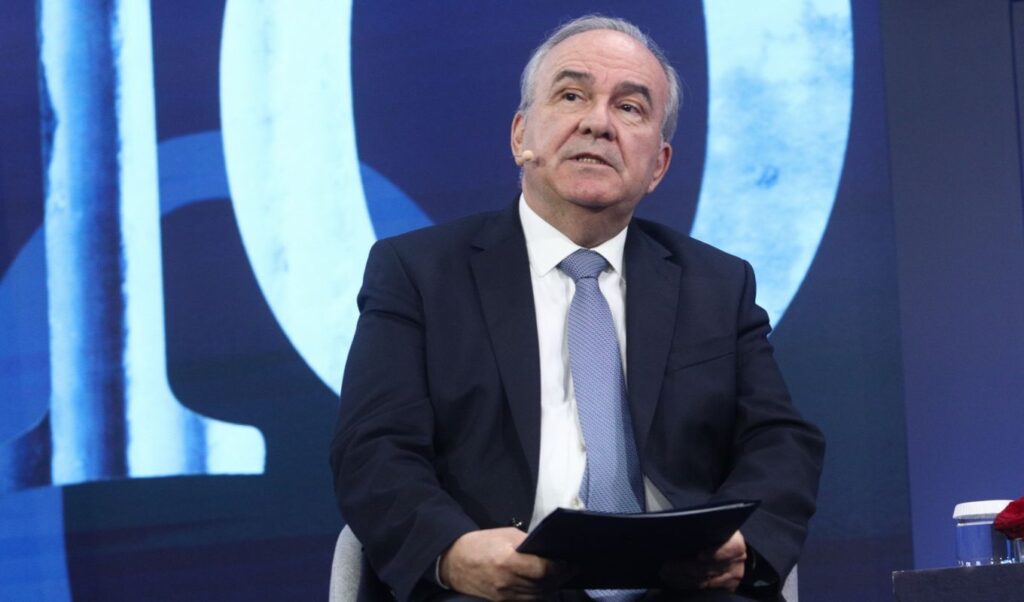
The press office of Deputy Finance Minister Nikos Papathanasis issued a statement reading as follows: “The regulatory framework governing the design and implementation of training actions, including the procurement procedures, was developed by our country during the period 2020–22 (ESDEK and related national legislation) in cooperation with the European Commission and in accordance with its guidance. In particular, the tenders that were subject to the sample audit by the European audit authority (DAC) were drafted in compliance with the above regulatory framework and had been approved by the Court of Audit. Furthermore, the DAC audit and its related findings explicitly state that the competent authorities followed the prescribed procedures of the national regulatory framework for training programs (ESDEK), as these were shaped following EU recommendations made during a 2017 audit that identified systemic weaknesses in training actions. It is also noted that our country will examine the options available under the relevant regulatory framework to contest the content of the said findings. It is further stressed that any imposition of financial corrections is covered by other EU expenditure, so that there is no net loss of European resources. In any case, the government has always been open to any audit at both the European and national level.”
Published in the newspaper Apogevmatini