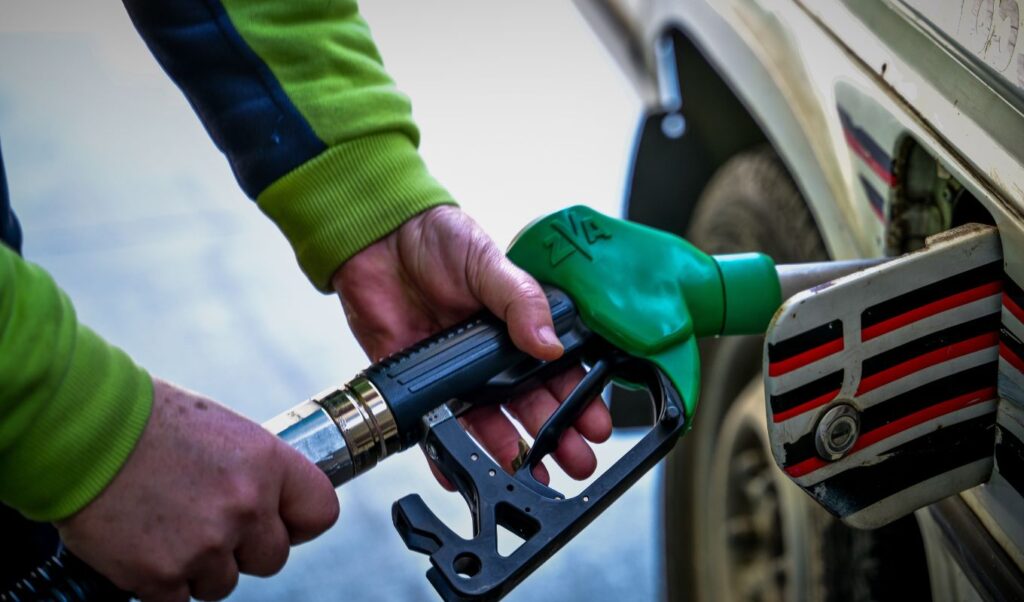
The Greek government is now in the final stretch of preparations for its consumer support measures on fuel prices, as announced by Kyriakos Mitsotakis. Unleaded gasoline remains firmly above €2.10 per liter across most of the Attica region, while there are well-founded fears that heating oil could reach as high as €2.00 per liter when it goes on sale in three weeks’ time.
The government vs. refineries battle over fuel prices
Negotiations are currently underway with refineries over the final amount they will contribute toward consumer relief. According to available information, the government is pushing for a minimum contribution of 15 cents per liter from the refineries, matched by an equal contribution from the state budget. This would mean that if the price stands at €2.00, the combined intervention could bring it down to €1.70. Depending on how international oil prices evolve before October 15th — when heating oil sales begin in Greece — the retail price could potentially drop as low as €1.60 per liter.
Calculations by the Ministry of Finance point to a maximum additional outlay of €200 million over the final quarter of 2026. Priority is being given to heating oil, based on the straightforward rationale that citizens have no readily available or more affordable alternative for heating their homes when temperatures plummet in November and December.
The 10-cent diesel subsidy continues through October
The existing diesel subsidy of 10 cents per liter will also continue through October, as it helps keep transportation costs in check and, by extension, moderates the final prices of goods being transported across the supply chain.
Across-the-board heating allowance increase with no income criteria changes
In addition to the heating oil intervention outlined above, a broad-based increase to the heating allowance will be introduced — without any changes to income eligibility criteria. This benefit applies not only to households that heat with oil, but also to those using natural gas or firewood. Targeted interventions will also continue, with increased funding earmarked for mountainous regions, which experience significantly lower temperatures during the winter months.
A profit margin cap is back on the table
Another tool in the government’s arsenal for what is expected to be a very difficult winter is a cap on profit margins. This measure has been revisited and is being planned along broadly the same lines as before, though the details have yet to be finalized. Under this scheme, petroleum trading companies that supply retail fuel stations would be prohibited from charging more than 5 cents per liter above their refinery procurement price for 95-octane unleaded gasoline and diesel.
Additionally, should the measure be adopted in this form, fuel stations would in turn be prohibited from charging consumers more than 12 cents per liter above the price at which they procure fuel from trading companies.
Athens presses Brussels on excise duty and VAT on fuel
At the same time, the Greek government is pressing Brussels to take measures to curb energy price inflation and to allow member states to reduce excise duties without such reductions counting against the so-called expenditure ceilings. “We are asking for Europe’s permission — not just us, but collectively — so that for as long as this crisis lasts, emergency interventions such as cuts to excise duty or VAT on fuels can be excluded from the calculation of expenditure ceilings. I don’t yet know what the final European decisions will be,” said government spokesperson Pavlos Marinakis in comments to Newsbomb. “Citizens care about what the final price will be, not how it’s achieved. That’s why there will be a timely announcement on the heating oil intervention and the heating allowance to support our fellow citizens, as well as on diesel, to reduce the inflationary impact,” added Deputy Minister to the Prime Minister Thanasis Kontogeorgis, speaking to Real FM.