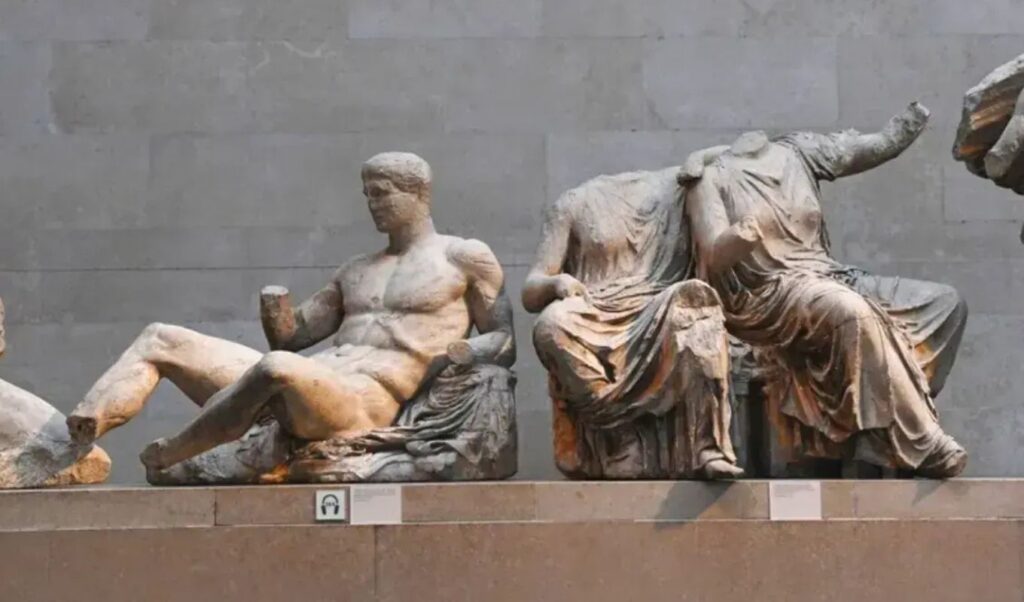
Once the permanent repatriation of the Parthenon Marbles is off the table — with the British Museum willing only to offer a loan arrangement — and with the Greek side seeing no meaningful progress, talks between Greece and Britain have collapsed, according to The Telegraph. The report reveals that negotiations over the issue, which Greece reopened in 2021 through direct talks with the British Museum aimed at securing the return of the sculptures, have been at a standstill for some time. The marbles were removed from the Parthenon by Lord Elgin — born Thomas Bruce — who, in true colonialist fashion, transported them to Britain in the 19th century.
Parthenon Marbles: The question of legal ownership
The British Museum continues to refuse the permanent return of the Parthenon Marbles, citing a legal provision that, according to museum officials, prohibits the institution from gifting objects in its collection — even when, as in this case, those objects self-evidently belong to the cultural heritage of another nation. Greece, it is reported, would be required to formally acknowledge that the British Museum retains ownership of the Marbles — essentially agreeing to what Lord Elgin himself promised and never honored when he claimed he was sending them to Britain for safekeeping. Britain is now effectively demanding the marbles as collateral in exchange for their return, a position that should outrage any fair-minded citizen of either country.
Greece has not abandoned the issue, however. As Culture Minister Lina Mendoni made clear, Greece is not even entertaining the idea of a loan arrangement. Prime Minister Kyriakos Mitsotakis’s contacts with the UNESCO Director-General and with Amal Alamuddin brought Greece’s longstanding demand for the permanent return of the Marbles back into the international spotlight. Meanwhile, George Osborne, chairman of the British Museum, remained characteristically composed — saying “it’s fine” while everything around him appeared to be unraveling. His remark that “there was a deal to be made” poured cold water on the prospects of progress, likely reflecting the kind of dry sarcasm that is quintessentially British. The Greek government, The Telegraph notes, frames Elgin’s actions as outright theft dating to 1816 — when the lord, exploiting Greece’s subjugation under the Ottoman Empire at a time just after the founding of the Filiki Etaireia and just before the outbreak of the Greek War of Independence, removed the marble sculptures from the Parthenon, along with friezes and architectural fragments from the temple dedicated to the goddess Athena, and subsequently sold them to the British government.
The red lines
Britain had hoped to send Greece what amounted to… an outline of the marbles, through a hybrid arrangement so absurd it would have even the Monty Python team laughing. The proposal, in essence, involved sending high-quality reproductions or images of the sculptures, presumably to be displayed at the Acropolis Museum. This attempt was made in 2024, and a source cited by The Telegraph stated that talks have since definitively broken down — even though certain back-channel lines of communication are said to remain open. Negotiations, in short, remain suspended in mid-air. George Osborne went even further, describing this arrangement as a “win-win” for both Greece and the UK.