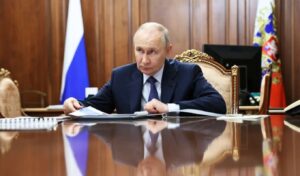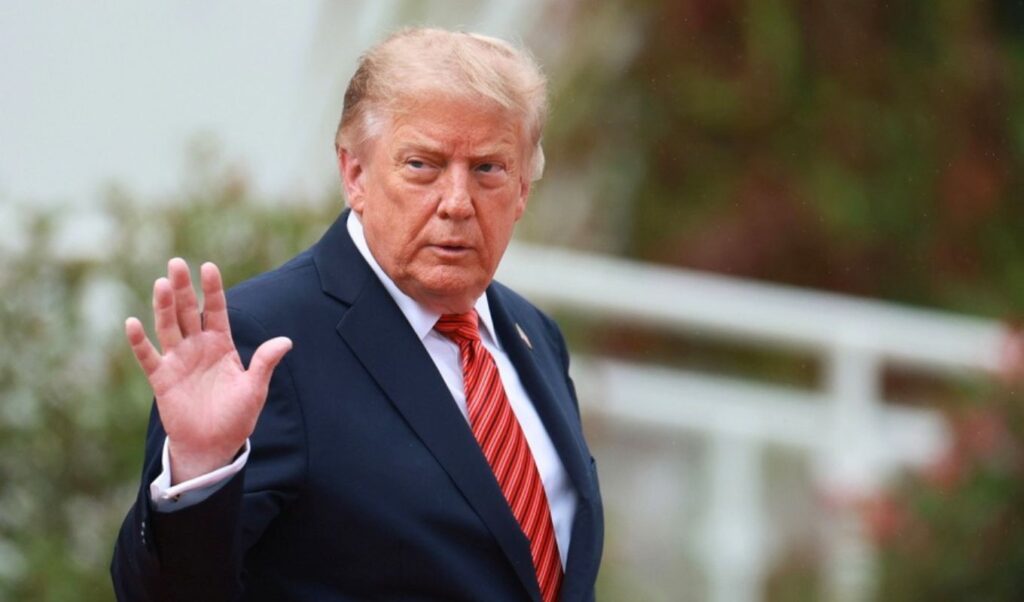
The meeting between Donald Trump‘s envoys and Vladimir Putin at the Kremlin has revealed a new reality in the negotiations over Ukraine. According to a report by the New York Times, the Russian president appeared supremely confident in his country’s military superiority, while the American administration is now searching for alternative paths toward peace.
Read also: Donald Trump: Russia and Ukraine agreed not to strike energy targets
Putin’s confidence and the reaction of American envoys
During the high-stakes meeting, Vladimir Putin stated categorically that Russian forces would seize the entire Donbas region. The Russian leader also warned that Moscow has the capacity to completely destroy Ukraine’s power grid. Jared Kushner, Donald Trump’s son-in-law and key negotiator, attempted to challenge these assertions. He reminded Putin that he had heard the very same predictions a year ago, raising the question of whether the same scenario might repeat itself in the year ahead. This exchange, as described by sources familiar with the details of the talks, highlights the central dilemma facing American diplomacy in its efforts to end the war in Ukraine.
New congressional sanctions against Russia
The U.S. Congress recently passed landmark legislation imposing sweeping sanctions on Russia’s energy sector. The legislative initiative aims to apply economic pressure on Moscow and compel Putin to make concessions over Ukraine. The bill passed with a bipartisan majority of 262 votes to 159, with Representative Michael McCaul stating that the legislation would cripple Russia’s war machine. Donald Trump has pledged to sign the bill, which was championed by Senator Lindsey Graham. The new sanctions grant the president the authority to impose tariffs of up to 100% on countries purchasing large quantities of Russian oil or natural gas. They also target Russian officials, businesspeople, and financial institutions.
The Trump administration’s carrot-and-stick approach
Despite the new sanctions, the Trump administration is pursuing a markedly different approach toward Vladimir Putin. Rather than relying exclusively on pressure, Washington is offering incentives to Russia in the hope of drawing it back to the negotiating table. According to sources close to the talks, the White House is considering signing business deals with Russia even before the cessation of hostilities in Ukraine. This approach represents a radical departure from Trump’s previous statements. An American official who spoke on condition of anonymity explained that trade agreements before the war’s end are feasible, as they would demonstrate that the United States genuinely desires a reset of relations with Russia.
From commitment to flexibility on Ukraine
The American administration’s new posture marks a significant pivot. Last year, Donald Trump had stated emphatically that business deals with Russia would not happen until the war in Ukraine was resolved. Ahead of the Alaska summit with Putin, he had stressed that Moscow wants to do business — but that this would not occur before peace was achieved. This shift suggests that envoys Steve Witkoff and Jared Kushner are searching for new methods to incentivize Russia. The deadlock in negotiations over Ukraine’s potential withdrawal from parts of the Donbas has pushed Washington to reassess its tactics.
The Kremlin’s business proposals
The Kremlin has been actively pitching business opportunities to the White House since Donald Trump’s return to power. Russian officials have proposed a range of deals spanning various sectors of the economy. Moscow’s proposals include agreements on rare earth elements, aluminum, and Arctic joint ventures. Russia has also proposed the involvement of American companies in the sale of Russian natural gas to Europe. Trump has described Russia’s economic potential as enormous. His administration is keen to create incentives for members of the Russian elite to push for peace in Ukraine. American officials believe that sealing business deals would convince Putin’s hardliners of Washington’s genuine intentions.
The Ukraine deadlock and new efforts to break it
Negotiations to end the war have reached a critical juncture. Vladimir Putin has clearly defined the territorial lines he seeks to secure in Ukraine, while Kyiv refuses to yield. Earlier this year, Ukrainian officials proposed renaming the Donbas region “Donnyland” in an effort to persuade Donald Trump to resist Russia’s territorial demands. The initiative failed to produce the desired results.
Kushner addressed the deadlock during a video call at a gathering of international Ukraine supporters in Kyiv. He stated that the role of the Trump administration as mediator is to find a creative solution that allows both sides to move forward. When Kushner remarked that Putin is committed to the talks, part of the Kyiv audience burst into laughter — a reaction that reveals the deep skepticism among Ukraine’s allies regarding the impartial framing of the negotiations.
Restarting negotiations and the road ahead
Talks to end a war now stretching beyond four and a half years had stalled earlier this year. Witkoff and Kushner had turned their attention to the conflict with Iran, leaving the Ukrainian issue on the back burner. The recent trip by Trump’s envoys to Moscow and subsequently to Kyiv signals an effort to restart the process. Ukrainian officials announced that trilateral peace talks between the United States, Ukraine, and Russia could resume as early as October.
The upcoming talks are expected to address the possibility of a limited ceasefire — one that could halt attacks on Black Sea shipping or on Ukraine’s energy infrastructure. Two days after Kushner’s appearance in Kyiv, a Russian jet-powered drone struck a train at a border crossing being used by senior officials, including former CIA Director David Petraeus. The incident underscores the ongoing hostilities despite diplomatic efforts. The war in Ukraine has claimed hundreds of thousands of lives, and the international community is watching developments closely. Donald Trump’s new approach — offering business incentives to Vladimir Putin — is a bold strategy that will ultimately be judged by its effectiveness in achieving peace.