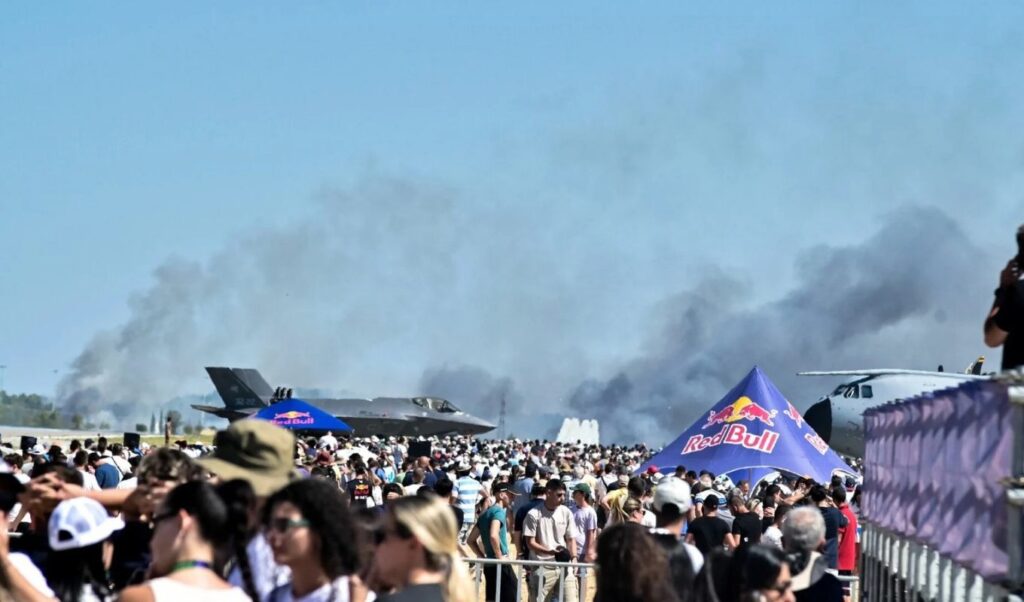
Investigations are in full swing into the circumstances and causes of the Phantom F-4 crash, which led to tragedy on Saturday afternoon during the Athens Flying Week airshow at Tanagra. Two experienced Hellenic Air Force pilots from the 348th Tactical Aviation Squadron “Aris” lost their lives in the accident — 40-year-old Ioannis Blesias and 37-year-old Dimitris Petros.
Read also: Phantom Crash at Tanagra: NATO Secretary General and Defense Ministers of Cyprus, France and Portugal Express Condolences — Dendias’ Post
The international airshow Athens Flying Week, organized by the company of the same name, has been held in Greece since 2012. On December 6, 2017, a Memorandum of Cooperation was signed between the Hellenic Air Force General Staff and Athens Flying Week, with a duration of ten years. As is standard in international practice, most airshow events are organized under the initiative and responsibility of private companies.
It is worth noting that the Hellenic Air Force was invited this year to participate in 30 international airshows, the majority of which — 18 events — are organized by private companies.
The aircraft (F-4) had undergone all required maintenance procedures and inspections in accordance with the Hellenic Air Force’s applicable protocols and was deemed fully airworthy.
Tanagra: The Phantom was performing a transit flight — The “ZEUS” team conducts the airshow display
The aircraft’s participation in Athens Flying Week 2026 involved a transit flight, not an airshow aerobatic display. The aerobatic display is performed by the “ZEUS” Aerobatic Demonstration Team flying F-16 aircraft. The question of the aircraft being “outdated” does not arise.
Aircraft dating back to World War II — such as the Spitfire — or even World War I-era planes regularly participate in similar events both in Greece and abroad.