Aviation accident expert and former Army Aviation pilot Pantelis Fragoulis, speaking on Sunday (6/9) about the Phantom jet crash at Tanagra, suggested that the fighter aircraft may have experienced an aerodynamic stall while executing a particularly demanding maneuver.
It is too early to draw conclusions
At the same time, in an interview with ERT, Mr. Fragoulis stressed that it is still far too early to reach safe conclusions, as the exact causes of the crash are being investigated by the competent Hellenic Air Force committee. Before addressing the possible circumstances of the accident, he extended his condolences to the families of the two pilots — 40-year-old Squadron Leader Ioannis Blesias and 37-year-old Flight Lieutenant Dimitrios Petros. “The air show ended in tragedy. I extend my heartfelt condolences to the families of both colleagues,” he said.
Analysis of the footage
Analyzing footage from the fatal flight, Mr. Fragoulis explained that the aircraft was executing a difficult maneuver at very low altitude. “The aircraft was diving at high speed while simultaneously banking in order to approach the runway. During that turn, I believe it may have entered an aerodynamic stall,” he stated.
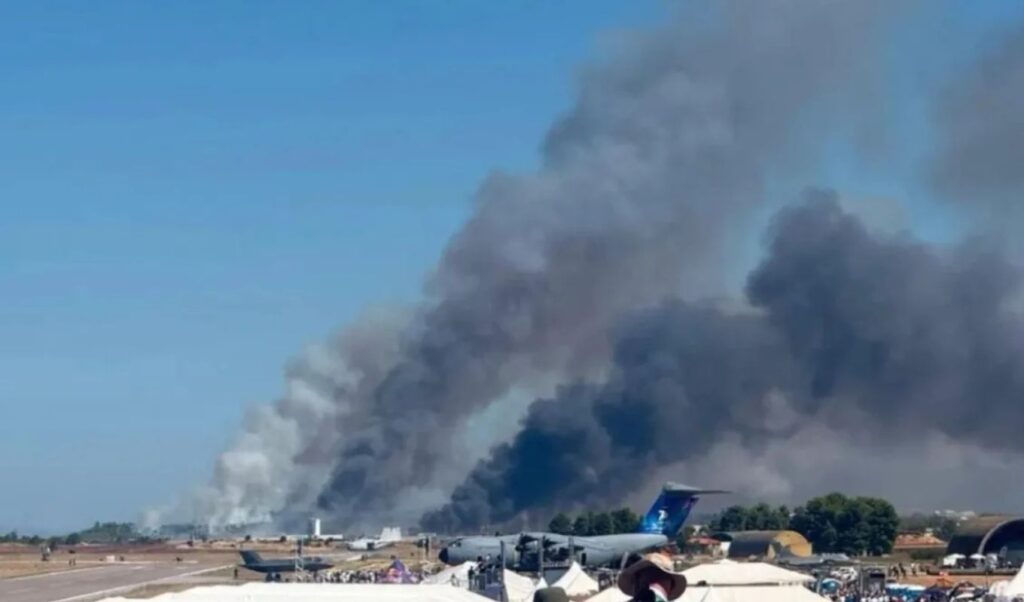
An aerodynamic stall occurs when the wings no longer generate sufficient lift to keep the aircraft airborne. At low altitude, the time available to react and regain control is extremely limited. The two-seat fighter crashed approximately two kilometers outside the Tanagra air base during the Athens Flying Week airshow. No spectators or local residents were injured in the crash.
“They tried to steer the aircraft away from the crowd”
Mr. Fragoulis also put forward the assessment that the two pilots remained in the aircraft until the very last moment, attempting to steer it away from spectators and residential areas. “The pilots did not want the aircraft to come down on people or homes. I believe they tried until the very last second to save it and direct it away,” he noted.
He clarified that airshow flights involve high-speed, high-angle maneuvers performed at extremely low altitudes, which carry a significantly elevated degree of difficulty. Regarding the fact that the ejection system was not activated, Mr. Fragoulis noted that the very low altitude and the pilots’ efforts to control the aircraft’s trajectory may have been decisive factors — while adding that this aspect too must be confirmed by the official investigation.
“Our pilots carry out difficult missions and interceptions over the Aegean every single day, with selfless dedication and a deep sense of responsibility. They are the people who defend our country, even at the risk of their own lives,” the expert concluded.