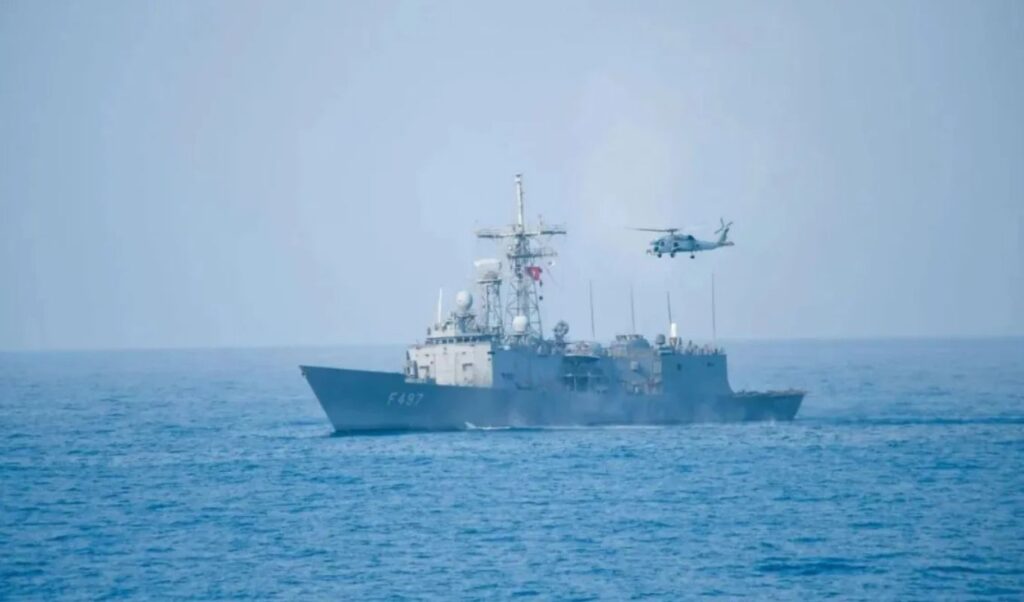
The period of relative calm in Greek-Turkish relations is giving way to a new and deeply concerning phase, pushing the two countries further from the spirit of the Athens Declaration.
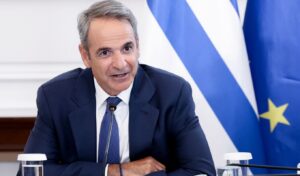
Prime Minister Kyriakos Mitsotakis delivered a clear message to Greece’s neighbor yesterday, stating that “areas of Greek sovereignty are indisputable, and we are ready to defend them at any moment.” Foreign Minister Giorgos Gerapetritis echoed this stance in his two most recent interviews, reiterating that “we will do whatever is necessary. We will respond to provocations and we will respond from a position of strength — because today Greece is stronger than ever before.”
The widening gap between the two countries is seen by many analysts as evidence that the framework of the Athens Declaration has failed as a basis for addressing Greek-Turkish disputes.
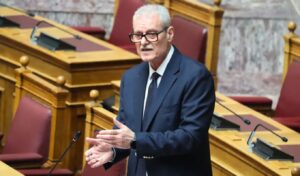
Professor Roussos speaks to parapolitika.gr on Greek-Turkish relations: If Turkey decides when “calm waters” begin and end, then we have a problem
Professor of International Relations at the University of the Peloponnese, Sotiris Roussos, speaking to parapolitika.gr, raises the question of how the “calm waters” policy in the Aegean came to be shipwrecked — and argues that “it is a game being played directly by Turkey.” As he puts it, “if Turkey decides when ‘calm waters’ begin and when they end, then we have a problem. The key issue is not whether the government will — as it should — defend Greek sovereign rights, but rather who ultimately defines who is in a calm situation and who is not.”
Against this backdrop of Turkish provocations, Greek diplomacy appears to be on high alert. As Foreign Minister Gerapetritis stated yesterday, Greece “is vigilant, but not anxious,” emphasizing that the country has the strength to assert its national interests on any front. In the event of a potential “hot incident” similar to the Imia crisis, Athens says it is ready to respond in every appropriate way on the ground. At the same time, efforts are being made to keep communication channels between the two countries open so that dialogue can continue, while Turkish violations will be formally reported. Already, as the minister noted, Turkey’s actions have been officially referred to European authorities.
To effectively counter Turkish pressure, Greece retains the option of preemptive action. Extending Greek territorial waters south of Crete to 12 nautical miles — and in the area of the partial EEZ delimitation with Egypt — is being actively discussed as a necessary step that would raise the costs for Ankara.
According to Professor Roussos, extending territorial waters south of Crete could happen “even tomorrow morning, through a single piece of legislation, since we do not border any other state and there is no ‘median line’ issue.” However, he stresses that the matter is fundamentally political, because “Turkey — which has created the illegal Turkish-Libyan memorandum — will react. The question is whether the government can withstand such a move. To take that step, the government would first need to consult not only Egypt but also Italy, the United States, and secure agreement and a green light from European partners. But if we do it and the Turks react and a crisis erupts, the problem will be far greater.”
The geopolitical picture is further complicated by shifting regional balances. Turkey is deeply concerned about the growing partnership between Greece, Cyprus, and Israel — something reflected daily in the Turkish press. Professor Roussos argues, however, that Turkey’s strategy of asserting claims in the Aegean and Eastern Mediterranean is not directly linked to Greece’s relationship with Israel, which, as he notes, predates the Athens Declaration. “Obviously, Greek-Israeli cooperation makes them more anxious — there is no doubt about that. But what strikes me is that it does not seem to deter Turkey from continuing all these provocations against our country. The argument that it protects us, that it creates a deterrent capacity — does that mean that without Israel, the Turks would have marched to Lamia? So I don’t see a direct correlation. The Greece-Cyprus-Israel partnership existed before. It existed when we were signing the ‘calm waters’ agreements, and it exists now. Clearly, with the current crisis in Turkish-Israeli relations, it is more worrying for Greeks — but I don’t think it is a direct factor in the deterioration of Greek-Turkish relations.”
Athens, meanwhile, appears determined to press ahead with plans for the resumption of seabed surveys related to the laying of the GSI electricity interconnector, potentially within September — fully aware that Ankara is closely monitoring energy developments, particularly following the involvement of French company Meridiam. Turkey’s response on the ground is expected to be a defining factor in how Greek-Turkish relations evolve from here.