Iran has announced that it reached an agreement with Oman to establish a new shipping route for commercial vessels wishing to transit the Strait of Hormuz, amid ongoing tensions with the United States. However, according to Iranian sources cited by state media, the reopening of this strategically vital waterway — which Tehran has kept closed — will depend on Washington’s next moves, as the US has imposed a naval blockade on Iranian ports in the Persian Gulf.
Read also: Two explosions in the Strait of Hormuz: What a tanker captain reported
“The geographic coordinates of the route agreed upon by both sides have been approved,” said Iranian Foreign Ministry spokesman Esmail Baghaei, according to the official IRNA news agency. He added that Tehran and Muscat are working toward issuing a joint statement, expected to be released shortly, provided there is no interference from “third parties” that could derail the process.
Iran closed the Strait again after hostilities with the United States resumed in early July. Tehran had already announced the closure of this critical passage — through which, under normal conditions, one-fifth of the world’s hydrocarbon consumption flows — when the conflict first broke out.
US President Donald Trump has repeatedly stated that Tehran wants a deal to reopen the strait, and this week referred to “good” talks taking place. Iran, on the other hand, denies holding direct negotiations with Washington, insisting instead that it is negotiating through Oman. The strait lies between the two countries.
US Vice President JD Vance said on Fox News yesterday that negotiations with Iran are proceeding in an irregular fashion, noting that the Trump administration is seeing both progress and setbacks in its efforts to secure a potential deal.
“It’s going to be complicated and it’s going to take time,” Vance said. He attributed the difficulties to divisions within the Iranian leadership, arguing that some officials want the war to end, while others — whom he described as “radical lunatics” — want it to continue. “First of all, the Iranians are extremely difficult people to deal with. Second, their system is fragmented,” the US Vice President remarked.
Strait of Hormuz: New tensions escalate amid Iran-US disputes and reports of attacks on vessels
According to Baghaei, talks with Muscat are nearly concluded — but even if a bilateral agreement is reached, it will not automatically make the passage safe, as there are still “factors” on the US side that prevent it from being considered secure.
He cited Washington’s naval blockade of Iranian Gulf ports — imposed in retaliation for Tehran’s closure of the strait — along with what he described as “other aggressive and threatening actions against Iran and its interests.”
On Tuesday, Donald Trump stated that the strait would reopen “very soon,” or Iran would be bombed “very hard,” asserting that a deal was expected within hours, by the end of the day at the latest. Iran, however, denied conducting any negotiations with Washington.
Tehran is not seeking a return to the pre-war status quo and is only permitting vessels wishing to transit the Strait of Hormuz to follow a single route, along its own coastline. Iran intends to maintain control over the strait and to impose transit fees — a position rejected by Washington and other nations as contrary to international maritime law.
The establishment of an alternative route via Oman in July provoked fury in Tehran and was followed by a series of attacks on commercial vessels.
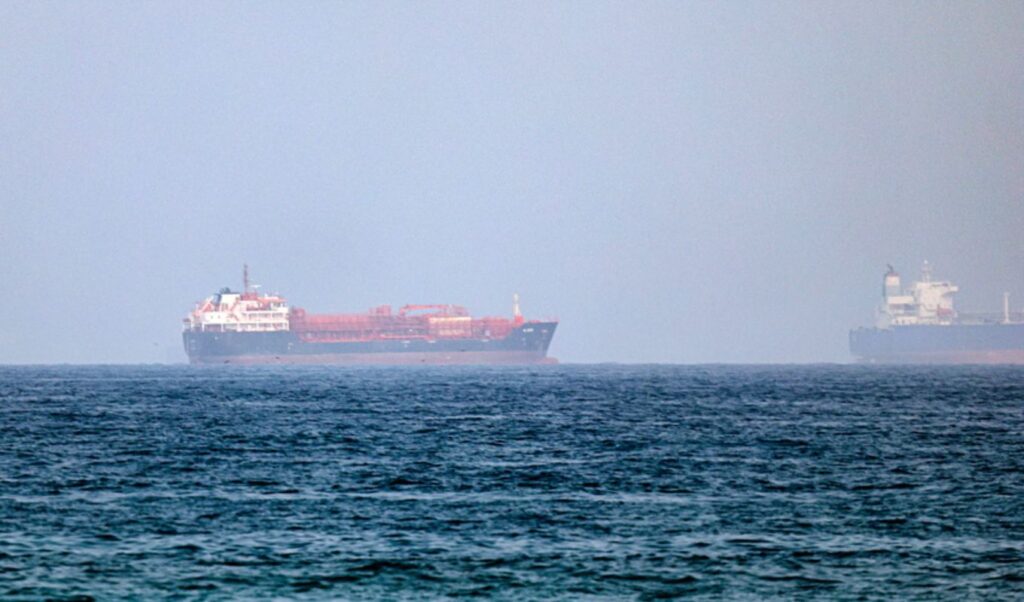
Early this morning, the captain of an oil tanker reported hearing two explosions as the vessel was transiting the Strait of Hormuz near the Omani coastline, according to the UK Maritime Trade Operations (UKMTO), a maritime security information service operating under the British Ministry of Defence.
The incident was recorded 9 nautical miles (16 kilometers) southeast of Kumzar, Oman.
On the other side of the Arabian Peninsula, Yemen’s Houthi movement — the Iran-aligned Shiite rebel group officially known as Ansar Allah — announced yesterday that it had attacked two Saudi oil tankers in the Red Sea and the Gulf of Aden, as part of a blockade it declared days earlier targeting ports and vessels belonging to the world’s largest crude oil exporter.