As Turkey seeks a way out of the S-400 impasse, Athens is blocking its neighbor’s participation in European programs such as ReArm Europe and SAFE — making the withdrawal of Turkey’s war threat against Greece a firm precondition. That threat has been formally maintained by the Turkish Grand National Assembly since June 8, 1995. Foreign Minister Giorgos Gerapetritis once again sent a clear message to Ankara yesterday: as long as the casus belli remains in place, Turkey cannot participate in international and European security architecture. He also dismissed Turkey’s potential return to the F-35 program as mere “speculation.”
“As far as the actual facts are concerned, no one can say that any commitment or promise has been made. Therefore, everything else is speculation,” he stated pointedly. According to Professor of International Law Petros Liakouras, who spoke exclusively to parapolitika.gr, even if Turkey were to receive six F-35 jets, the balance of power in the Aegean would not shift immediately — a large fleet of F-35s would be required to meaningfully enhance Turkey’s military capability. He also noted that the issue of removing the Russian S-400 missile systems from Turkish soil remains unresolved.
Turkey’s cabinet convenes over F-35s and S-400s — scenarios and stumbling blocks
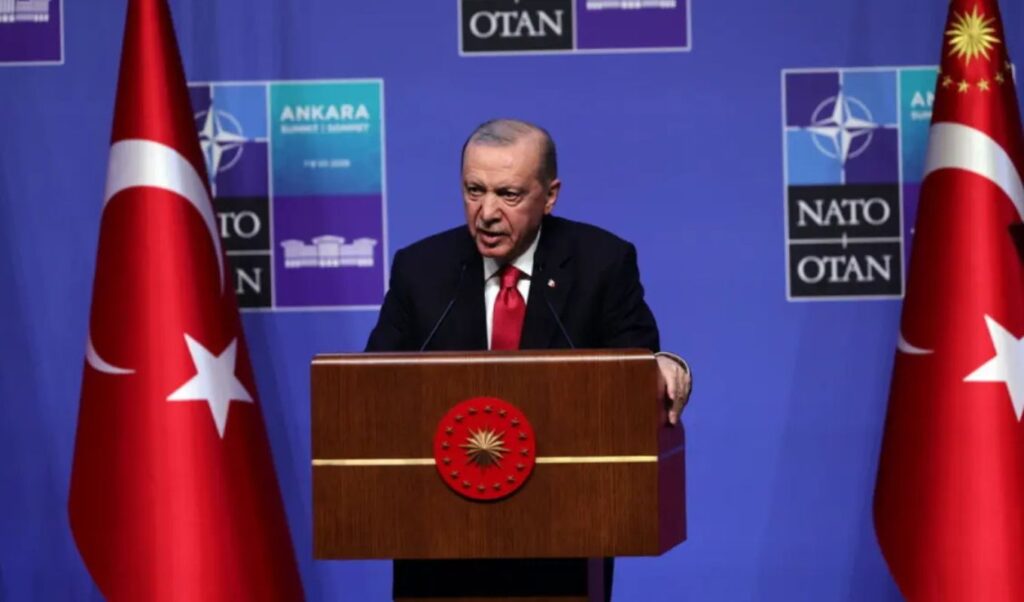
Today in Ankara, the cabinet is meeting under President Recep Tayyip Erdoğan to discuss the procurement process for the F-35s from the United States and the future of the S-400 air defense system. The pro-government newspaper Milliyet reports that today’s cabinet session will address the procedures to be followed in the wake of the Erdoğan–Trump meeting and the U.S. President’s promise that “sanctions against Turkey will be lifted.” Many analysts interpret this as a sign that an announcement regarding Turkey’s plan to remove the S-400s from its territory could come as early as today.
Three scenarios have previously been discussed. The first involved returning the missile systems to Russia — an option Moscow rejected from the outset. The second involved deploying them in occupied northern Cyprus, a scenario that was dismissed as it was considered Turkish-controlled territory that would resolve nothing. The most likely scenario now, as reported in recent days by the newspaper Hürriyet, is the transfer of the S-400s to a Gulf state — with Qatar as the leading candidate, though the United Arab Emirates has not been ruled out. Recent Iranian strikes against Gulf states have prompted them to reassess their air defense needs.
According to Professor Liakouras, the biggest stumbling block in a potential transfer to a Gulf country is securing Russia’s consent — something that has not yet been confirmed, despite ongoing consultations. Furthermore, once the systems are relocated, the U.S. Congress would need to decide whether the conditions for lifting sanctions against Turkey have been sufficiently met. That process will require additional time and effort. While Trump may currently believe he has Congress under control, a significant number of lawmakers — including several Republicans — have strongly opposed the F-35 deal. If the balance between the two parties in the legislature shifts following the midterm elections in October, things could become even more difficult for Turkey on this front. “We still don’t know the outcome. The entire issue remains very much up in the air,” he said.
Greece’s last line of defense against Turkey acquiring the F-35s is to formally request that the United States and NATO include a binding clause ensuring Turkey will not use the aircraft against Greece, a fellow NATO ally. But how enforceable would such a commitment actually be? According to Professor Liakouras, Turkey would be legally obligated to honor such a clause — and for that reason, he argues, it represents a very shrewd move by Greek diplomacy.