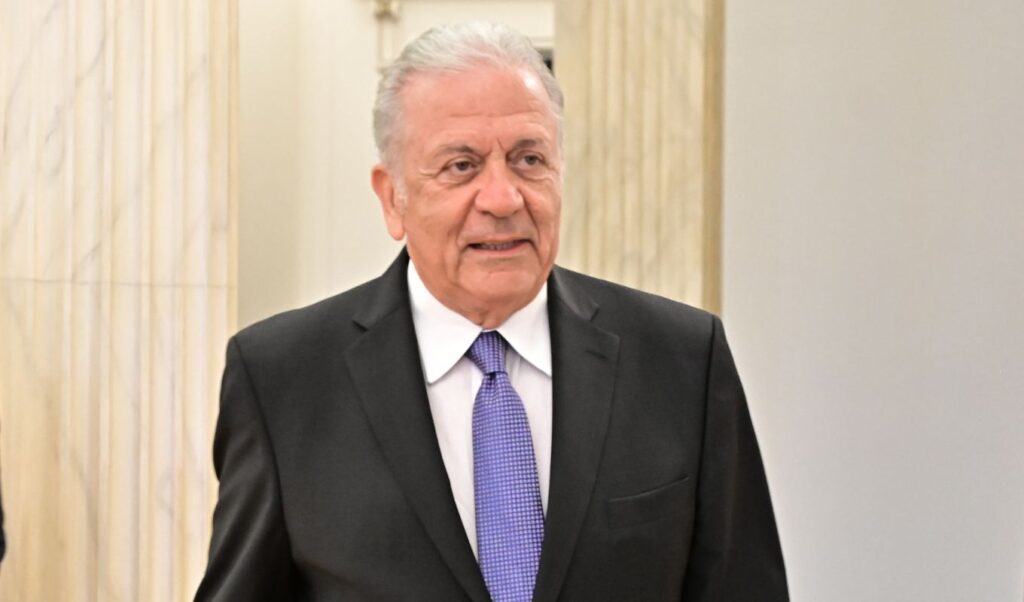
The Qatargate scandal has taken a new turn following the issuance of a European Arrest Warrant by Belgian authorities against Dimitris Avramopoulos, former European Commissioner and current member of the Greek parliament representing New Democracy. The warrant — reportedly covering serious criminal offenses — is believed to be connected to the broader investigative strand examining influence networks and funding schemes uncovered as part of the Qatargate affair, a case that continues to occupy European judicial authorities and has sent shockwaves through the institutions of the European Union.
Read also: Dimitris Avramopoulos: The full list of charges included in the European Arrest Warrant
Dimitris Avramopoulos: How the European Arrest Warrant process works
Under the European framework for judicial cooperation, the procedure involves the transmission of the warrant through the competent prosecutorial authorities of both Belgium and Greece. Where the individual named in the warrant is a sitting member of parliament, the process also requires the involvement of the Hellenic Parliament, which must examine any request to lift parliamentary immunity before any further judicial action can be taken — a step that will apply in the case of Mr. Avramopoulos.
The Qatargate investigation and Dimitris Avramopoulos’s connection to Fight Impunity
At the heart of the Qatargate case is the NGO Fight Impunity, founded by Italian former MEP Pier Antonio Panzeri, one of the central figures in the investigation. The organization had built an extensive network of contacts involving former and current European officials, which is now under close scrutiny by authorities probing allegations of corruption, money laundering, and the exertion of influence on behalf of foreign interests — including those of Qatar.
It is within this context that the name of Dimitris Avramopoulos has emerged, as he is alleged to have participated in the honorary board of the organization.
Dimitris Avramopoulos’s response
Avramopoulos has maintained that his involvement was entirely institutional and properly disclosed, carried out with the approval of the relevant European bodies and without any administrative or executive role. He has also emphasized that any remuneration he received was duly declared and taxed in Greece.
Furthermore, he has categorically rejected any suggestion of unlawful activity or involvement in the handling of undeclared funds, insisting that his relationship with the NGO in question was limited in scope and strictly institutional in nature.