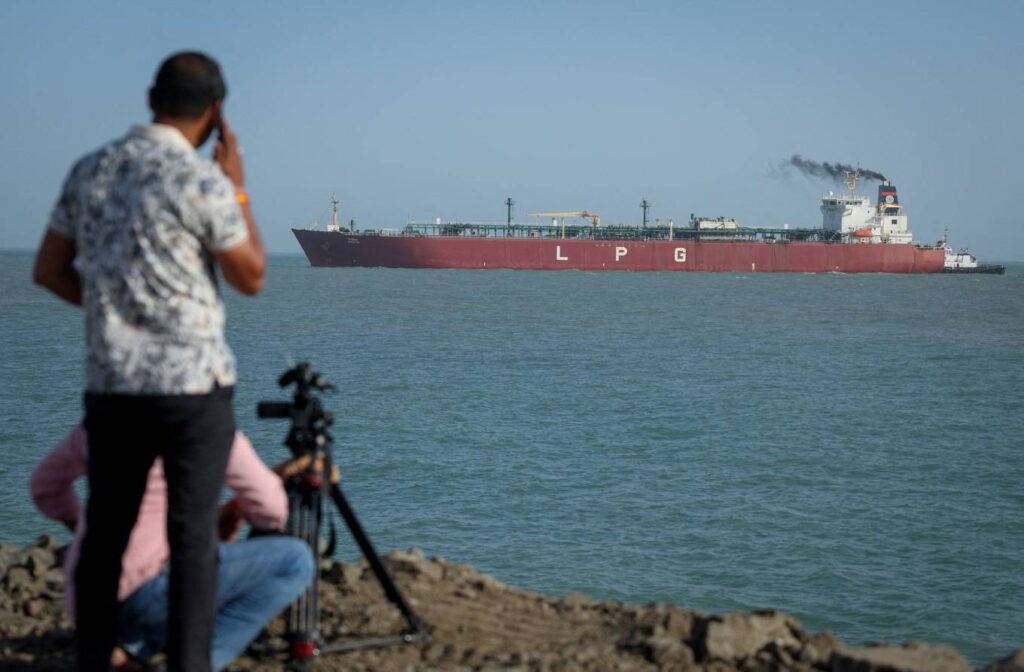
Iran is entering a new era following the landmark agreement with the United States, as American forces have lifted the naval blockade that had been imposed on the country’s ports and coastal regions. The development is considered highly significant for both stability in the Middle East and the global economy, as it directly impacts maritime shipping, oil exports, and the operation of one of the planet’s most critical energy corridors. The decision was announced by CENTCOM, which confirmed that US forces are no longer obstructing the passage of vessels to and from Iranian ports in the Arabian Gulf and the Gulf of Oman.
Read also: JD Vance calls US-Iran deal a “win-win” as 12.5 million barrels of oil flow through the Strait of Hormuz (Video)
According to the official announcement, the lifting of restrictions was carried out on orders from the US President and forms part of the first phase of implementing the agreement between Washington and Tehran. The development was immediately followed by a resumption of commercial activity, as dozens of vessels began approaching Iranian ports once again, creating conditions for normalization in the region after months of heightened tensions and military confrontations.
VP VANCE: “We destroyed a substantial number of their ballistic missiles and their ballistic missile launchers… all the President said yesterday is that of course countries don’t give up the right of self defense…but we do expect that it’s part of the final deal—they are not… pic.twitter.com/0EEI1TNeLI
— Breaking911 (@Breaking911) June 18, 2026
A new phase in US-Iran relations
During a White House briefing, US Vice President JD Vance announced that a 60-day negotiation period between the two countries is beginning immediately. He emphasized that the agreement includes specific de-escalation steps and mutual commitments, aimed at preventing a repeat of the hostilities that caused significant disruption to the international community and energy markets.
Vance revealed that more than 12 vessels have already docked at Iranian ports since the blockade was lifted, and highlighted a dramatic surge in oil traffic through the Strait of Hormuz. According to the figures he presented, more than 12.5 million barrels of oil passed through the Strait in a single night — the highest level recorded since the crisis began in late February.
Iran, the Strait of Hormuz, and the global economy
The restoration of free navigation through the Strait of Hormuz is considered critical for the global economy. A significant share of the world’s oil and natural gas production transits through this narrow waterway, meaning any disruption in the region poses an immediate threat to international markets. The resumption of commercial traffic is expected to help stabilize energy prices and ease the pressures that had been building over recent months.
The US Vice President also made clear that Washington expects Tehran to comply with the terms of the agreement regarding ballistic missile systems. As he stated, the US recognizes Iran’s right to self-defense, but considers it essential to limit capabilities that could pose a threat to international security.
A message to Israel as well
JD Vance’s remarks concerning Lebanon and Israel drew particular attention. The US Vice President stressed that Israel must respect the new agreement and avoid actions that could lead to renewed escalation. “Attacks on Beirut that kill civilians are not acceptable,” he said pointedly, while expressing the view that the agreement has the potential to strengthen stability across the entire region.
The lifting of the naval blockade marks the first major tangible outcome of the US-Iran agreement, and is expected to serve as a key benchmark for whether the ongoing de-escalation process ultimately succeeds or fails.
VP VANCE: “One of the reasons we are engaged in this process is to ensure that no money is flowing to Hezbollah… What I would say to you know some of the the the critics of the deal that I’ve heard, that will say, ‘well, Iran’s gonna get all this benefit.’ … What is the… pic.twitter.com/0fvQtNCJ6z
— Breaking911 (@Breaking911) June 18, 2026