The presidents of the United States and Iran, Donald Trump and Masoud Pezeshkian, remotely signed a bilateral agreement on Wednesday evening aimed at ending the war in the Middle East. Under the deal, Tehran committed to diluting its enriched uranium stockpiles in exchange for the lifting of Washington’s sanctions, with the finer details left to be resolved in further negotiations expected to begin on Friday.
The two sides reached an agreement this week to end the armed conflict that erupted on February 28, triggered by a relentless campaign of US and Israeli airstrikes against the Islamic Republic, which claimed thousands of lives — the majority of them in Iran and Lebanon.
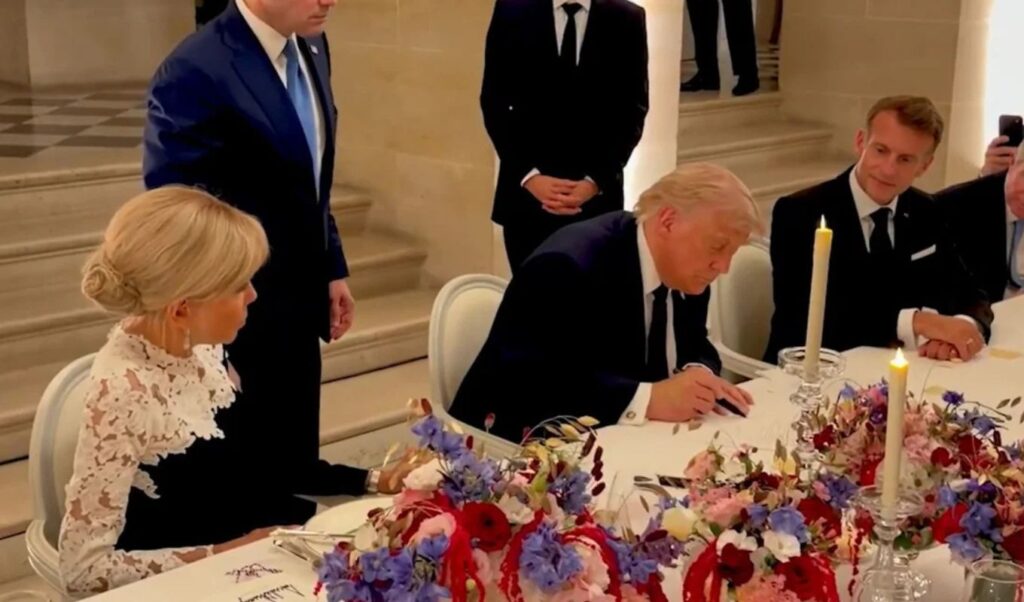
The “Islamabad Memorandum of Understanding,” which includes the Lebanese front, was signed by US President Donald Trump during his visit to France.
Trump: “I signed it at Versailles”
“I just signed it — I signed it at Versailles,” the Republican told reporters as he exited the Palace of Versailles following an official state dinner. The White House subsequently shared a video on X showing Trump signing the document with a marker, with French President Emmanuel Macron seated beside him offering his congratulations, before Trump handed it to Secretary of State Marco Rubio, who was standing behind him.
🚨 President Donald J. Trump has SIGNED the Iran Memorandum of Understanding at Versailles in France. 🇺🇸 pic.twitter.com/JQ6qlbvFAF
— The White House (@WhiteHouse) June 17, 2026
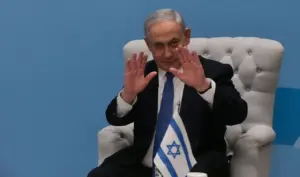
The document was signed by Iranian President Masoud Pezeshkian and his American counterpart, announced Iranian Foreign Ministry spokesman Esmail Baghaei.
Iran’s state news agency IRNA released photographs showing President Pezeshkian signing the agreement.
📸 Iran’s President Pezeshkian and his US counterpart Trump signed the MoU between Tehran and Washington digitally and remotely.
Follow: https://t.co/7Dg3b41hTx pic.twitter.com/8GtQFZhuZ0
— PressTV Extra (@PresstvExtra) June 18, 2026
According to Press TV, Baghaei noted that the decision to have the document signed by the two presidents was deliberate. The fact that the heads of state themselves signed it raises the political cost of any potential violation, he explained.
Analysts noted that Tehran had preferred to avoid any public handshakes between Iranian and American officials at a formal signing ceremony — Iran holds the United States partly responsible for the death of Supreme Leader Ali Khamenei on February 28, and the political cost of such imagery domestically would have been considerable.
Strait of Hormuz will reopen “without delay,” Pakistan’s prime minister pledges
The signing of the agreement by both presidents means that the Strait of Hormuz will fully reopen “without delay” and that the US military’s blockade of Iranian ports will be lifted “immediately,” Pakistani Prime Minister Shehbaz Sharif assured in the early morning hours.
He also confirmed that a ceremony will be held in Switzerland on Friday to mark the significant “development” and to launch “technical talks” between the parties.
As recently as Wednesday evening, it had been expected that US Vice President JD Vance and Iranian parliament speaker Mohammad Baqer Qalibaf would sign the agreement in Switzerland on Friday.
“A US failure,” says Qalibaf — “A great victory for Iran,” declares Hezbollah’s secretary-general
The agreement “marks the failure of the United States,” Qalibaf said Wednesday evening during a televised interview on state TV.
Hezbollah’s secretary-general, Naim Qassem, head of the Lebanese Shia movement aligned with Tehran, welcomed the agreement as a “great victory” for Iran, which he thanked for insisting that the Lebanese front be included in the deal.
In a televised address, he urged the Beirut government to “exploit” the agreement to “drive Israel out” of Lebanese territory.
Opponents of the movement accuse Hezbollah of having dragged Lebanon into the war on March 2 by firing rockets at Israel in retaliation for the death of Ali Khamenei.
Hezbollah leader Qassem also called on the Lebanese government to halt its direct negotiations with Israel, which began in April under Washington’s auspices.
Lebanese President Joseph Aoun had earlier emphasized that the process is “independent” of the Washington-Tehran agreement.
Two months of negotiations
The text of the agreement, read out to journalists by a US official on Wednesday, stipulates that Washington will suspend — effective immediately upon signing — the sanctions that had blocked sales of Iranian oil. It also agreed to proceed with the full lifting of all sanctions against Tehran in the event that a final agreement is reached following sixty days of negotiations.
During that period, the two governments will discuss the creation of a “mechanism to allow the processing” of Iran’s enriched uranium stockpiles, through a dilution method “under IAEA supervision” — a provision the US official described as a “major victory” for Washington.
According to the same source, Iran will allow the full restoration of navigation through the strategically vital Strait of Hormuz within thirty days — its de facto closure since the outbreak of the war having severely rattled the global economy.
The United States also committed, in the event a final agreement is reached, to facilitating — in coordination with “regional partners,” particularly Gulf monarchies — the release of $300 billion in frozen funds for Iran’s reconstruction and economic development, without any direct American financial contribution.
Iran released the text of the agreement on Wednesday through its official state news agency, IRNA.
The 14 points of the US-Iran agreement
The 14-point memorandum of understanding sets out provisions for reopening the Strait of Hormuz, easing certain economic restrictions on Iran, and establishes expectations for addressing Iran’s nuclear program during future technical talks. It is formally titled the “Islamabad Memorandum of Cooperation between the United States of America and the Islamic Republic of Iran.” “This is essentially an agreement that allows us to immediately open the Strait of Hormuz, commits the Iranians to destroying the enriched uranium, and then gives us an opportunity where, if the Iranians improve their good behavior, we will respond by relaxing certain provisions that could make them a more prosperous country,” a senior US official stated. The memorandum is expected to be formally signed on Friday, triggering a 60-day window for negotiating the final terms of the agreement.
- The Islamic Republic of Iran and the United States, together with their respective allies in the current war, hereby declare through the signing of this Memorandum of Understanding the immediate and definitive cessation of hostilities on all fronts, including Lebanon, and commit to refraining from any hostile action against one another and from the threat or use of force against one another. The final agreement shall confirm the provisions of this Article and all remaining Articles.
- The Islamic Republic of Iran and the United States commit to respecting each other’s sovereignty and territorial integrity and to refraining from any interference in each other’s internal affairs.
- The Islamic Republic of Iran and the United States commit to negotiating and concluding a final agreement within a maximum period of 60 days, which may be extended by mutual consent.
- Immediately upon the signing of this Memorandum of Cooperation, the United States shall lift the naval blockade and prevent any interference with or obstruction of the Islamic Republic of Iran, and shall restore traffic to full capacity within a maximum of 30 days. Vessel traffic shall be commensurate with pre-war traffic volumes on the part of the Islamic Republic of Iran. The United States also commits to withdrawing its forces from the surrounding areas within 30 days of the final agreement.
- Upon the signing of this Memorandum of Cooperation, the Islamic Republic of Iran shall immediately take steps to ensure that commercial vessel traffic between the Persian Gulf and the Sea of Oman, and vice versa, is restored within 30 days to pre-war volumes, taking into account the need to remove technical obstacles and for Iran to clear mines.
- The United States commits, together with its regional partners, to creating a comprehensive plan — agreed upon by both parties — for the reconstruction and economic development of the Islamic Republic of Iran, while securing funding of at least $300 billion. The implementation mechanism for this plan, as part of the final agreement, shall be determined within 60 days.
- The United States commits to terminating, on a timeline to be agreed upon as part of the final agreement, all forms of sanctions currently imposed on the Islamic Republic of Iran, including UN Security Council resolutions and IAEA Board of Governors resolutions, as well as all unilateral US sanctions, both primary and secondary.
- The Islamic Republic of Iran reaffirms that it will never produce nuclear weapons. The Islamic Republic of Iran and the United States have agreed that the fate of the enriched material and all other mutually agreed matters relating to nuclear energy, including Iran’s nuclear needs, shall be adequately addressed in a final agreement; the final agreement shall confirm the provisions of this Article.
- The Islamic Republic of Iran and the United States agree that, pending a final agreement, the status quo shall be maintained: Iran shall maintain the status quo in its nuclear program, and the United States shall neither impose new sanctions on Iran nor reinforce its forces in the region.
- The United States commits that, immediately upon the signing of this Memorandum of Cooperation and until the date of sanctions relief, the US Treasury Department shall issue exemptions for the export of Iranian crude oil, petrochemical products and their derivatives, as well as all related services, including banking, insurance, transportation, and ancillary services.
- The United States commits that, in light of progress in negotiations toward a final agreement, the frozen or restricted funds and assets of the Islamic Republic of Iran shall be unblocked and made fully available. These funds, whether held in the principal account or transferred, shall be used for any final beneficiary payment as determined by the Central Bank of the Islamic Republic of Iran and shall be fully available for use. The United States commits to issuing all necessary licenses and permits on this basis.
- The Islamic Republic of Iran and the United States agree that an implementation mechanism shall be established to oversee the successful implementation of and future compliance with the Final Agreement.
- Following the signing of this Memorandum of Cooperation and upon receipt of assurances regarding the commencement of implementation of Articles 4, 5, 10, and 11 of this Memorandum of Cooperation and the continued implementation of these steps, the Islamic Republic of Iran and the United States shall commence negotiations toward a Final Agreement solely with respect to the remaining Articles.
- The final agreement shall be approved through a binding UN Security Council resolution.
Reactions in the wake of the US-Iran agreement signing
The G7 heads of state, whose summit had just concluded in France, praised in a joint statement the “historic opportunity to prevent Iran from acquiring any nuclear weapon and to address the threats linked to its regional activities” and its ballistic missile program.
French President Emmanuel Macron also voiced his support for the agreement between the United States and Iran, just hours after Donald Trump signed the memorandum of understanding at Versailles. The French president described it as a development that “opens the path to lasting peace,” while also expressing confidence that it would contribute to lower energy prices globally.
Macron shared a video on X of the moment the American president signed the US-Iran memorandum of understanding at the Palace of Versailles. In the footage, Donald Trump can be heard commenting on the process: “This was not easy,” moments before putting his signature to the document.
In his post, Macron described the agreement as a significant development for stability in the Middle East and for the global economy.
“President Trump signed tonight at Versailles the agreement between Iran and the United States,” the French president wrote.
He added that the agreement “opens the path to lasting peace” and enables the reopening of the Strait of Hormuz, one of the world’s most critical maritime routes for the transport of oil and natural gas.
“This is an important step in the right direction for our citizens, one that will soon allow energy prices to fall,” Macron noted.
Le Président Trump a signé ce soir à Versailles l’accord entre l’Iran et les États-Unis.
Cet accord ouvre la voie à une paix durable et permet la réouverture du détroit d’Ormuz.
C’est un pas important dans la bonne direction pour nos compatriotes… pic.twitter.com/b1XgZrBv0m
— Emmanuel Macron (@EmmanuelMacron) June 18, 2026
China, for its part, stated that it was “absolutely essential” for “all parties” to fully implement the agreement and avoid external “interference,” according to Beijing, during a phone call between Foreign Minister Wang Yi and his Iranian counterpart Abbas Araghchi.
The head of Chinese diplomacy — whose country is heavily dependent on oil imports from the Gulf — stressed the need for “proper management” of navigation through the Strait of Hormuz and for easing “the international community’s serious concerns.”
Oil prices closed slightly higher on Wednesday, with markets appearing cautious ahead of the agreement’s signing; North Sea Brent crude, the benchmark variety, rose 0.75% to $79.55 per barrel.